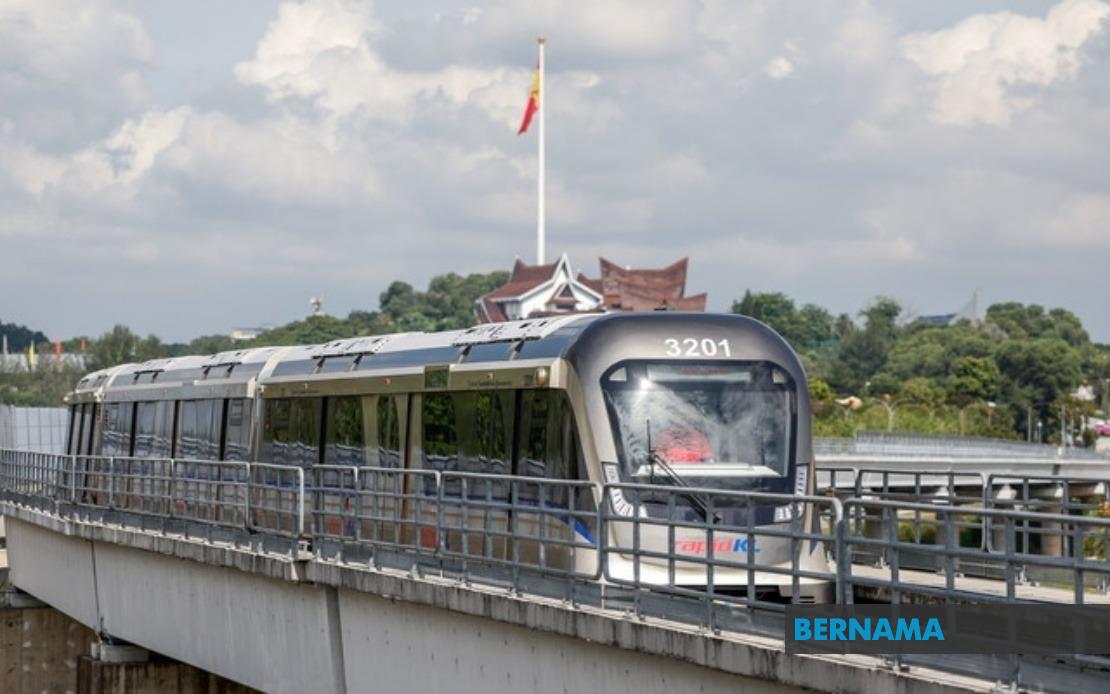
The MADANI Government has committed to meeting with Sultan Sharafuddin Idris Shah, the Sultan of Selangor, to provide detailed explanations on the LRT3 Shah Alam Line following critical remarks by the Ruler regarding the project's escalating costs and persistent implementation delays. Transport Minister Anthony Loke made the announcement on July 2, emphasizing that the government takes seriously the concerns raised by the Palace about one of the country's significant public transportation initiatives.
Loke acknowledged the ruler's perspective during a charity dinner in Kuala Lumpur, pledging that he would personally coordinate with the Sultan of Selangor to offer comprehensive clarification on the troubled project. The minister's willingness to engage directly with the palace signals the government's recognition of the Ruler's role as a stakeholder in major developments within the state and the need to maintain transparent communication with Selangor's constitutional head.
The Ruler's intervention reflects mounting frustration with the LRT3 project's troubled trajectory. Sultan Sharafuddin highlighted that the scheme experienced a suspension lasting more than 18 months following the change in Federal Government administration in 2018, a decision that significantly disrupted project momentum and derailed initial timelines. This hiatus was compounded by an additional 19-month delay attributable to the COVID-19 pandemic, pushing completion further into 2021 and beyond.
During these prolonged interruptions, the project underwent substantial modifications that reduced its scope and ambition. Station designs were downsized, the initially planned number of train carriages was decreased, and five stations originally envisioned along the alignment were eliminated entirely from the scheme. These changes effectively transformed the LRT3 from its original conception, raising questions about whether cost-cutting measures have compromised the system's capacity to serve the Shah Alam and surrounding areas effectively.
The Sultan emphasized a crucial perspective often overlooked in debates about infrastructure projects: the LRT3 was never intended as a prestige megaproject designed primarily to enhance governmental image, but rather as a practical initiative aimed at delivering genuine benefits and improving the quality of life for residents across Selangor. This framing positions the project within a welfare and public service context rather than as a monument to development ambition.
For Malaysian readers and the broader Southeast Asian context, the government's willingness to engage with the palace over project governance reflects important governance principles. In Malaysia's constitutional framework, Rulers possess significant moral authority and custodial responsibilities toward their states' development and citizen welfare. The decision to seek a formal audience demonstrates recognition that major infrastructure decisions benefit from palatial consultation, even in systems where ultimate executive authority rests with elected officials.
Beyond the LRT3 clarification, Loke also outlined transport ministry initiatives designed to facilitate voter participation in the upcoming 16th Johor State Election scheduled for July 11. The ministry coordinated with Keretapi Tanah Melayu Berhad (KTMB) to substantially increase Electric Train Service (ETS) frequency on the Kuala Lumpur-Johor Bahru corridor, enabling voters from outstation locations to return home more conveniently to cast their ballots.
The enhanced ETS scheduling particularly benefits individuals returning from Singapore who can now utilize multiple daily trains to reach Segamat, Labis, and other areas within Johor. This accommodation recognizes that many Johor voters work or reside elsewhere and require convenient transportation options to fulfill their civic responsibilities. Similarly, voters from Malaysia's northern states can leverage improved ETS services to facilitate their return to Johor for the election.
The electoral logistics initiative reflects broader government efforts to reduce barriers to voting participation. By increasing public transport capacity and frequency, the transport ministry acknowledged that access challenges can suppress voter turnout among those living or working away from their registered constituencies. This approach demonstrates recognition that infrastructure services extend beyond routine commuting to encompass fundamental democratic participation.
The 16th Johor State Election involves 172 candidates competing across 56 state seats, with early voting scheduled for July 7 and main polling occurring on July 11. This electoral exercise represents a significant political moment for Johor and provides insight into voters' preferences regarding the state government's direction and performance across various policy areas, including public transportation and infrastructure development.
The convergence of these developments—the government's commitment to address palatial concerns about major infrastructure, coupled with simultaneous efforts to enhance democratic participation through improved transport logistics—illustrates how contemporary Malaysian governance increasingly recognizes the interconnection between physical infrastructure, institutional accountability, and citizen engagement. The transport ministry's dual focus reflects an understanding that effective governance requires both maintaining respectful dialogue with constitutional institutions and ensuring that practical policies facilitate rather than obstruct civic participation.
The LRT3 clarification process will provide an opportunity to substantively address the gap between original project promises and current realities, potentially informing future infrastructure planning approaches. How the government explains the project's modifications and defends the reduced scope will likely influence public confidence in long-term transportation planning across the region and shape expectations regarding infrastructure delivery in subsequent initiatives.

