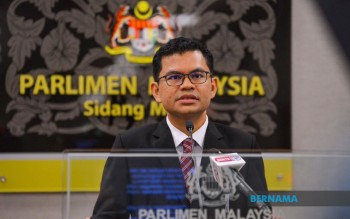
The National Economic Action Council has formally committed to studying a package of policy recommendations submitted by the Malaysian Plastics Manufacturers Association, with responsibility for the review assigned to the Ministry of Investment, Trade and Industry and the Economy Ministry. Economy Minister Akmal Nasrullah Mohd Nasir announced the decision during a briefing on recent global supply pressures, signalling that the government recognises the strategic importance of the sector to Malaysia's broader industrial ecosystem.
The plastics industry has become increasingly squeezed by external economic forces that extend beyond the control of individual manufacturers. Rising costs for raw materials on global markets, combined with logistical bottlenecks that persist from pandemic-era supply chain disruptions, have created a challenging operating environment for Malaysian producers. The MPMA's presentation to the NEAC highlighted how downstream manufacturers in Malaysia face a competitive disadvantage when benchmarked against peers in other nations, particularly regarding the per-unit cost of imported raw materials and intermediate inputs. This cost differential directly translates into higher production expenses that domestic manufacturers must absorb, reducing their margins and competitiveness in both regional and global markets.
The sector's economic footprint in Malaysia remains substantial, though recent performance shows subtle contraction. In 2025, the plastics industry generated sales valued at RM62.69 billion, marking a decline from RM64.78 billion in 2024. The market remains diversified across multiple applications, with packaging materials accounting for 45 per cent of total sales, while the electrical and electronics segment comprises 29 per cent of output. This composition reflects the sector's critical role as a supplier of essential components and materials to multiple downstream industries, making its health a matter of broader economic concern.
Among the substantive proposals the government will examine is the potential voluntary adoption of Extended Producer Responsibility, a regulatory framework that would shift certain environmental and waste management obligations toward manufacturers. The Economy Ministry will assess the financial implications of such a scheme for the sector, particularly for smaller enterprises with limited resources for compliance infrastructure. The assessment will also evaluate the current state of Malaysia's recycling capacity and whether the necessary facilities exist to support meaningful circular economy implementation at scale.
Government consideration of EPR reflects a growing international trend toward producer accountability for end-of-life product management, driven by environmental imperatives and evolving consumer expectations. However, the Malaysian government's decision to examine voluntary rather than mandatory implementation suggests awareness of the sector's current cost pressures and desire to avoid imposing additional regulatory burdens without adequate preparation. If structured appropriately, a well-designed circular economy framework could strengthen Malaysia's plastics industry by reducing reliance on virgin raw materials, thereby insulating manufacturers from commodity price volatility and supply chain disruptions originating in geopolitically sensitive regions.
The ministry expressed confidence that Malaysia's overall economic trajectory remains on track to achieve the official growth target of between 4.0 and 5.0 per cent for the current year. First quarter 2026 data showed the economy expanding at 5.4 per cent, a performance underpinned by robust domestic consumption, strength in services and manufacturing, and resilient export performance in electrical and electronics segments. Trade data through May demonstrated that Malaysian exporters remain competitive internationally, with shipments growing 24.3 per cent year-on-year to reach RM793.8 billion, while imports increased more modestly at 11.8 per cent, generating a trade surplus of RM132.8 billion.
Inflation metrics indicate that price pressures remain contained, with consumer inflation measured at 2.0 per cent in May, reflecting only marginal acceleration from April's 1.9 per cent. This stability suggests that Malaysia's economy is expanding without generating significant demand-side inflationary pressure, a positive indicator for manufacturing competitiveness and consumer purchasing power. The government will release preliminary second quarter GDP estimates on July 17, with official figures to follow on August 14, providing additional clarity on whether the first quarter momentum has persisted.
The decision to commission a formal review of the MPMA's proposals represents an acknowledgment that sector-specific challenges sometimes require targeted policy responses rather than broad-based macroeconomic management. The plastics industry's interconnections with multiple downstream sectors—ranging from consumer goods manufacturing to electronics assembly—mean that its continued health carries implications for Malaysia's manufacturing export competitiveness more broadly. Rising costs and supply chain vulnerabilities in the plastics sector could eventually constrain the competitiveness of sectors that depend on plastic components or packaging.
For Malaysian manufacturers in packaging, electrical products, and consumer goods, the outcome of this government review carries direct significance. Companies may face higher input costs if the government cannot identify measures to improve plastics sector competitiveness, or they may benefit from more efficient supply chains if policy interventions succeed in reducing structural cost disadvantages. The government's commitment to considering the interests of the entire industrial chain, rather than the plastics sector in isolation, suggests that policy responses will attempt to balance the needs of upstream material suppliers with those of downstream manufacturers.
The timing of this review, alongside strong overall economic performance and contained inflation, suggests the government believes it has fiscal and macroeconomic space to examine industry-specific support measures if evidence warrants them. The next several weeks will be critical as MITI and the Economy Ministry evaluate the technical merits of the MPMA's proposals and determine whether direct government intervention, regulatory reform, or market-based solutions offer the most promising path forward.

