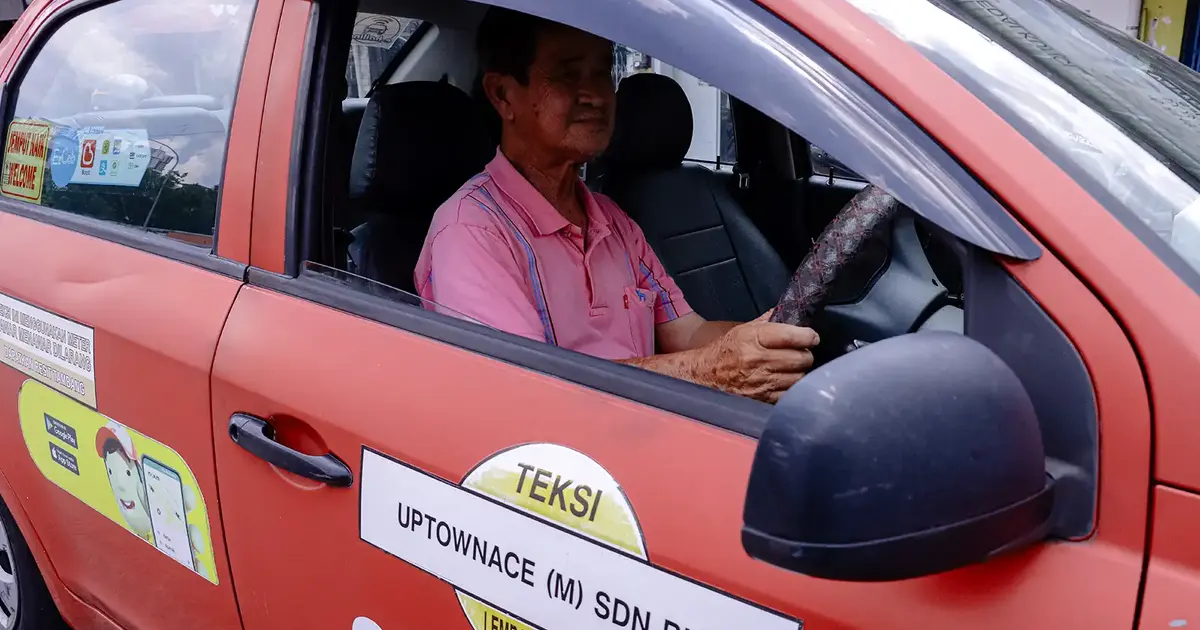
The Malaysian government has approved a supplementary allocation of RM10 million directed toward supporting the nation's taxi drivers, a move that underscores growing recognition of the transport sector's economic and social significance. The funding announcement reflects broader policy efforts to stabilize livelihoods within an industry that has faced considerable pressure from ride-hailing competition and shifting travel patterns in the post-pandemic era.
Prime Minister Anwar Ibrahim characterised taxi operators as essential frontline workers whose daily interactions with international visitors shape perceptions of Malaysia on the global stage. This framing positions the support measure within a wider tourism and hospitality context, acknowledging that the quality of service and professionalism displayed by drivers directly influences how travellers experience the country and subsequently recommend it to others. The PM's comments suggest the government views this sector not merely as employment for hundreds of thousands, but as a strategic asset in enhancing Malaysia's competitive standing within the regional tourism marketplace.
The backdrop to this initiative involves structural challenges that have reshaped the taxi industry over the past decade. Ride-sharing platforms such as Grab have fundamentally altered consumer behaviour and pricing dynamics, compelling traditional taxi operators to adapt or face diminishing revenues. Driver incomes have become increasingly volatile, with many struggling to maintain sustainable earnings while managing vehicle maintenance, fuel costs, and licensing fees. The pandemic further exacerbated these difficulties, as tourism and business travel contracted sharply, directly impacting demand for taxi services.
Financial support packages of this nature typically address immediate operational challenges rather than long-term structural reform. The RM10 million allocation may be distributed through various mechanisms—direct cash assistance, subsidies for fuel or maintenance, training programmes, or technology adoption schemes—though the announcement did not specify the precise disbursement methodology. Understanding how funds will reach drivers and what conditions might apply remains essential for assessing the measure's effectiveness in genuinely improving livelihoods.
The timing of this announcement carries political significance within Malaysia's current economic management discourse. As inflation pressures persist and cost-of-living concerns dominate public discourse, targeted assistance to specific worker groups demonstrates governmental responsiveness to sectoral hardship. For a transport sector that includes significant numbers of informal or semi-formal workers with limited access to conventional social safety nets, such direct transfers can provide meaningful relief during periods of economic stress.
From a Southeast Asian perspective, Malaysia's approach mirrors similar interventions undertaken by neighbouring governments facing taxi industry disruption. Thailand, Indonesia, and the Philippines have all grappled with analogous tensions between traditional taxi operators and modern digital transport platforms, often responding with regulatory measures, subsidies, or training initiatives. Malaysia's relatively targeted financial approach differs from some regional neighbours who have pursued more restrictive regulatory frameworks against ride-hailing services.
The broader implications for Malaysian economic policy merit consideration. This allocation signals that the government acknowledges the limits of purely market-driven adjustment, particularly for workers lacking capital or education to transition to alternative employment. Simultaneously, it raises questions about how such sector-specific support aligns with overarching economic restructuring goals and whether temporary financial injections address root causes of industry vulnerability or merely defer necessary adaptation.
Taxi driver organisations and representative bodies have historically advocated for various forms of government intervention, from licensing reform to technology training programmes enabling integration with digital platforms. The RM10 million commitment may partially address longstanding calls for assistance, though sector representatives would likely argue that more comprehensive reform—including regulatory clarity around platform governance and driver classification—remains necessary for sustainable industry viability.
The announcement also reflects demographic and labour market realities. Malaysia's taxi industry employs a workforce that skews toward older drivers with limited alternative employment prospects, making this cohort particularly vulnerable to technological disruption. Supporting these workers through targeted allocations represents a pragmatic acknowledgement of the human costs associated with economic transformation, even if such measures work at the margins of broader structural change.
Looking forward, the sustainability of taxi services as a viable livelihood will likely depend on factors beyond immediate government support: regulatory frameworks governing competition with digital platforms, investment in driver training and professionalism standards, and potentially new service models that leverage technology rather than resist it. The RM10 million commitment should therefore be understood as one element within a more comprehensive policy framework that remains under development, rather than as a definitive solution to an industry facing fundamental secular challenges.
The government's willingness to allocate resources toward this sector also carries symbolic weight for Malaysia's broader development narrative, signalling that rapid technological transformation and growing inequality concerns have moved into mainstream policy consciousness. How effectively this funding translates into improved driver welfare and service quality will ultimately determine whether such measures contribute meaningfully to economic resilience and social cohesion during periods of significant structural change.

