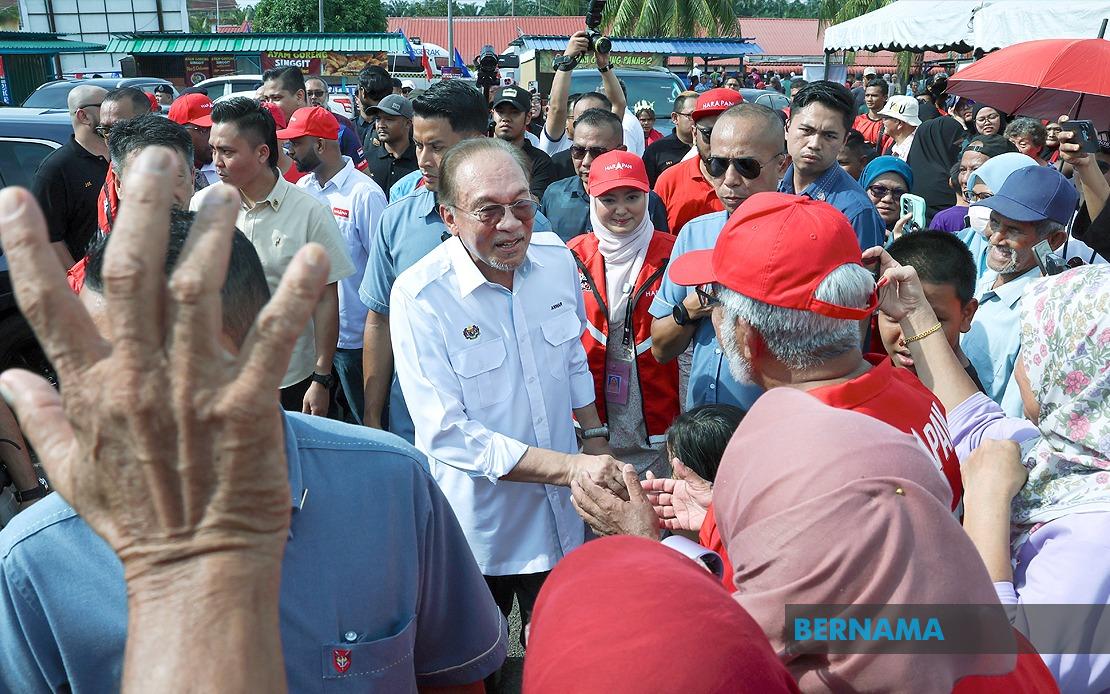
In a touching display of devotion, a 58-year-old grandmother from Kampung Pudu in Segamat, Johor, recently rode a motorcycle through an oil palm estate to facilitate her grandson's long-held ambition of meeting Prime Minister Datuk Seri Anwar Ibrahim. The journey reflects the lengths some families will go to support a child's aspirations, and in this case, the effort paid off in unexpected and memorable ways. Muhammad Afif Ikhwan, a nine-year-old with deep admiration for the Prime Minister, had harboured this dream for some time, with his grandmother Rosimah Mohammad determined to make it happen.
The opportunity arose when Anwar was scheduled to address a gathering at Felda Palong Timur in Segamat on a recent Sunday. Rosimah and her grandson travelled from their village specifically for this event, enduring the ride through the agricultural landscape to position themselves where the young boy might catch a glimpse of his idol. The anticipation built throughout their journey, with Afif barely managing to sleep the night before, his excitement palpable as he contemplated the possibility of being in the Prime Minister's presence.
What transpired at the venue exceeded everyone's expectations. When Anwar made his way towards the stage while acknowledging members of the public, the determined nine-year-old pushed through the crowd to extend his hand. Rather than a simple acknowledgment, the Prime Minister not only shook the child's hand but took the exceptional step of inviting him onto the stage to stand alongside him during the speech. For Rosimah, witnessing her grandson's dream materialise in such an extraordinary manner was deeply moving, and she has spoken openly about the profound happiness she observed in Afif's expression during those precious moments.
The encounter left a lasting impression that extends far beyond the brief meeting itself. According to Rosimah, her grandson continues to treasure the memory with touching devotion, hugging the shirt he wore that day every night as a tangible reminder of an experience that will likely remain central to his childhood recollections. Such gestures, while seemingly small, often shape how young people view public figures and instil in them a sense of personal connection to the broader political landscape.
The story gained additional significance when it reached Prime Minister Anwar himself. Recognising the sincerity of the child's admiration and the family's effort to facilitate this meeting, Anwar authorised a follow-up gesture that underscored his appreciation for the moment they had shared. This decision reflected a broader understanding of the symbolic importance such encounters hold for ordinary Malaysians, particularly young people who are forming their political consciousness and values.
Siti Aishah Shaik Ismail, the PKR deputy information chief, was tasked with representing the Prime Minister during a visit to Muhammad Afif's home in Kampung Pudu. During this visit, she presented gifts selected at Anwar's personal request, including a bicycle, a school bag, and a pair of shoes. These items served as tangible expressions of the Prime Minister's acknowledgment of the boy's admiration and his family's dedication. The selection of practical gifts for a nine-year-old suggests thoughtfulness rather than mere ceremonial obligation.
From a broader perspective, this incident illustrates how grassroots interactions between political leaders and constituents can create meaningful connections that resonate beyond the immediate moment. In Malaysian politics, where the relationship between leaders and the public often tends towards formality, such unscripted encounters—particularly those involving children—can humanise public figures and foster a sense of accessibility that many feel is increasingly rare. The spontaneity of Anwar's decision to bring the child onto the stage suggests a willingness to deviate from prepared remarks when presented with genuine human interest.
For families in rural areas like Kampung Pudu, such experiences also carry a different weight. The journey itself—a motorcycle ride through an oil palm estate—represents both the geographical distance and the determination required for those outside urban centres to engage directly with national leadership. Rosimah's willingness to undertake this expedition with her grandson speaks to the value placed on such opportunities in communities where proximity to high-level political figures is less routine.
The incident also touches on themes of intergenerational connection and the transmission of values. A grandmother facilitating her grandson's political aspirations, even before the boy has fully developed his own independent understanding of governance, represents a form of mentorship and encouragement of civic interest. Whether or not Muhammad Afif's admiration for the Prime Minister continues into adulthood, the experience has provided him with a narrative about perseverance, support from family, and the possibility of meaningful interaction with national figures.
In the context of Malaysian politics, where personality-driven followings remain significant, such encounters carry particular resonance. Young voters and those coming of age politically often form their first impressions through personal or semi-personal interactions like this one. The fact that Anwar took the additional step of following up through his office demonstrates an understanding of the political capital—in the broadest sense—that such gestures generate. It also reflects calculations about public relations, as stories of a Prime Minister meeting enthusiastic young supporters are naturally sympathetic narratives in news cycles.
The aftermath of the meeting, with Afif's continued attachment to the shirt worn that day, suggests that for this particular child, the experience has crystallised into something approaching hero-worship. Whether this evolves into sustained political engagement or becomes merely a cherished childhood memory remains to be seen. However, the incident underscores how political leadership, when accessible and responsive to public enthusiasm, can create powerful formative experiences for young Malaysians.

