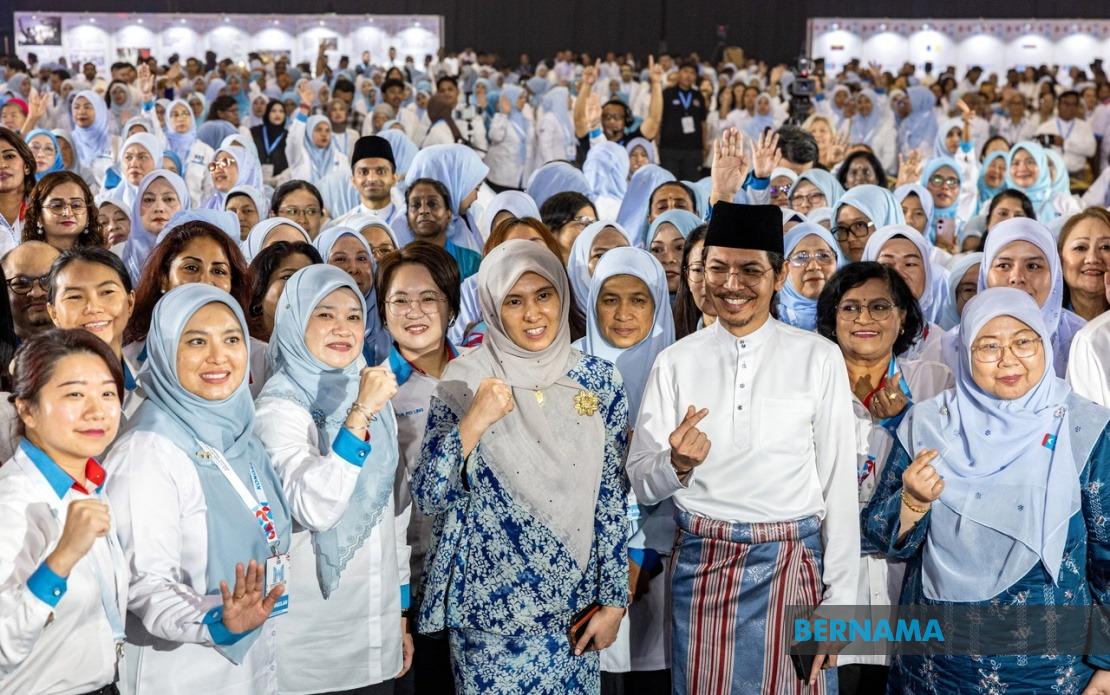
Political leaders across Malaysia must prioritize the cultivation of robust grassroots networks if they hope to maintain meaningful connections with their constituents, according to Muhammad Kamil Abdul Munim, chief of Angkatan Muda Keadilan (AMK). Speaking during the conclusion of debate proceedings at the 2026 AMK National Congress in Melaka on August 14, he underscored the necessity of consistent community engagement as a foundational element of political success.
Muhammad Kamil's remarks highlight a fundamental shift in strategic thinking among party leaders as Malaysia prepares for upcoming electoral contests. Rather than relying solely on top-down communication mechanisms or centralized messaging strategies, he advocates for a model where political machinery operates with genuine embeddedness within local communities. This perspective reflects growing recognition that sustainable political influence requires more than occasional campaign activities or announcement-based engagement.
A critical dimension of grassroots work, according to the AMK chief, involves the capacity to shape public perception and counter narratives disseminated by rival political factions. By maintaining close relationships with community members, leaders gain platforms through which to communicate their party's vision and policy positions directly, minimizing the potential for misinformation or negative framing to take root. He emphasized that presence itself constitutes a form of political communication—visibility in communities sends signals about a party's commitment and accessibility.
Muhammad Kamil identified several interconnected elements essential to effective grassroots strategy: the messaging narratives parties present, the operational machinery that mobilizes support, internal communication systems, and the relational networks that bind leadership to ordinary members. Each component requires deliberate cultivation and maintenance. The absence of strength in any single area potentially undermines the entire structure, suggesting that comprehensive organizational development must precede electoral campaigns rather than being hastily assembled during campaign seasons.
The AMK chief also cautioned that electoral preparation cannot remain confined to national-level discourse and strategy. While headline-grabbing policy announcements and national debates generate media attention, the lived experiences and specific concerns of communities often diverge significantly from national political discourse. Leaders who ignore this gap risk alienating voters who perceive disconnect between party rhetoric and attention to local realities—a vulnerability that opposition parties routinely exploit.
A particular emphasis emerged regarding the responsibilities of local-level leaders in fostering party membership engagement. Muhammad Kamil called for intensified programming and activities designed to deepen understanding among party members, especially those newly recruited. This reflects concern that rapid membership expansion sometimes outpaces capacity to effectively integrate new members into party culture and ideological frameworks.
The challenge of ideological cohesion and institutional memory appears to weigh heavily on the AMK chief's thinking. He expressed concern that inadequate efforts to cultivate idealism among younger members and newcomers might gradually erode the foundational principles that justify the party's existence and continued struggle. Without deliberate investment in explaining why the party exists, what it stands for, and what specific duties membership entails, organizations risk attracting supporters motivated primarily by transactional benefits rather than principled commitment.
This concern resonates particularly in the Malaysian political context, where parties frequently face accusations of internal drift, compromised principles, or mission creep toward mere power-seeking. The articulation of clear connections between party platform, individual responsibilities, and collective struggle serves as prophylactic against such delegitimization. Members who understand and internalize these connections become more resilient advocates, capable of explaining party positions to skeptics and less vulnerable to recruitment by competing organizations offering material incentives.
Muhammad Kamil's statements suggest recognition that political victories and sustained electoral success increasingly depend not on sophisticated digital campaigns or celebrity endorsements, but on the unglamorous work of community presence and relationship-building. This represents a potentially significant reorientation for a youth wing traditionally focused on mobilization during campaign periods. The implication is that effective youth political work must occur continuously, transforming local leaders into community fixtures rather than seasonal activists.
For Malaysia's broader political landscape, these remarks underscore the enduring importance of ground-level organization even in an era of mass media and digital communication. While social media enables rapid message dissemination, it cannot replicate the trust and legitimacy generated through sustained in-person engagement. Political parties that invest in trained, ideologically coherent local leadership structures position themselves to withstand sophisticated opposition campaigns and changing electoral demographics.
The emphasis on explaining party struggles and ideological commitments to members also addresses a generational challenge facing many Malaysian political organizations. Younger voters, in particular, increasingly demand authenticity and ideological consistency. Parties that can articulate compelling narratives about their purposes and principles—and demonstrate through action that these principles genuinely guide decision-making—appear better positioned to build durable supporter bases.
Moving forward, Muhammad Kamil's prescriptions suggest that AMK and its parent organization will evaluate success not primarily through membership numbers or campaign funding, but through the depth of community networks and the sophistication of local leadership capacity. This represents a longer-term investment orientation, with payoffs that may only become apparent during subsequent election cycles. For Malaysian voters and analysts, monitoring whether parties actually implement these grassroots strategies will provide crucial indicators of their commitment to democratic renewal versus mere electoral opportunism.

