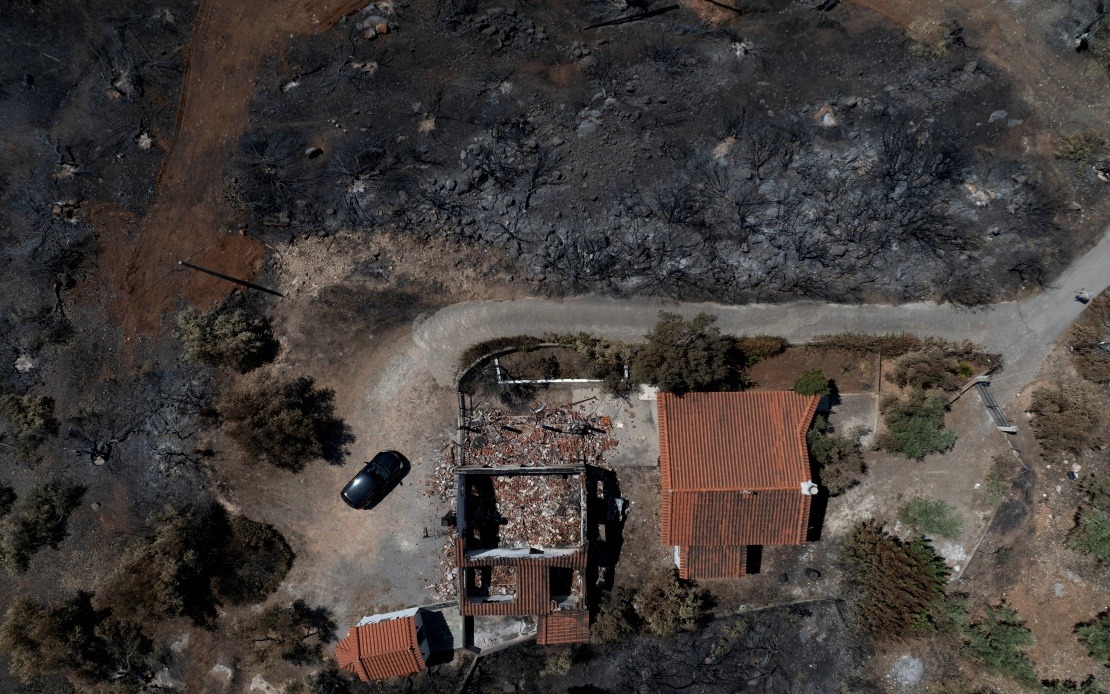
Greece has declared a "red alert" for three critical regions including the capital Athens, signalling an exceptionally dangerous day ahead for wildfire activity. The General Secretariat for Civil Protection, which operates under the Climate Crisis and Civil Protection Ministry, escalated the threat level to Category 4 for August 6, affecting the densely populated Attica region, the neighbouring area of Viotia, and the island of Evia. This represents the maximum alert status in Greece's fire risk classification system, prompting authorities to mobilise all available emergency resources for what officials expect to be conditions of "very high" fire risk.
The activation of this highest alert level triggers a comprehensive response protocol. The National Civil Protection Mechanism immediately shifts into full operational capacity, marshalling personnel from the fire service, police force, and armed forces for coordinated patrols across vulnerable zones. These teams conduct both ground-level surveillance and aerial monitoring to detect ignition sources quickly and prevent fires from gaining momentum in the challenging weather conditions forecast for the region. The visible escalation of state resources reflects the seriousness with which Greek authorities regard the combination of meteorological factors—likely including elevated temperatures, low humidity, and strong winds—that create ideal conditions for rapid fire spread.
To reduce the possibility of human-caused ignitions, the government has implemented preventive restrictions on vehicle movement and public access to forests and other fire-prone areas. Residents have been explicitly warned to avoid activities that could inadvertently spark fires, a blanket precaution that acknowledges how quickly small incidents can escalate into major conflagrations during high-risk periods. These restrictions represent a significant inconvenience to the public but are considered necessary given the potential for catastrophic losses of life, property, and natural resources.
The red alert comes as firefighting crews worked to suppress a blaze that erupted near Koropi, located southeast of Athens. The fire ignited in low vegetation within the Driggia area around mid-afternoon local time on Wednesday, prompting a rapid response that underscores the intensity and unpredictability of wildfire behaviour in the region. The fire service mobilised at least 52 firefighters, including three specialised forest commando units trained specifically for challenging terrain operations, supported by 14 ground vehicles equipped with water and firefighting equipment. The aerial component of the response was equally substantial, involving four helicopters and two dedicated water-dropping aircraft that coordinated through a command helicopter.
The sophistication of Greece's firefighting apparatus reflects lessons learned from previous disasters. The operations centre managing the Koropi fire employed thermal and optical drone cameras to track the fire's progression in real time, providing commanders with detailed intelligence about fire behaviour, wind patterns, and neighbouring structures at risk. Local municipal authorities supplemented the state effort by deploying water tankers to the affected area. An arson investigation team was despatched to determine whether the fire resulted from negligence, deliberate arson, or natural causes—information crucial for understanding fire causation patterns and directing future prevention efforts.
More pressing for authorities has been a larger wildfire that began in Viotia the previous week and subsequently spread westward into Attica, burning across multiple administrative boundaries and creating a complex, evolving incident. According to data from the European Union's Copernicus satellite monitoring system, which provides objective measurements of fire extent, this blaze has consumed approximately 14,424 hectares—equivalent to 35,642 acres. The sheer scale of this fire illustrates how rapidly flames can propagate across the Greek landscape when conditions favour spread, consuming agricultural land, forests, and occasionally reaching inhabited communities.
The human cost of wildfire operations became grimly apparent when two firefighting helicopters collided mid-air during operations against this major blaze on Sunday. The collision killed a Danish pilot and a Greek aerial coordinator, highlighting the extreme risks that aviation crews accept when conducting low-altitude firefighting manoeuvres in smoke-filled environments with limited visibility. These fatalities have cast a sobering shadow over ongoing operations and underscore the dangers inherent in battling large fires under adverse conditions.
For regional observers including Malaysia and Southeast Asia, the Greek situation illustrates the escalating challenges posed by changing climate patterns. Mediterranean regions have experienced increasingly severe fire seasons in recent years, with Greece itself suffering multiple major incidents. The sophistication of Greece's response—combining satellite monitoring, drone surveillance, coordinated ground and aerial assets, and rapid deployment protocols—represents a model that developing nations may aspire to, though such capabilities require substantial investment in training, equipment, and institutional capacity. The collision of firefighting helicopters also underscores how even well-resourced countries struggle with the inherent dangers of emergency response in extreme conditions.
The declaration of a red alert typically lasts from early morning through evening hours and is adjusted based on meteorological forecasts and real-time fire activity. As climate-driven extreme weather events become more frequent globally, Greece's experience provides important lessons about the necessity of maintaining robust civil protection systems, coordinating across jurisdictions, and accepting that some days present unmanageable fire risk requiring preventive closures rather than reactive suppression. For Malaysian readers familiar with seasonal haze and occasional forest fire crises, the Greek situation demonstrates how developed European nations with significant firefighting resources nevertheless face challenges in managing landscape-scale fires driven by adverse meteorological conditions.

