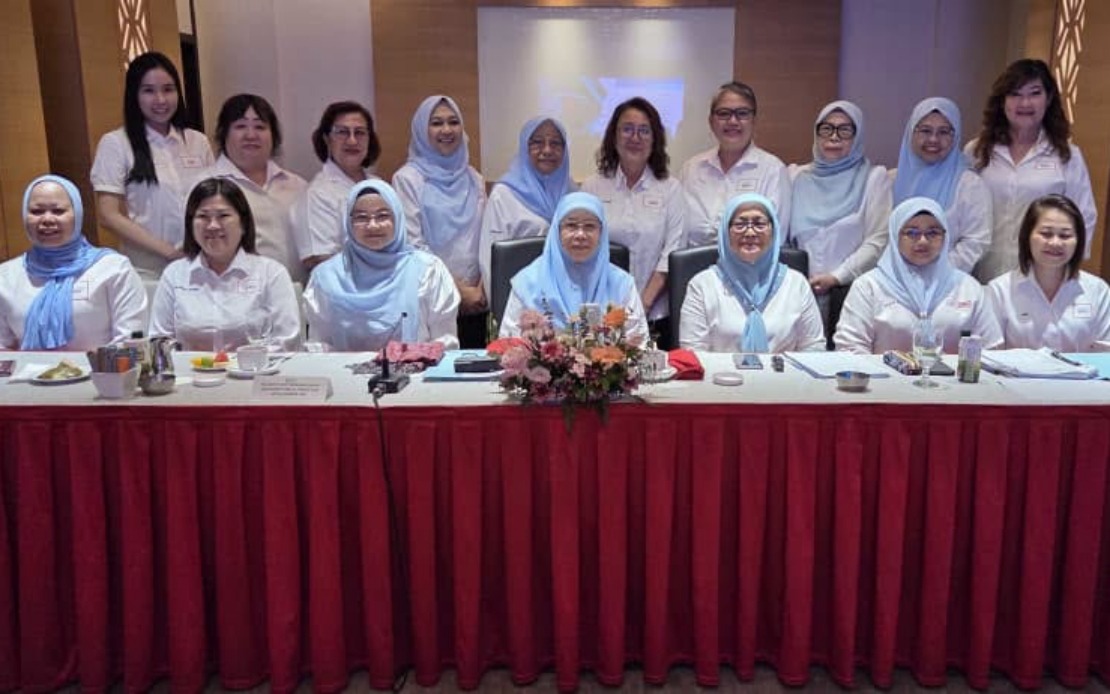
The women's wing of the Gabungan Rakyat Sabah has unveiled an organizational restructuring aimed at fortifying the coalition's campaign machinery and deepening its connection with voters across Sabah. Announced during a meeting held in Kota Kinabalu on July 22, the initiative establishes five specialized units designed to enhance the party's operational capacity while maintaining sustained engagement with communities throughout the state. The move signals growing recognition within GRS of the need for more sophisticated, issue-focused political mobilization as the nation approaches its next general election cycle.
Leading this organizational overhaul is Datuk Seri Azizah Mohd Dun, the chief of the GRS Women's wing, who emphasized that the structural changes reflect broader strategic thinking about how women's organizations can drive political messaging and grassroots activation. The five units—Policy and Strategy, Economic, Health, Information, and Welfare—represent a deliberate attempt to segment the coalition's outreach efforts into specialized domains where women leaders can develop deeper expertise and credibility on specific policy areas that resonate with voters. This compartmentalized approach contrasts with more traditional models that concentrate all organizational functions within a single hierarchical structure, potentially allowing for more agile responses to emerging issues.
Azizah herself will oversee the Policy and Strategy Unit, positioning the wing's leadership at the heart of electoral planning. The Economic Unit has been entrusted to Datuk Surinam Sadikun, reflecting the importance of economic messaging in an era when cost-of-living concerns dominate household conversations across Malaysia. Simi Linggom takes charge of the Health Unit, a particularly sensitive portfolio given ongoing public preoccupation with healthcare accessibility and affordability. The Information Unit, crucial in today's media landscape where narrative control significantly influences electoral outcomes, falls to Datin Atin Belynda Buntot. Meanwhile, Datin Wong Siow Lee @ Mary Wong leads the Welfare Unit, which directly addresses social safety net issues that affect vulnerable populations.
The strategic design of these units reveals calculated priorities within GRS's electoral calculus. By establishing a dedicated Health Unit, the coalition signals recognition that women voters—often primary decision-makers in family health matters—care deeply about healthcare policy and accessibility. The Economic Unit's prominence underscores the coalitional understanding that Sabah's economic development remains contested political terrain, with multiple parties competing to define whose policies best serve prosperity. The Information Unit's existence acknowledges the contemporary reality that controlling political narrative requires dedicated institutional capacity rather than ad-hoc responses.
Azizah's framing of the women's wing's mandate reveals underlying concerns about political momentum and organizational complacency. Her assertion that GRS cannot afford to remain in comfort zones or stay static reflects anxiety about competitive pressures in Malaysian politics, where multiple coalitions and independent candidates continuously vie for electoral advantage. The statement that politics is inherently dynamic carries particular weight in a Malaysian context where coalition alignments have shifted dramatically over recent electoral cycles, and where state-level politics in Sabah remains fluid and factious.
The emphasis on regular meetings, coordinated effort, and readiness for political change suggests the GRS Women's wing intends to function as a nimble political organization capable of adapting messaging and mobilization strategies as circumstances evolve. This stands in contrast to more rigid party structures that may struggle to respond quickly when voters' priorities shift or when competing coalitions launch new initiatives. For Malaysian political observers, such adaptability increasingly determines electoral success, particularly in states like Sabah where demographic diversity and economic volatility create volatile voter behavior.
The timing of this restructuring carries significance beyond mere administrative reorganization. With the next general election's timing remaining uncertain, GRS appears determined to ensure its grassroots machinery operates at full capacity whenever polling day arrives. Structural preparation of this kind—establishing clear reporting lines, defined responsibilities, and specialized expertise—typically precedes intensive campaign periods. The women's wing's formalization may indicate that GRS leadership anticipates electoral competition sooner rather than later.
For Malaysian and Southeast Asian political observers, the GRS Women's wing's reorganization exemplifies broader trends in regional politics where women's organizations have graduated from ceremonial roles to becoming substantive actors in electoral campaigns. This evolution reflects both demographic realities—women constitute roughly half the electorate—and strategic recognition that women voters respond to targeted messaging and specialized outreach. The creation of dedicated units around healthcare, economics, and welfare suggests GRS believes women voters respond more enthusiastically to specific policy commitments than to generic party slogans.
The structural changes also invite reflection on how women's political organizations navigate the tension between advocacy for gender-specific issues and broader coalition maintenance. GRS Women's wing must simultaneously advocate for policies that disproportionately affect women while remaining disciplined coalition members bound by broader party electoral strategy. The unit structure potentially allows for deeper expertise on women-centered issues while maintaining integration with overall party machinery.
Looking forward, the effectiveness of this reorganization will depend on whether the five units develop genuine policy depth and community relationships, or whether they function primarily as organizational staging grounds for mobilization. Malaysian political history contains examples of both outcomes—some women's wings have evolved into powerful policy shapers while others have remained largely ceremonial. The GRS Women's wing's ability to translate structural innovation into substantive political influence will significantly shape coalition competitiveness in coming electoral cycles.

