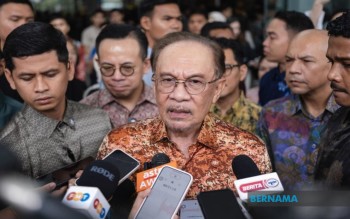
Prime Minister Datuk Seri Anwar Ibrahim has drawn a clear line on tax policy, declaring that the government will not adopt the fundamental structure of the Goods and Services Tax despite ongoing discussions about reforming Malaysia's consumption tax regime. Speaking after opening the TikTok Shop Summit 2026 in Kuala Lumpur, Anwar, who simultaneously holds the Finance portfolio, emphasized that any future tax adjustments must preserve the principle of protecting lower-income households from increased fiscal burden.
The distinction Anwar articulated reflects a careful balance between fiscal pragmatism and political commitment to his MADANI administration's core platform. While he explicitly closed the door on GST's universally applied model, he acknowledged that the government is actively examining ways to improve the current Sales and Service Tax framework. This nuanced position suggests ongoing internal debate about Malaysia's tax competitiveness and revenue generation capacity without abandoning the government's foundational pledge to shield vulnerable populations.
Anwar's firmness on the GST question carries particular significance given Malaysia's recent tax history. The previous administration's implementation of GST in 2015 sparked substantial public backlash over inflation concerns and perceived regressivity, ultimately leading to its replacement with SST in 2018 under the Pakatan Harapan government. The political scars from that episode remain visible, making any GST resurrection extraordinarily difficult despite its potential efficiency benefits. By explicitly ruling out GST's essence rather than the tax itself, Anwar signals to both the business community and ordinary Malaysians that the government recognizes the tax system's social dimensions.
The government has indicated willingness to consider selective GST components or alternative revenue mechanisms such as levies on electronic payment transactions. These options represent middle-ground approaches that might broaden the tax base without implementing GST's blanket approach. Such mechanisms could potentially generate additional government revenue without directly taxing the poorest segments of society, addressing the dual imperatives of fiscal sustainability and social equity that define the MADANI framework.
Malaysia's tax regime has been subject to intense scrutiny as policymakers grapple with mounting public expenditure, infrastructure development requirements, and regional economic competitiveness. The current SST structure, while politically more palatable than GST, has faced criticism from economists who argue it lacks GST's administrative efficiency and may leave the government revenue-constrained. This tension between economic efficiency and political feasibility remains at the heart of consumption tax debates across Southeast Asia, where several countries maintain dual or multiple consumption tax structures.
For Malaysian business, Anwar's comments clarify the government's direction while maintaining some operational flexibility. Companies operating across regional markets where GST operates will continue navigating different tax environments, but the predictability of SST's continuation provides medium-term planning certainty. The potential for SST component adjustments means businesses should remain alert to technical modifications that could affect pricing strategies and compliance requirements.
The broader context of global tax cooperation initiatives adds another layer to Malaysia's consumption tax deliberations. International frameworks increasingly influence national tax policy through commitments on minimum corporate tax rates and information sharing. While consumption tax remains primarily a domestic policy matter, the global trend toward tax base broadening indirectly pressures countries to examine their systems' comprehensiveness and fairness dimensions.
Anwar's reassurance regarding MADANI government principles reflects the administration's political positioning ahead of potential future elections. The government's commitment to protecting lower-income Malaysians through tax policy has become a defining characteristic, distinguishing it from predecessors and framing policy choices within a social contract narrative. Any perceived deviation from this principle risks damaging the administration's political credibility, particularly among constituencies that supported it partly on this basis.
The decision not to revisit GST's fundamentals also acknowledges practical political constraints. Public opinion regarding consumption tax remains sensitive in Malaysia, with many Malaysians still recalling the inflationary pressures associated with the previous GST regime. Reintroducing GST would likely provoke organized opposition and complicate the government's legislative agenda, making the SST modification path considerably more attractive from a political sustainability perspective.
Moving forward, Malaysian policymakers will likely pursue incremental improvements to SST rather than wholesale tax architecture changes. This could include better compliance mechanisms, expanded coverage of previously exempted services, or adjusted rate structures that improve progressivity while maintaining political acceptability. Such adjustments would represent the government's pragmatic approach to balancing fiscal needs with social commitments, a formula increasingly important as Southeast Asian economies navigate post-pandemic recovery amid inflationary pressures and rising public service demands.

