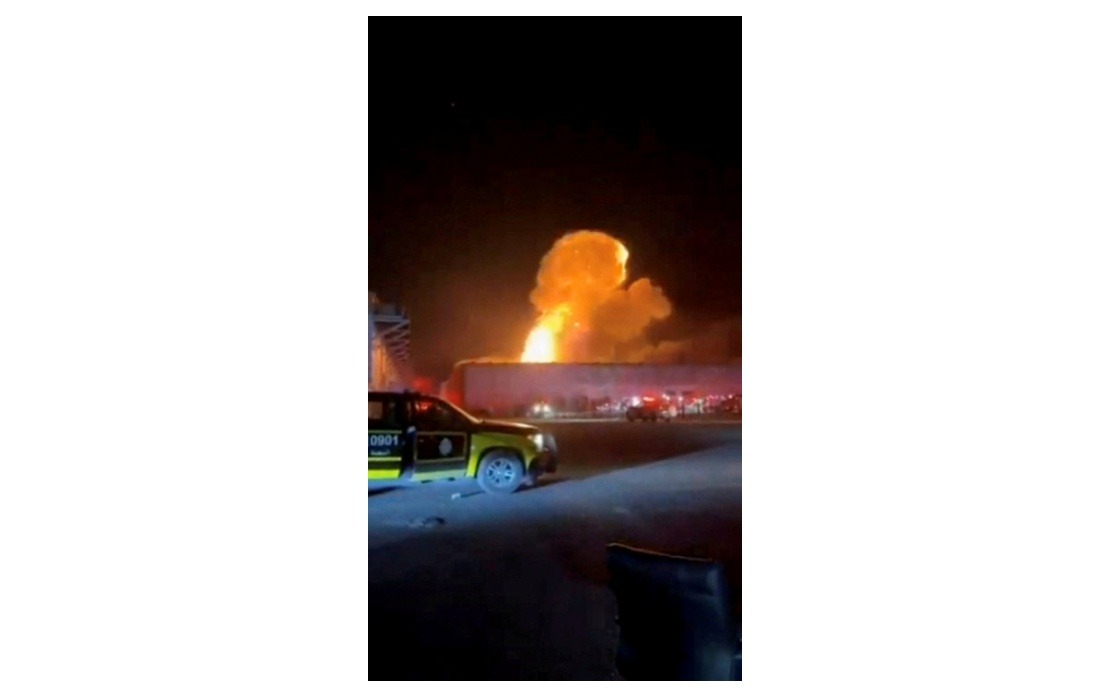
Heightened alarm swept through the Persian Gulf on Friday as three major Arabian Peninsula states simultaneously activated emergency protocols in response to escalating military hostilities. The coordinated activation of warning systems across Bahrain, Qatar, and Kuwait underscored the gravity of the security situation and the immediate threat posed by aerial attacks on one of the world's most strategically important regions.
Bahrain's Interior Ministry was among the first to respond, triggering civil defence sirens across the island nation and instructing residents to seek immediate shelter in designated safe areas. The urgency reflected genuine concern about potential spillover from broader regional conflict, given Bahrain's proximity to Iran across the Persian Gulf and its hosting of critical US military infrastructure, including the headquarters of the US Navy's Fifth Fleet.
Qatar's authorities issued similarly serious warnings, directing the public to remain indoors and maintain positions within secure locations as the nation elevated its security threat assessment to high alert status. The Interior Ministry's explicit guidance signalled that officials considered the danger sufficiently imminent to warrant immediate preventive measures for civilian populations, even as the specifics of potential targets remained unclear to the public.
Kuwait, situated at the northern edge of the Gulf, faced the most direct threat, with its air defence systems actively engaging what the national military described as hostile missile and drone platforms. The Kuwaiti army confirmed that these systems were responding to attacks but declined to provide operational details that might compromise ongoing defence efforts. The activation of warning sirens throughout Kuwaiti territory meant civilians experienced the practical reality of military conflict in real time, seeking shelter as defensive operations unfolded overhead.
These developments represent a significant escalation in a cycle of tit-for-tat military engagement that has characterised the region since late February, when coordinated US and Israeli operations targeted Iranian military installations. Iran subsequently retaliated with its own barrage of missiles and unmanned aircraft directed at Gulf states hosting American forces, transforming the historical US-Iran rivalry into a kinetic conflict with direct consequences for civilian populations across multiple countries.
The Iranian military claimed responsibility for fresh drone strikes aimed at American military assets in Bahrain, adding another layer to the escalating confrontation. These claims, if substantiated, would represent a deliberate targeting of US positions within allied territory, a significant departure from previous episodes of regional tension that typically remained more constrained.
For Malaysia and other Southeast Asian nations, the intensification of Gulf tensions carries serious implications. The Persian Gulf remains crucial to regional trade and energy security, with Malaysian firms and citizens operating throughout the region. Disruptions to shipping through the Strait of Hormuz—a critical chokepoint through which flows roughly one-third of global maritime petroleum traffic—would reverberate through Asian economies dependent on stable energy supplies. Malaysian energy security, manufacturing supply chains, and regional commerce all hinge on maintaining freedom of navigation through these waters.
The situation also illustrates the precarious state of diplomatic efforts intended to contain the conflict. Although Iran and the United States reportedly achieved a Pakistani-mediated framework agreement last month aimed at establishing a ceasefire and pursuing long-term peace arrangements, that understanding proved insufficient to prevent renewed hostilities. The agreement apparently lacks mechanisms robust enough to prevent tactical escalation or breaches by either side, suggesting fundamental disagreements persist regarding interpretation and implementation of any accord.
Recent tensions specifically centred on the Strait of Hormuz have introduced a new dimension to US-Iran hostilities. Rather than focus exclusively on broader geopolitical competition, the two powers have engaged in direct military exchanges in waters Malaysia and other maritime nations depend upon for commerce and energy. This shift to active combat operations in chokepoints distinguishes the current phase from previous periods of standoff or proxy conflict.
The simultaneous activation of emergency protocols across three different states demonstrates how interconnected Gulf security has become. An attack on one nation's airspace now triggers immediate responses in neighbouring jurisdictions, reflecting both technological reality—missiles and drones travel quickly across the small distances separating Gulf states—and the political reality that several Gulf nations host American military facilities and personnel.
For regional observers, the events underscored the limitations of traditional deterrence frameworks. Despite the presence of advanced air defence systems, coalition military capabilities, and supposed diplomatic understandings, escalation continued unabated. The failure of the Pakistani-mediated agreement to prevent resumed hostilities raises questions about whether any diplomatic framework can genuinely contain the deep strategic incompatibilities between Washington and Tehran.
The broader implication for Southeast Asia involves recognizing that even distant regional conflicts generate ripple effects through energy markets, shipping routes, and economic ties. Malaysia's economic interests in stable Gulf conditions mean that American-Iranian tensions warrant careful monitoring despite their geographic distance. The activation of emergency sirens in Bahrain, Qatar, and Kuwait Friday morning represented not merely local crises but developments with potential global ramifications that Malaysian policymakers and businesses cannot afford to ignore.

