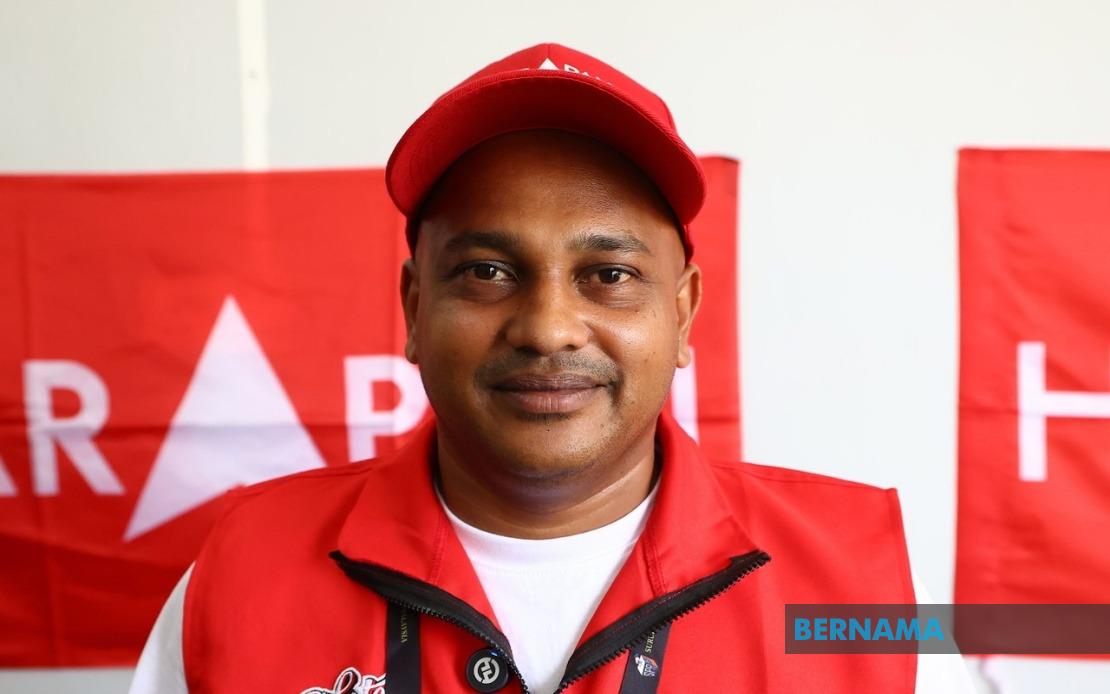
Guna Balakrishnan, contesting for the Layang-Layang state seat as a Pakatan Harapan candidate in the Johor state election, is centering his campaign on tackling long-neglected infrastructure challenges and stimulating economic growth in the predominantly agricultural constituency. Speaking in Kluang ahead of the July 11 polling date, the PH candidate outlined a development strategy that would move beyond piecemeal solutions to address the systemic issues hampering residents' livelihoods and quality of life.
The infrastructure deficiencies plaguing the area are not recent phenomena. Through extensive door-to-door canvassing, Balakrishnan has identified flash flooding and inadequate street illumination as the two most pressing and persistent complaints from constituents, problems that have remained unresolved for more than a decade. These grievances reflect a broader pattern of underinvestment in basic services across rural constituencies, an issue that carries particular weight given the region's demographic composition and economic vulnerabilities.
Layang-Layang's economy centres on agriculture, with the constituency surrounded by FELDA settlements, plantation holdings, and farming villages. This reliance on primary production leaves residents, particularly younger generations, with limited local career pathways. The lack of industrial development—notably the absence of modern manufacturing facilities, processing plants, or semiconductor operations—has contributed to a brain drain phenomenon. Young people seeking better employment prospects and higher earning potential have been forced to relocate to more economically dynamic urban centres, a pattern that weakens community cohesion and deprives the constituency of human capital needed for growth.
Balakrishnan's vision prioritises revitalising local economic activities to retain youth and create meaningful employment opportunities without requiring residents to uproot themselves. This approach recognises that sustainable development requires not merely infrastructure fixes but a comprehensive economic transformation. By attracting or facilitating investment in value-added industries and modern manufacturing, the constituency could diversify its economic base while leveraging its existing agricultural foundations. Such a strategy would position younger residents to build careers and families in their home communities.
The candidate's emphasis on direct community engagement reflects a campaign methodology focused on understanding granular local concerns rather than engaging in broader political messaging. Face-to-face interactions form the backbone of his outreach strategy, with plans to visit every area within the constituency to gather firsthand accounts of residents' priorities and challenges. This ground-level approach contrasts with campaigns reliant primarily on top-down communication or political rhetoric divorced from community realities.
Balakrishnan faces a competitive three-cornered contest against Chua Jian Boon of Barisan Nasional and Abd Mutalip Abd Rahim, the incumbent representing Perikatan Nasional. This multi-candidate race reflects the fragmented political landscape characterising many Johor constituencies, where no single coalition commands overwhelming dominance. The outcome will depend significantly on which candidate convinces voters that their platform offers the most credible pathway to addressing accumulated grievances.
Integral to Balakrishnan's messaging is the Malaysia MADANI framework, the government's aspiration programme emphasising shared prosperity and inclusive development. By linking local infrastructure and economic concerns to this national vision, he attempts to frame improvements in Layang-Layang not as parochial benefits but as manifestations of broader governance principles. Whether this framing resonates depends on voters' perception that Pakatan Harapan can deliver tangible results, particularly given decades of unresolved infrastructure issues suggesting systemic implementation challenges.
The campaign entered its third week with growing grassroots momentum, though Balakrishnan recognised the need to intensify efforts across digital and social media platforms to expand his reach. In an electoral environment where rural constituencies increasingly use online channels to access information, digital strategy has become as important as traditional campaigning. The ability to communicate effectively through these channels allows candidates to reinforce messages and counter competing narratives more efficiently than geography-dependent approaches alone permit.
The Layang-Layang race encapsulates broader challenges facing Malaysian rural constituencies: underdeveloped infrastructure, economic stagnation, and youth out-migration. These interconnected problems require integrated solutions addressing both immediate infrastructure deficits and longer-term economic restructuring. Voters will ultimately decide whether Balakrishnan's approach—emphasising systemic development and community-centred planning—offers better prospects than alternatives. The July 11 polling will determine not only representation for the 16th Johor state assembly but also signal which governance philosophies residents believe most likely to reverse decades of relative decline in their constituencies.

