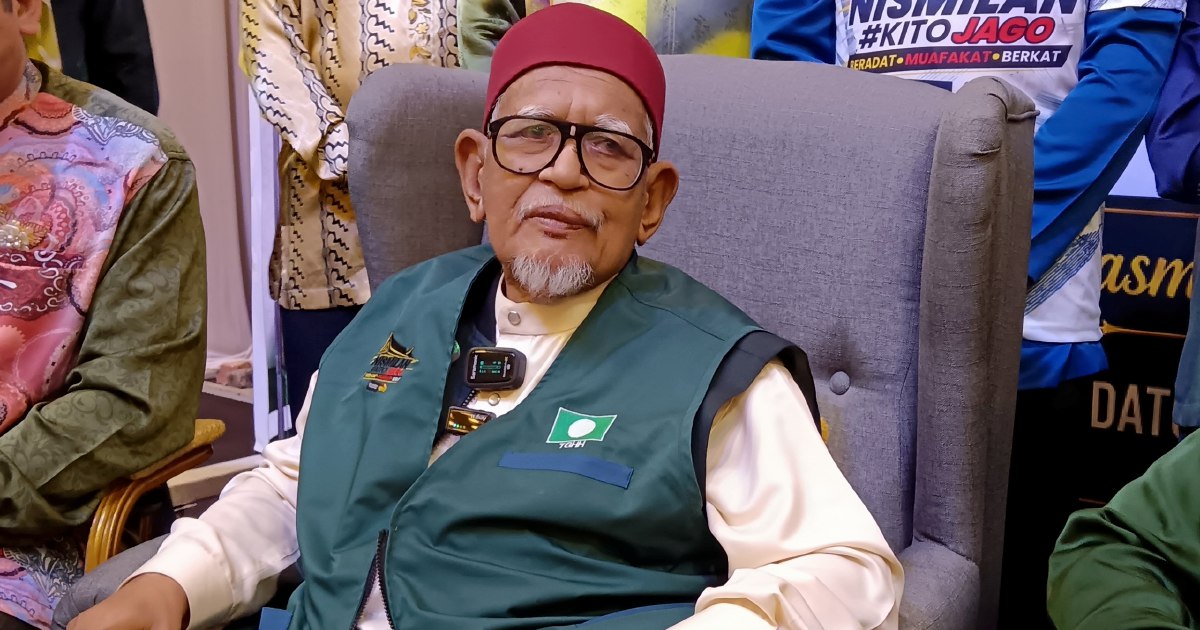
Tan Sri Abdul Hadi Awang, the president of PAS, has categorically dismissed characterisations by his counterpart Tan Sri Muhyiddin Yassin that Perikatan Nasional has grown toxic whilst under the Islamist party's stewardship. Speaking in Jempol, Hadi sought to redirect the narrative away from PAS, instead suggesting that tensions within the coalition stem from the conduct of other constituent members, particularly Bersatu.
The exchange between these two prominent figures underscores deepening fractures within PN, a coalition that was initially positioned as an alternative to the ruling Pakatan Harapan government. What began as a strategic partnership combining Bersatu, PAS, and various other parties has increasingly become characterised by internal squabbling, mutual recriminations, and competing visions for the coalition's direction and electoral strategy. This deterioration is particularly significant given PN's role as a major opposition bloc with considerable parliamentary representation.
Hadi's rejection of the toxicity claim reflects PAS's broader defensive posture within the coalition. The Islamist party, which has substantially expanded its political footprint and now plays a leading role in PN's governance and strategy, appears unwilling to accept responsibility for any perceived problems. Instead, the PAS leadership frames itself as a stabilising force that other members have undermined through various actions and statements that the party views as inconsistent with coalition principles and objectives.
The timing of this public exchange is particularly telling, coming during a period when PN has sought to position itself as a viable alternative to the incumbent federal government. Such internal disputes risk damaging the coalition's credibility with voters and weakening its ability to present a unified platform ahead of electoral contests. Political observers in Malaysia have long noted that opposition coalitions are particularly vulnerable to factionalism, as they lack the institutional leverage and resource allocation mechanisms that government provides.
Muhyiddin's assertion that PN has become toxic suggests a fundamental disconnect between his vision for the coalition and its current trajectory under heightened PAS influence. As the founder and former leader of Bersatu, Muhyiddin may feel that the party has been gradually sidelined or marginalised within the broader PN structure, particularly as PAS has consolidated its political dominance. This power dynamic shift has likely created significant tensions between key figures within the coalition.
The specific allegation of toxicity carries weight in Malaysian political discourse, where coalitional stability is paramount to electoral success. Should the public increasingly perceive PN as fractious or internally divided, voters may gravitate toward other alternatives, including potential reconciliation with Pakatan Harapan or new political formations. For the coalition's component parties, maintaining at least a veneer of unity becomes essential for retaining bargaining power and avoiding marginalisation.
Hadi's counterattack—suggesting that Bersatu bears responsibility for coalition problems—reveals a strategic calculation that PAS should be viewed as the victimised party, threatened by Bersatu's alleged destabilising behaviour. This framing allows PAS to maintain moral authority whilst avoiding substantive engagement with Muhyiddin's specific critiques. By deflecting blame onto Bersatu, Hadi attempts to consolidate support from other PN members who may harbour their own grievances against the party founded by Muhyiddin.
The broader context for this dispute includes ongoing tensions over PN's cooperation with the federal government, seat allocations, policy direction, and the distribution of political spoils. Different coalition members have pursued divergent strategies regarding engagement with Kuala Lumpur, with some favouring conditional support whilst others advocate sharper opposition. These strategic differences have created operational challenges and contributed to public perceptions of disunity.
For Malaysian voters and regional observers, the internal dynamics of PN warrant close attention. The coalition represents a significant political force, commanding substantial parliamentary numbers and holding power in several state governments. Its stability or instability has direct implications for governance at both federal and state levels, affecting policy implementation and resource allocation across multiple sectors. Conversely, a coalitional collapse could trigger unpredictable political realignment that might reshape Malaysia's competitive landscape.
The Hadi-Muhyiddin disagreement also reflects broader ideological and pragmatic differences within the coalition. PAS, with its explicitly Islamist orientation, brings a particular worldview and set of priorities to PN's platform, which some stakeholders may view as constraining political flexibility. Muhyiddin and Bersatu, by contrast, have historically positioned themselves as more inclusive and multiethnic, creating potential friction over representation and messaging.
Looking forward, whether PN can reconcile these tensions or whether further deterioration will occur remains uncertain. Both Hadi and Muhyiddin command significant support bases and control institutional resources, meaning that neither party can easily dominate the other without risking coalition collapse. This stalemate suggests that PN may continue experiencing periodic eruptions of mutual criticism and accusations, even whilst nominally remaining unified.
The implications extend beyond PN's internal machinations to affect the broader Malaysian political ecosystem. How the coalition navigates these challenges will influence voter confidence in opposition politics, the viability of alternative government formation, and ultimately the competitive dynamics shaping Malaysian democracy. For now, the public dispute between these two senior figures serves as a stark reminder that Malaysia's contemporary politics remains characterised by personalised leadership, factional rivalry, and institutional fragility.

