The attendance of Sabah Chief Minister Datuk Seri Hajiji Noor and senior Gabungan Rakyat Sabah (GRS) figures at the 2026 PKR National Congress in Melaka on August 15 has been interpreted as a tangible demonstration of deepening ties between the state administration and the federal government, moving beyond traditional partisan divides to focus on shared developmental objectives. The symbolic importance of this gathering lies in its reflection of a political climate where cooperation on substance can coexist with separate party structures, a nuance often lost in Malaysian political discourse where state and federal divisions are typically portrayed as adversarial.
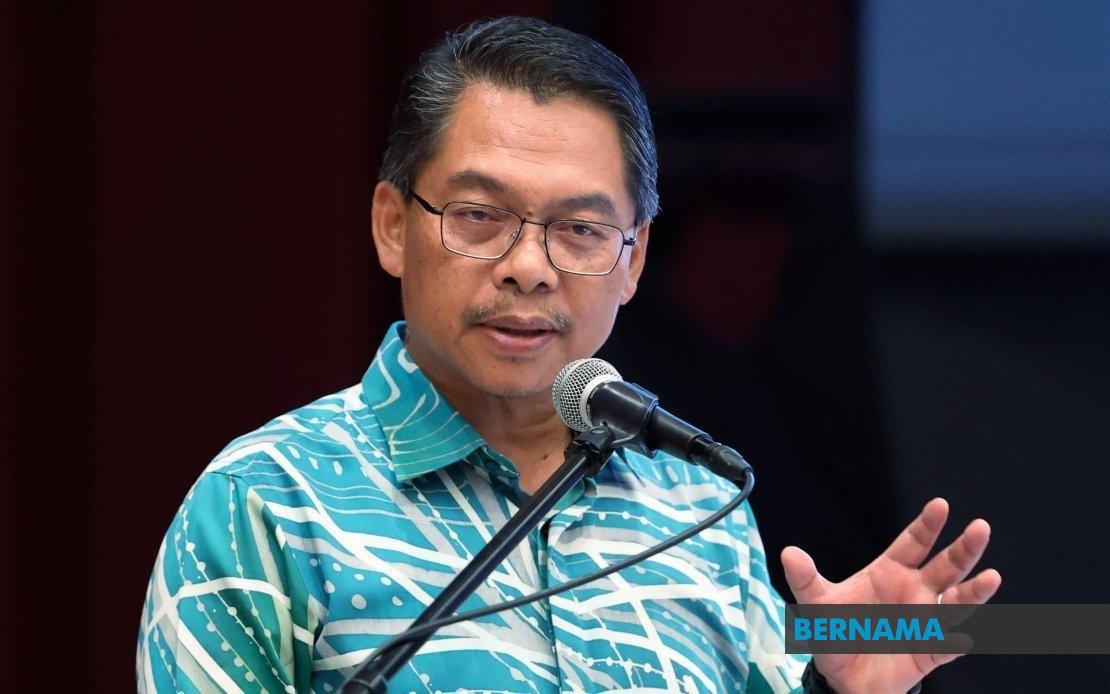
Datak Mustapha Sakmud, who chairs the Sabah PKR Leadership Council, characterised the attendance as evidence that the cooperative spirit extends well beyond ceremonial politics. Speaking on behalf of the party at the congress, Mustapha emphasised that the partnership encompasses broader governmental functions and collaborative frameworks that touch multiple sectors affecting public welfare. This framing is significant because it suggests that the cooperation operates on the premise that effective governance requires alignment regardless of whether parties hold opposing colours on the national stage.
The core of Mustapha's position centres on translating political stability into tangible benefits for Sabah's population. He articulated that ensuring economic opportunities, improving infrastructure, and addressing quality-of-life concerns represent the shared agenda uniting these different political players. For Sabah residents, this messaging carries real implications—it suggests that development frameworks, resource allocation, and service delivery improvements are being coordinated between state and federal levels rather than stalled by political friction. The emphasis on delivering material improvements reflects a pragmatic approach to governance that prioritises outcomes over partisan competition.
Musapha, simultaneously serving as Minister in the Prime Minister's Department overseeing Sabah and Sarawak Affairs, positioned the MADANI Government under Prime Minister Datuk Seri Anwar Ibrahim as bearing institutional responsibility for ensuring that national development reaches all regions equitably. This framing transfers accountability directly to federal leadership for how development initiatives account for regional differences and local needs. For Malaysian observers, particularly those in states outside the peninsula's central corridor, such explicit acknowledgment of regional variation in development strategy addresses a persistent grievance about one-size-fits-all federal policies that may not suit Sabah's geographic, demographic, and economic realities.
A particularly consequential dimension of Mustapha's statement involves the Malaysia Agreement 1963 (MA63), the constitutional instrument defining Sabah and Sarawak's place within the Malaysian federation. His commitment that PKR would champion implementation of MA63 within a framework respecting the states' special constitutional status touches a deeply sensitive historical and political issue. Sabah has long contested the extent to which its original federal compact has been honoured, with disputes ranging from revenue-sharing arrangements to immigration autonomy. Mustapha's explicit invocation of this matter signals that federal partnership with the Sabah government now includes active engagement with these constitutional grievances, rather than dismissing them as separatist sentiment.
The delegation of GRS representatives who attended the congress underscored the depth of this engagement. Deputy Chief Minister Dr Joachim Gunsalam, Rural Development Minister Datuk Rubin Balang, Youth and Sports Minister Datuk Nizam Abu Bakar Titingan, and Education and Science Minister Datuk James Ratib represented the operational core of Sabah's state administration. Their presence indicated that this was not a courtesy appearance by Hajiji alone but rather a coordinated attendance by the government apparatus. This distinction matters because it signals institutional commitment rather than individual diplomatic gesture.
Musapha framed the attendance as a calculated political message to Sabah's population, arguing that political differences should not prevent substantive cooperation on matters affecting people's lives. This framing tackles a persistent Malaysian voter concern: the perception that party affiliation often supersedes governance effectiveness. For Sabah voters weighing electoral choices, seeing GRS and PKR leaders sitting together at the same congress potentially normalises cross-party collaboration on development matters, creating space for voters to judge parties on delivery rather than solely on tribal loyalty.
The 2026 PKR National Congress itself, themed 'Memugar Reformasi, Membina MADANI' (Nurturing Reform, Building MADANI), provided the venue for this demonstration. Prime Minister Anwar Ibrahim's dual role as PKR president and head of the federal government meant that his official opening of the congress lent government authority to the proceedings. For Sabah's political class, this created an opportunity to showcase their integration into the MADANI framework and federal planning structures rather than operating as a peripheral state government.
Context matters here for understanding Malaysian politics more broadly. Sabah's historical position as a negotiated partner in the federation, rather than a territory incorporated through colonial unification, has produced a distinct political culture where state autonomy carries constitutional weight. The GRS coalition that governs Sabah operates outside the traditional Pakatan Harapan-Barisan Nasional binary that dominates peninsula politics, meaning its cooperation with PKR requires deliberate bridge-building. The August 15 congress attendance suggests that federal strategists view integration of Sabah's GRS leadership into MADANI governance structures as a priority.
For Southeast Asian observers tracking Malaysian political stability, this cooperation carries implications. Sabah's geographic position bordering Philippines and Indonesia, combined with its significant resource wealth and distinct demographic composition, means that internal political tensions can have regional security dimensions. Evidence of functional federal-state cooperation reduces friction points that external actors might exploit. Conversely, it strengthens Kuala Lumpur's capacity to manage border issues, resource allocation, and regional diplomacy with a unified governmental stance.
The broader arc of Malaysian politics in recent years has involved gradual coalition realignment. The MADANI framework, introduced by the Anwar Ibrahim administration, explicitly incorporates multiple state governments and parties that operated outside traditional opposition blocs. Sabah's GRS integration into this ecosystem represents a significant shift from the period when state governments operated in distinct silos. Whether this translates into sustained coordination or represents a temporary convergence of interests will bear watching, particularly as economic conditions evolve and resource disputes potentially re-emerge.
Moving forward, the practical test of this cooperation will be evident in how federal development allocations flow to Sabah, how MA63 implementation disputes are resolved, and whether GRS retains autonomy in state-level decision-making. Mustapha's emphasis on ensuring that development remains inclusive and equitable suggests at least rhetorical commitment to protecting state interests within federal frameworks. For Sabah residents, translating these political statements into improved schools, roads, healthcare, and economic opportunities represents the genuine measure of whether the August 15 congress attendance reflects durable cooperation or symbolic positioning for electoral benefit.

