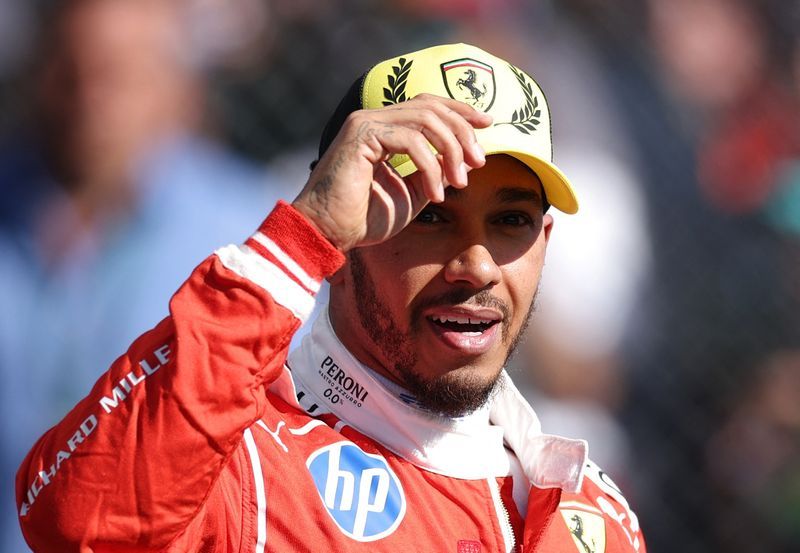
Lewis Hamilton enters the Hungarian Grand Prix with momentum firmly at his back, positioning himself for a potentially commanding performance at the Hungaroring before Formula One's mid-season shutdown. The Ferrari driver has transformed his championship picture in recent weeks, clawing his way back into title contention after a difficult start to the season, and Budapest represents familiar hunting ground where his record speaks volumes about his dominance at the venue.
The broader narrative at this stage of the season, however, centres on the dysfunction within Mercedes' championship challenge. George Russell's mechanical struggles have become a persistent distraction in the paddock, with his car mysteriously losing substantial time along the straights—a concerning development for a team that entered 2024 as championship favourites. The performance gap has become particularly acute when measured against his 19-year-old Italian teammate Kimi Antonelli, who has accumulated six victories in just ten races and maintains a commanding 50-point lead in the standings. Russell's recent retirement in Belgium, his third failure to score this season, starkly illustrates the depth of his technical problems and the resulting toll on Mercedes' title aspirations.
Russell's predicament stands in sharp contrast to his pre-season billing as a consistency machine and title favourite, making his current 50-point deficit to Antonelli especially damaging psychologically. The Briton's absence from the points in Belgium allowed Hamilton to reclaim the runner-up position overall, though at 45 points adrift of the Mercedes leader, the seven-time world champion faces an uphill climb in the championship mathematics. Nevertheless, the narrative shifting towards Hamilton's strength rather than Mercedes' weakness represents a significant psychological advantage as the season enters its crucial mid-point.
Hungary holds almost mythical status in Hamilton's personal record books. His eight previous victories at the Hungaroring represent an unparalleled achievement at any single circuit, and securing another win this weekend would bring him within one victory of equalling his all-time record of nine wins at Silverstone—a remarkable feat given the circuit's technical complexity. Beyond the raw statistics, the venue carries particular significance as the location of Hamilton's most recent pole position, dating back to 2023, suggesting the car setup and driving style requirements suit his approach. For Ferrari, securing a strong result here before the August break would provide crucial momentum heading into the second half of the season.
Ferrari team principal Fred Vasseur, however, struck a cautious tone when assessing his team's prospects at Budapest, demonstrating the measured approach necessary when dealing with the unpredictable nature of Formula One competition. The Hungaroring presents a fundamentally different challenge compared to recent venues like Spa, where engine power and straight-line speed traditionally dominate. Vasseur emphasized that while Ferrari's engine deficit becomes less critical at the twistier Budapest circuit, assuming success would be foolish; the team must approach the weekend with fresh perspective and meticulous attention to setup details and tyre management rather than relying on any perceived advantages. This caution reflects hard-earned wisdom about championship fighting where complacency regularly proves costly.
Charles Leclerc has emerged as Ferrari's form driver over the recent races, securing victory at Silverstone and demonstrating podium consistency with a second-place finish in Belgium. Hamilton's own recent record shows a mixed picture, though he claimed victory in Barcelona and has featured regularly among the points finishers. The comparison between the two Ferrari drivers suggests that consistency and circuit-specific strengths will likely determine the outcome rather than any broader mechanical advantage, placing emphasis on driver skill and tactical execution.
Young sensation Antonelli painted a picture of a wide-open contest, suggesting that the Hungarian Grand Prix might develop into a four-way battle involving not only Ferrari and Mercedes but also Max Verstappen's Red Bull and the resurgent McLaren team. At a circuit where traditional power advantages diminish and energy deployment becomes less critical, the playing field narrows considerably, potentially favoring cars that excel through technically demanding corners and require superior driver precision. Antonelli's characterization of Budapest as somewhat similar to Monaco—a circuit where outright driving ability matters enormously—suggests that this weekend could serve as an exceptional barometer of true competitive strength divorced from straight-line performance disparities.
McLaren arrives in Budapest with a comprehensive package of upgrades designed to close performance gaps evident at other circuits. The team is introducing a new floor and aerodynamic components alongside testing of an experimental rear wing configuration, suggesting technical innovation aimed at extracting every available tenth. The organization's willingness to continue development work while also fielding reserve driver Leonardo Fornaroli—the previous year's Formula Two champion—in Friday morning practice demonstrates the squad's commitment to extracting maximum information from every available opportunity. Oscar Piastri's absence from the morning session appears strategically calculated.
Aston Martin's technical timeline adds another layer to the competitive picture, with the team bringing a long-delayed chassis upgrade this weekend while deferring the latest Honda engine upgrade until the Dutch Grand Prix at the month's end. This staggered approach to major component introduction reflects the complexities of Formula One development cycles, where timing such improvements for maximum benefit requires careful strategic consideration. The Hungarian circuit's characteristics may not fully suit the chassis upgrade benefits, yet securing baseline data before the August break remains valuable for the team's overall progress.
As the championship enters its crucial second half, the Hungarian Grand Prix will provide essential clarity about the true competitive order heading into the August break. Hamilton's historical dominance at Budapest, combined with Ferrari's recent form, suggests a potentially compelling narrative. Yet the complexity of modern Formula One, where mechanical reliability, setup precision, and driver execution intersect unpredictably, means that no outcome remains certain. For Malaysian and Southeast Asian Formula One enthusiasts, this weekend offers a microcosm of the sport's intensity—a moment where championship narratives can shift dramatically within a single afternoon.

