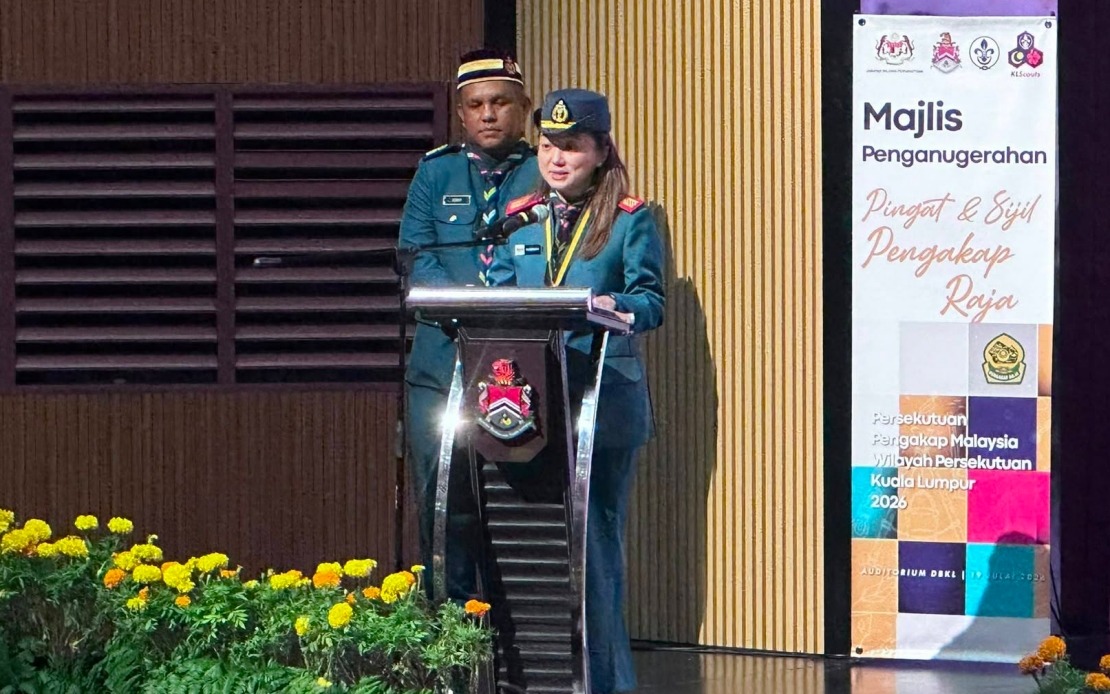
Hannah Yeoh, the Minister in the Prime Minister's Department (Federal Territories), has assumed the presidency of the Federal Territories State Scouts Council following her proclamation at a ceremony held at City Hall Auditorium in Kuala Lumpur on July 19. The appointment underscores the growing emphasis on youth leadership development within Malaysia's federal territory governance structure, positioning scouting as a key vehicle for building disciplined young leaders equipped with practical skills and civic responsibility.
The proclamation ceremony doubled as the venue for the 2026 Kuala Lumpur Federal Territory King's Scout Medal and Certificate Presentation Ceremony, bringing together senior government officials and scouting leadership. The timing reflects a coordinated push by the federal administration to elevate the profile of the scouting movement while recognising outstanding achievements among Malaysia's young scouts. Simultaneously, Kuala Lumpur City Hall Executive Director Rosli Nordin was proclaimed chairman of the Kuala Lumpur Federal Territory State Scouts Council, creating a two-tiered leadership structure that bridges ministerial oversight with municipal implementation.
Yeoh's commitment to the scouting cause became immediately evident through a substantial financial pledge. She announced a total ministerial allocation of RM20,000 directed towards expanding scouting activities within the Federal Territories, with the funds strategically divided to address different aspects of youth engagement. The first tranche of RM10,000 was earmarked for the Kuala Lumpur Federal Territory branch of the Scouts Association of Malaysia to organise additional programmes during school holiday periods, recognising that structured activities during breaks are critical for sustained youth participation and skill development.
Recognising potential barriers to participation, Yeoh subsequently announced an additional RM10,000 allocation specifically targeting youth who face obstacles in accessing conventional scouting programmes. This second allocation demonstrates awareness of socioeconomic disparities affecting youth participation in extracurricular activities across urban Malaysia. By explicitly directing funds toward inclusion, the minister signalled that scouting should not remain the preserve of privileged communities but rather serve as a democratising platform for character building and leadership training across diverse economic backgrounds.
The ceremony honoured 58 recipients of the King's Scout Certificate, scouting's most prestigious individual award. This distinction reflects the recipients' successful navigation of rigorous assessment criteria encompassing leadership capacity, technical competency, personal resilience, community service contributions, and demonstrated commitment to Scout principles. Each certificate holder represents the culmination of sustained effort and exemplifies the movement's mission to cultivate young citizens capable of meeting society's leadership challenges. The King's Scout designation carries significant weight within Malaysia's youth development ecosystem, serving as tangible validation of character formation and competence.
Beyond individual achievement awards, recognition extended to experienced mentors driving the movement forward. Seventy-five scout leaders received Chief Scout's Commendation Certificates, acknowledging their instrumental role in fostering the next generation of civic-minded youth. An additional 108 scout leaders were presented with Federal Territories Scouts Wangsa Certificates, representing broader institutional appreciation for the volunteer corps sustaining scouting operations at grassroots level. These multiple tiers of recognition reflect the movement's understanding that sustainable youth development depends upon attracting and retaining committed adult mentors.
The Malaysian Scouting Movement positions the King's Scout award as the highest achievement within its framework, functioning as proof that recipients possess the discipline, integrity, and service orientation essential for effective civic leadership. For young Malaysians pursuing this credential, the recognition carries implications extending beyond the scouting context itself, often serving as a differentiating credential in university applications and early career development. The certificate thus represents not merely personal accomplishment but preparation for elevated responsibility within professional and civic spheres.
The gathering attracted senior figures across Malaysia's governance and scouting hierarchies. Major General Datuk Prof Dr Mohd Zin Bidin, in his capacity as Chief Scout of Malaysia, lent institutional weight to the proceedings, while Tan Sri Johari Abdul, serving simultaneously as National Scout Council member and Dewan Rakyat Speaker, bridged scouting and parliamentary spheres. Their attendance underscored the movement's integration within Malaysia's broader institutional framework rather than its existence as an isolated youth organisation. Parliamentary leadership's engagement with scouting reflects recognition that the movement contributes meaningfully to national development objectives.
Yeoh's elevation to council presidency occurs within a context of sustained federal government investment in youth development infrastructure. The Federal Territories, encompassing Kuala Lumpur, Labuan, and Putrajaya, represent Malaysia's administrative and symbolic centre, making their scouting programmes visible exemplars of national youth policy. Enhanced ministerial focus on these territories' scouting activities carries implications for movement visibility and resource availability across the broader federation, potentially influencing state-level commitment to youth programmes.
The RM20,000 allocation, while modest in absolute terms, carries symbolic significance within Malaysia's civic funding landscape. Directed specifically toward expanding holiday programming and removing financial barriers to participation, the commitment demonstrates governmental recognition that youth engagement requires deliberate resource allocation and inclusive design. For Malaysian scouting, which operates primarily through volunteer effort and modest institutional budgets, such targeted ministerial support can meaningfully expand programme scope and accessibility.
Moving forward, Yeoh's presidency will likely emphasise scouting's contribution to developing young people equipped with leadership capabilities, practical skills, and commitment to community service. As Malaysia navigates complex development challenges, the scouting movement's emphasis on character formation and civic responsibility resonates with broader national priorities. The ceremony thus represented not merely ceremonial recognition but affirmation of scouting's relevance within contemporary Malaysian society and the government's commitment to sustaining youth development through established institutional channels.

