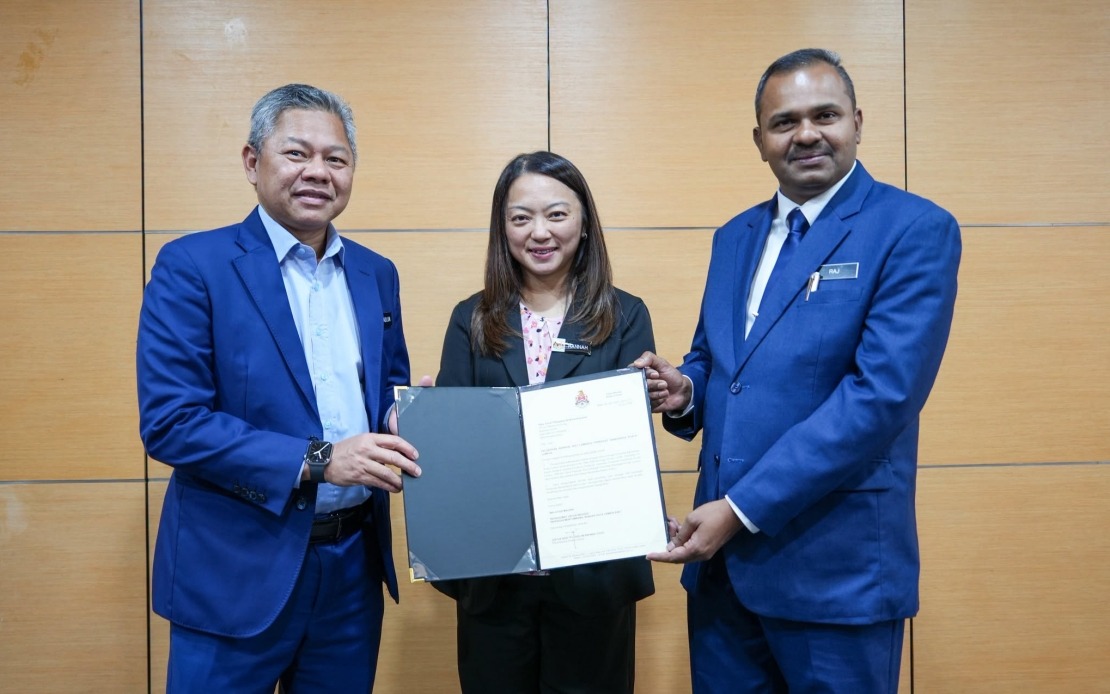
Federal Territories Minister Hannah Yeoh has offered her congratulations to S. Thiyagaraj following his appointment to the Kuala Lumpur City Advisory Board, marking another step in expanding the municipal advisory structure that guides the capital's development. The announcement came during a formal handover ceremony where Kuala Lumpur Mayor Datuk Seri Fadlun Mak Ujud presented Thiyagaraj with his official appointment letter, underscoring the significance the city administration places on broadening stakeholder engagement in governance matters.
Thiyagaraj brings substantial professional experience to the board, having spent nearly two decades in public service before his recent departure from government employment. His career trajectory within the Prisons Department extended from 2005 through 2023, during which he progressed to the rank of Assistant Superintendent of Prisons, specializing in technical intelligence and investigative operations. This background in law enforcement and institutional management suggests the board is seeking individuals with strong administrative credentials and experience navigating complex organizational structures.
In her statement, Hannah emphasized the pivotal role advisory boards play in municipal governance, describing the advisory structure as essential to ensuring that city administration remains responsive to resident concerns while maintaining operational efficiency. She characterized Thiyagaraj's appointment as an opportunity to strengthen the mechanisms through which the Mayor receives counsel on contentious and routine governance matters alike, from urban planning considerations to service delivery improvements. The minister's framing reflects broader trends across Malaysian local government toward incorporating external perspectives in decision-making processes.
The minister expressed confidence in Thiyagaraj's ability to fulfill his responsibilities with the integrity and professionalism expected of board members serving the capital. Hannah's remarks suggested that the appointment process had been carefully considered, with emphasis placed on identifying individuals capable of offering substantive contributions rather than nominal participation. She called on Thiyagaraj to approach his tenure as an opportunity to serve the broader public interest rather than narrow constituencies.
The Kuala Lumpur City Advisory Board functions as an institutional mechanism through which the municipality solicits guidance on administrative and developmental priorities. As Hannah noted, members bear responsibility for ensuring that governance frameworks evolve to meet contemporary challenges while remaining transparent and accountable to the public. This reflects a recognition that municipalities increasingly require diverse perspectives to address complex urban issues spanning transportation, infrastructure, environmental management, and community welfare.
Thiyagaraj's appointment diversifies the board's composition by adding a voice with substantial background in institutional operations and personnel management. His experience addressing organizational challenges within a large governmental agency may prove relevant to city administration, where similar coordination complexities arise when multiple departments must align on strategic objectives. The former prison officer's technical and investigative expertise could also contribute meaningful insights to board deliberations on security-related matters affecting city residents.
The ceremony itself, attended by the Federal Territories Minister, signaled the political importance attached to board appointments. Such visibility underscores that local governance structures in Malaysia's federal territories operate within frameworks established by the national government, with ministerial oversight ensuring alignment between municipal and federal-level priorities. This hierarchical relationship shapes how advisory boards function and the scope of influence they exercise over mayoral decision-making.
As Kuala Lumpur continues navigating challenges associated with rapid urbanization, congestion, and competing developmental demands, advisory boards composed of individuals drawn from diverse professional backgrounds provide forums where accumulated expertise can be brought to bear on municipal problems. Thiyagaraj's appointment reflects an apparent strategy of recruiting board members whose prior service records demonstrate commitment to institutional excellence and rigorous operational standards.
The board structure itself represents an attempt to balance the executive authority vested in the Mayor with collaborative input that reduces the likelihood of governance decisions reflecting only narrow perspectives. Hannah's emphasis on transparency, efficiency, and public responsiveness suggests that the administration views these advisory mechanisms as integral to maintaining municipal legitimacy and ensuring that developmental initiatives enjoy community support. Thiyagaraj's tenure will reveal whether individuals recruited from public service backgrounds can effectively contribute to these collaborative governance frameworks or whether advisory boards remain largely symbolic institutions with limited practical influence.

