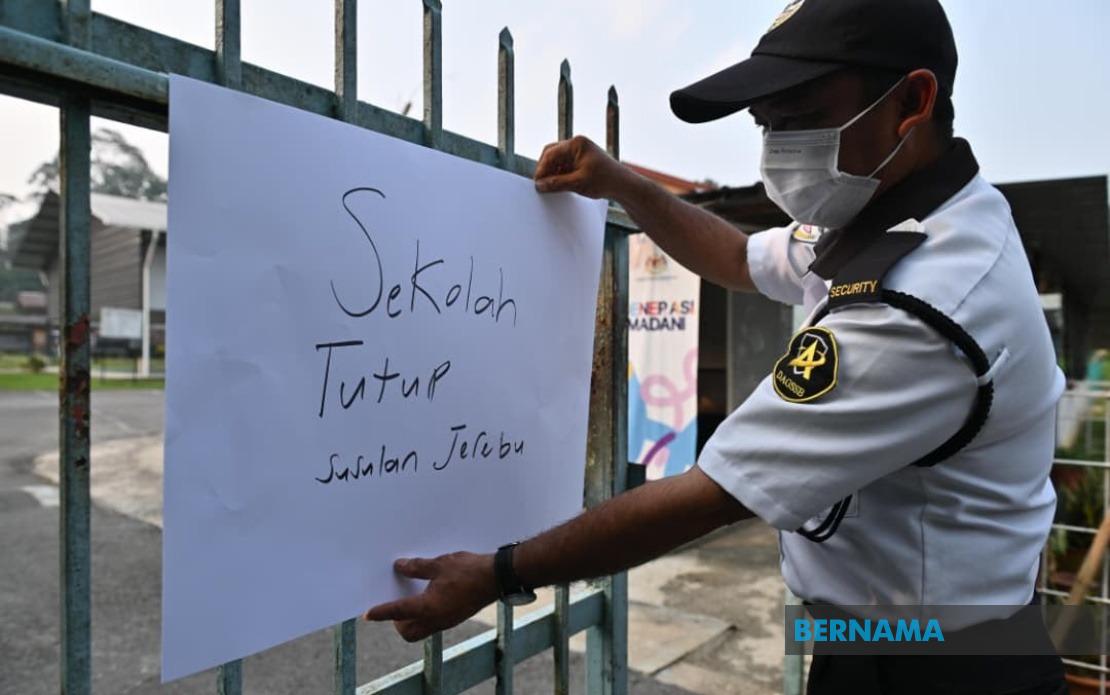
Authorities in Sarawak have ordered the temporary closure of 108 schools across the Serian district following persistent deterioration in air quality, with the Air Pollutant Index rising above the critical 200 threshold. The decision reflects growing concern over transboundary haze, which has blanketed parts of the state and forced significant disruptions to daily life and economic activity. The closures, effective immediately, are underpinned by a precautionary approach designed to shield students and educators from prolonged exposure to hazardous air pollutants that pose measurable health risks.
The Sarawak State Disaster Management Committee, acting under the National Haze Action Plan, has instituted a framework whereby educational facilities automatically close once API readings breach the 200 mark, signalling a shift from unhealthy to very unhealthy air quality. This threshold-based protocol, overseen by the Sarawak State Education Department, serves as an objective trigger for emergency response measures, removing discretion and ensuring consistent implementation across districts. The committee's statement underscored that student and staff welfare takes absolute precedence over in-classroom instruction, acknowledging that outdoor exposure during such conditions carries unacceptable medical risks.
To mitigate learning losses from the closures, the education authorities have pivoted to Home-Based Teaching and Learning, commonly referred to as PdPR in Malaysian education circles. This digital alternative enables educators to continue delivering curriculum content remotely, maintaining pedagogical momentum during the shutdown period. The shift towards online instruction reflects lessons learned from the COVID-19 pandemic, when Malaysian schools rapidly deployed similar emergency protocols. However, the effectiveness of this transition depends heavily on student access to reliable internet connectivity and digital devices—a constraint that may disproportionately affect rural communities within the Serian area.
The haze crisis facing Sarawak has intensified markedly since the beginning of August, with air quality metrics showing a consistent upward trajectory across multiple monitoring stations. As of early afternoon on August 12, two districts had entered the "very unhealthy" category, with Tebedu recording 212 and Serian itself at 202 on the API scale. Simultaneously, eleven additional areas, including major urban centres such as Kuching and Sibu, were classified as unhealthy, indicating widespread degradation of atmospheric conditions. This geographic spread suggests that transboundary smoke from regional sources, likely originating from agricultural burning in neighbouring Indonesia, has blanketed an expansive territory across Sarawak.
The Air Pollutant Index operates on a standardised classification system that provides public health guidance aligned to air quality severity. Readings from zero to 50 denote good conditions suitable for all outdoor activities, while the 51-to-100 range indicates moderate air quality with minor concerns for sensitive groups. The unhealthy category spans 101 to 200, above which vulnerable populations should restrict outdoor exposure. Very unhealthy conditions, pegged at 201 to 300, warrant widespread public caution and closure of schools and outdoor facilities. Readings exceeding 300 constitute a hazard level that demands maximum protective measures. By this scale, Sarawak's current situation places substantial portions of the state in the danger zone.
Cchildren, elderly residents, pregnant women, and individuals with pre-existing cardiovascular or respiratory conditions represent the population cohorts most vulnerable to haze-related illness. Prolonged inhalation of fine particulate matter can exacerbate asthma, trigger cardiac episodes, and cause acute respiratory distress. Schools serve as congregate settings where such high-risk individuals gather in enclosed spaces with potentially compromised ventilation, multiplying exposure duration and intensity. The decision to close facilities thus protects not only students but also teaching staff, many of whom may belong to at-risk categories themselves. For families with elderly relatives at home, the school closure may create competing challenges around childcare and elder supervision during hazardous conditions.
The Sarawak State Disaster Management Committee has issued explicit guidance urging residents to curtail outdoor activities whenever air quality metrics deteriorate into unhealthy or worse territory. This recommendation extends beyond schools to encompass workplaces, outdoor recreation, and routine errands. Sports facilities, playgrounds, and public gathering spaces face informal pressure to reduce operations or move activities indoors. The economic implications of such widespread behavioural modification remain substantial, affecting retail commerce, tourism, transportation sectors, and small businesses dependent on foot traffic. Workers in construction, agriculture, and logistics face particular hardship, as outdoor employment cannot simply migrate online.
Government authorities have emphasised the importance of obtaining haze-related information exclusively through official channels, cautioning the public against speculation and the amplification of unverified claims via social media. This messaging reflects a recognition that misinformation can provoke panic, fuel conspiracy theories, and undermine public confidence in institutional responses. During environmental crises, accurate real-time data becomes crucial for informed decision-making at household and community levels. The committee's appeal underscores the tension between transparent communication and the risk that alarming information, even when factually correct, can trigger social disruption or market volatility.
The Serian school closures represent a microcosm of broader haze management challenges confronting Southeast Asia. Transboundary air pollution flows across national borders regardless of diplomatic protocols, creating shared vulnerability among riparian nations. Malaysia, as a recipient of smoke from Indonesian sources during the dry season, has limited unilateral control over regional air quality. Diplomatic pressure, bilateral environmental cooperation agreements, and enforcement mechanisms targeting agricultural burning in Indonesia remain critical levers for long-term mitigation. In the interim, reactive responses such as school closures and public health advisories serve as necessary palliatives, but they underscore the region's structural exposure to episodic environmental crises that demand coordinated multinational solutions.
Looking ahead, the persistence and severity of the current haze episode will determine how long closures remain in effect and whether additional districts implement similar measures. Sarawak's meteorological services monitor atmospheric circulation patterns that influence smoke dispersal, providing forecasts that guide reopening decisions. Should API readings drop below 200 in coming days, schools would resume normal operations, though the underlying vulnerability to future haze events remains endemic to the region's geography and climate dynamics. For educators and students, the closure period offers both disruption and an unintended reminder of environmental fragility—a lesson that transcends the curriculum.

