The Ministry of Health has committed RM500,000 to substantially improve healthcare infrastructure at the Kemar Health Clinic in Gerik, addressing long-standing capacity challenges that have hindered medical service delivery to the indigenous Orang Asli population in Hulu Perak. Health Minister Datuk Seri Dr Dzulkefly Ahmad announced the initiative during an inspection visit to the facility, emphasising the government's determination to ensure equitable healthcare access regardless of geographic isolation or terrain difficulties.
A cornerstone of the upgrade involves constructing a new Boat Storage Facility, which plays a critical operational role in the clinic's ability to reach scattered communities. The existing storage structure, now over eleven years old and showing significant deterioration, currently accommodates only a single vessel, creating maintenance challenges and limiting the clinic's capacity to respond to medical emergencies across waterborne settlements. The deteriorated facility has become a bottleneck in healthcare delivery to populations entirely dependent on river transportation for accessing services.
Beyond infrastructure, the allocation will fund the acquisition of essential medical assets, including a replacement four-wheel-drive vehicle to succeed the ageing transport equipment currently in service. More critically, the funding encompasses procurement of sophisticated diagnostic and emergency medical equipment, particularly a Video Laryngoscope system necessary for performing intubation procedures during acute clinical emergencies. These acquisitions represent a significant technological upgrade for a remote clinic serving dispersed communities with limited immediate access to tertiary care facilities.
Complementing these upgrades, the Ministry has also commissioned the Medik 8 multipurpose boat, a twelve-passenger vessel costing RM350,000, which was officially launched at the Belum Rainforest Resort Jetty. This addition to the existing fleet of six boats is specifically designed to reduce emergency response intervals for the more than 4,500 Orang Asli residents inhabiting the RPS Kemar settlement and surrounding areas, where waterways represent the primary—and often only—transportation infrastructure linking communities to medical facilities.
Dr Dzulkefly underscored that the new boat would function as a complementary resource within the Ministry's broader fleet, collectively strengthening the ability to navigate challenging river conditions and adverse weather to deliver timely medical interventions. The minister articulated a philosophical commitment grounded in Malaysia MADANI principles, asserting that healthcare constitutes a fundamental right irrespective of settlement patterns or environmental barriers, and that no geographical constraint should prevent Malaysians from accessing quality medical care.
The minister also highlighted the long-term transformational potential of the proposed new Kemar Health Clinic (Type 5), a facility that would substantially modernise the physical environment where healthcare is delivered, offering residents substantially more comfortable and comprehensive services within a contemporary healthcare infrastructure framework. The expedited construction of this facility reflects governmental acknowledgement that current physical conditions have become inadequate for the population served.
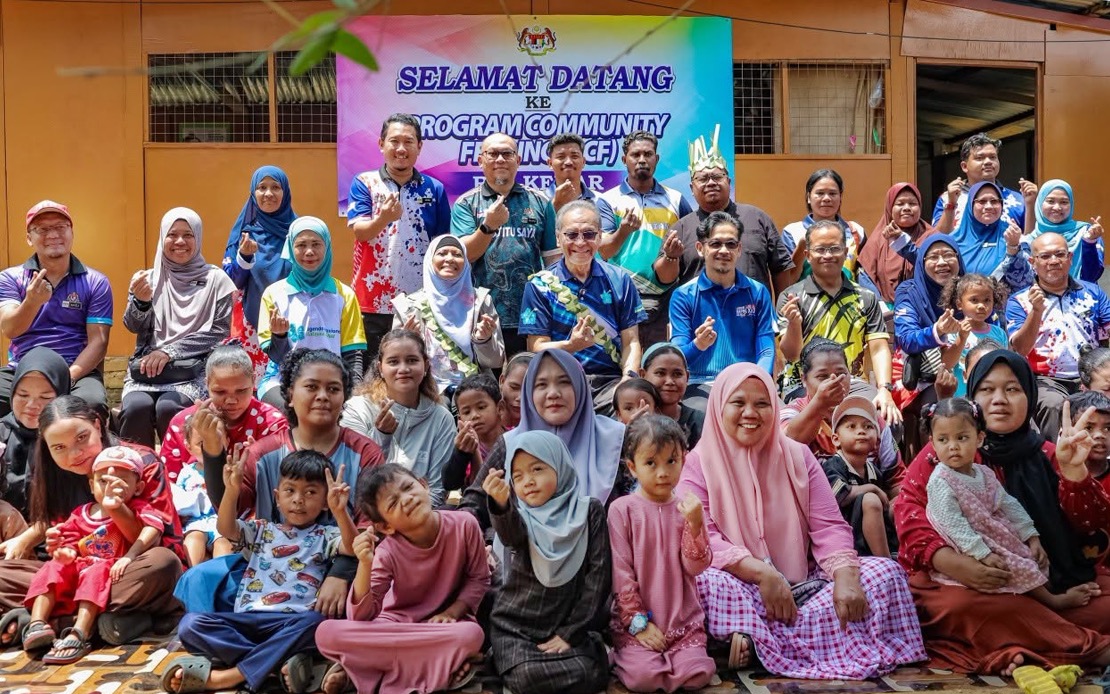
During the visit, Dr Dzulkefly visited the Community Feeding Programme Centre at RPS Kemar, an initiative addressing nutritional deficiencies among vulnerable Orang Asli children aged six months to six years. The programme combines active feeding protocols with full-cream milk supplementation, multivitamin administration, and Ready-to-Use Therapeutic Food formulations for documented malnutrition cases. Operating continuously from 2015 through 2025, this targeted intervention has achieved remarkable health outcome improvements within the community.
The nutritional programme's decade-long implementation has produced measurable reductions in stunting prevalence, declining from 75.2 per cent to 50.8 per cent—a substantial 24.4 percentage-point improvement reflecting sustained nutritional intervention effectiveness. Simultaneously, underweight rates among the target population have fallen from 43.7 per cent to 25.2 per cent, indicating that comprehensive feeding programmes combined with maternal and child health services can effectively interrupt cycles of malnutrition in resource-constrained communities.
Dr Dzulkefly acknowledged the indispensable contributions of healthcare personnel operating in challenging circumstances, including medical doctors, nursing staff, and boat operators who routinely navigate hazardous river conditions and unfavourable weather to fulfil clinical responsibilities. He emphasised that sophisticated government infrastructure and medical technology remain merely instrumental without the dedication and sacrifice of frontline workers willing to operate in demanding environmental conditions.
These initiatives reflect broader recognition that indigenous communities in peninsular Malaysia's remote regions experience persistent healthcare access disparities stemming from geographic isolation and transportation constraints. The Kemar cluster serves as a microcosm of challenges facing multiple Orang Asli settlements scattered across forested regions where conventional road-based healthcare logistics prove impractical, necessitating specialised waterborne transport and climate-adapted service delivery models.
For Malaysia's Southeast Asian context, the Kemar investment exemplifies how developing nations address healthcare equity within biodiversity-rich frontier regions inhabited by indigenous populations. Similar challenges characterise healthcare delivery across ASEAN's highland and riverine areas, where geographic determinants of health require innovative infrastructure and transport solutions beyond conventional urban-focused health system designs.
The combined initiatives—physical infrastructure renewal, medical equipment modernisation, expanded waterborne transport capacity, and sustained nutritional programming—demonstrate a systems-oriented approach to remote healthcare delivery. Such integrated interventions address not merely episodic disease management but underlying structural determinants driving health disparities among marginalised indigenous populations, establishing a template potentially applicable to comparable contexts throughout the region.

