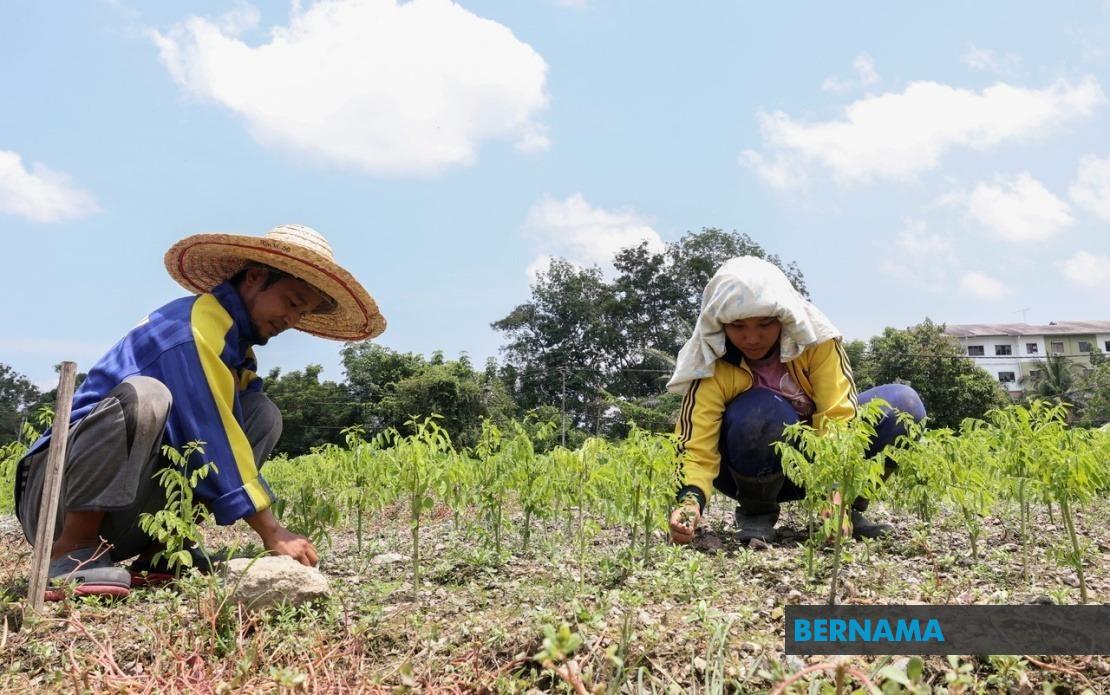
An extended period of extreme heat blanketing 17 locations nationwide is creating mounting challenges for Malaysia's agricultural workforce, with the effects rippling through both crop production and daily livelihoods. The phenomenon, which prompted the Malaysian Meteorological Department to issue Level 1 hot weather alerts, has upended farming practices in Sandakan and surrounding districts, where growers are grappling with unprecedented irrigation demands and deteriorating harvests despite their escalating efforts.
Farmers operating in the affected zones face a paradox: despite investing substantially more labour and water resources, their yields continue to decline as thermal stress overwhelms protective measures. Vegetable cultivator Firyanus Salamba, operating in Sandakan's Batu 7 area, has emerged as a representative voice for this crisis, describing how environmental conditions have fundamentally altered his operational framework. His farm, once manageable under conventional watering protocols, now demands tripled intervention schedules that would have seemed excessive merely months ago.
The complexity of maintaining crop viability under such conditions extends beyond simple volume increases in water application. Firyanus explained that his irrigated vegetables—encompassing okra, sweet shoots, and mustard greens—previously thrived on single daily watering cycles aligned with natural precipitation patterns. The current regime necessitates morning, afternoon, and evening hydration cycles, yet these incremental efforts yield counterintuitive results. Chilli cultivation has proven particularly vulnerable, with plants struggling to survive the relentless thermal environment even when receiving maximum recommended water inputs.
The horticultural sector faces similarly acute pressures, with flowering nurseries experiencing comparable production crises. Survey observations conducted across affected regions documented that nursery operators managing ornamental plants and florals have adopted comparable adaptive strategies, implementing at minimum twice-daily watering to forestall wilting and premature mortality. These operational modifications signify a substantial departure from sustainable practices, as both water consumption and labour intensity escalate dramatically during the dry season.
MetMalaysia's technical classification of the current situation rests upon precise meteorological criteria. The Level 1 cautionary category designation activates when daily maximum temperatures reach between 35 and 37 degrees Celsius for a continuous three-day minimum period. This threshold-based system provides standardized guidance for public health authorities and agricultural planners, though it offers limited solace to practitioners experiencing real-time production collapse. The alert structure exists primarily to communicate risk rather than to mitigate actual physical impacts on vegetation.
Geographically, the crisis exhibits distinct regional clustering patterns reflecting climatic variability across the peninsula and East Malaysia. Peninsular Malaysia's affected zones concentrate in three principal states: Perak registers the highest density with four designated areas encompassing Larut and Matang, Kuala Kangsar, Kampar, and Batang Padang. Pahang accounts for four additional municipalities spanning Kuantan, Raub, Temerloh, and Pekan. Kelantan and Selangor each contribute singular regions, with Kuala Krai and the Hulu Selangor-Gombak corridor respectively implicated. This eleven-area concentration demonstrates that moisture-deficient conditions predominantly characterise the nation's western agricultural belt.
East Malaysian territories have not escaped the phenomenon's reach. Sabah's participation encompasses five geographically dispersed districts: Telupid, Tenom, Sandakan, Pitas, and Beluran collectively represent a significant proportion of the state's productive agricultural landscape. Sarawak's inclusion remains more limited, with solely Marudi designated as falling under Level 1 protocols. The distribution indicates that extreme temperature anomalies transcend typical regional climate patterns, suggesting broader atmospheric circulation disruptions affecting the entire nation simultaneously.
The implications for Malaysia's food security architecture warrant urgent consideration, particularly given the sector's ongoing structural vulnerabilities. Vegetable production, traditionally considered a resilient agricultural segment with rapid crop cycles and diversified planting schedules, faces unexpected pressure when thermal stress undermines successive planting cohorts. The cumulative effect of reduced yields across multiple crop varieties threatens to constrict domestic supply chains and potentially elevate consumer prices for essential commodities during critical periods.
Farmer adaptability, while demonstrated through creative irrigation intensification, cannot indefinitely compensate for climatic extremes without corresponding technological investments and policy support mechanisms. Current coping strategies—essentially applying additional water and labour—represent stopgap solutions rather than systemic resilience measures. Sustainable responses would necessitate infrastructure development, crop variety selection emphasizing heat tolerance, and coordinated water management protocols addressing both agricultural demands and competing urban requirements.
The broader meteorological context suggests this episode may foreshadow emerging climate patterns rather than representing a statistical aberration. Regional agricultural planners face the uncomfortable prospect that such thermal episodes could recur with increasing frequency and intensity, potentially rendering certain traditional growing locations suboptimal within coming decades. For Malaysian stakeholders spanning from smallholder farmers to policymakers overseeing food systems, the convergence of environmental stress and production vulnerability demands accelerated adaptation planning.
Immediate relief measures, should authorities implement them, might encompass temporary water subsidy arrangements, emergency irrigation infrastructure enhancement, or crop insurance provisions acknowledging climate-related losses. Medium-term strategies should prioritize agricultural research emphasizing heat-resistant cultivars suited to Malaysian growing conditions and expansion of climate-controlled growing facilities. Without decisive intervention, the current crisis threatens to catalyse longer-term agricultural restructuring affecting rural livelihoods and national food sufficiency metrics throughout Southeast Asia's premier agricultural economy.

