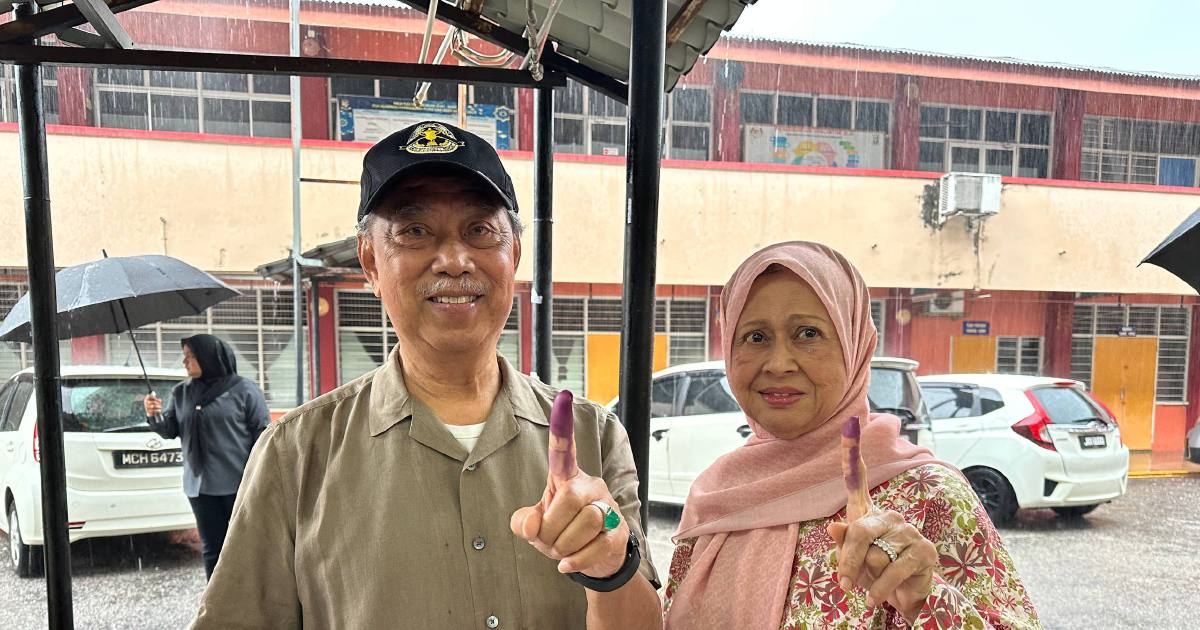
Johor's state election took place amid challenging weather conditions today, with Bersatu positioning itself as confident that voters would turn out in significant numbers. Party leadership, speaking from Muar, expressed the view that the electorate's commitment to the democratic process would transcend the inconvenience of heavy rainfall affecting multiple areas across the state. The party's projected turnout threshold of 70 per cent underscores expectations of robust participation despite the meteorological obstacles that greeted voters from early morning.
The rainfall that blanketed several districts throughout the morning hours presented a genuine logistical challenge for election administrators and voters alike. In Malaysian electoral contexts, weather conditions have historically influenced turnout patterns, particularly in rural and semi-urban areas where transportation infrastructure may be less developed. The simultaneous occurrence of heavy precipitation and a state election created conditions that typically discourage participation, yet party operatives expressed confidence that this particular contest would buck such trends.
Muhyiddin's public statements about the election reflected broader party sentiment that the contest itself held sufficient significance to motivate voters despite environmental barriers. Such optimism suggests underlying organisational confidence in campaign messaging and voter mobilisation efforts undertaken during the lead-up to polling day. The specific invocation of a 70 per cent turnout target reveals both aspirational thinking and implicit acknowledgement that weather would depress participation below what might otherwise be achievable during clear conditions.
From a regional perspective, Johor's electoral dynamics carry implications extending beyond the state itself. As Malaysia's southernmost peninsula state and a significant economic hub, Johor's political trajectory influences broader calculations within the peninsula's political establishment. Election results and voter participation patterns in Johor frequently serve as bellwethers for national sentiment and coalition strength, rendering every state poll in this jurisdiction a matter of attention for actors far beyond Muar and Kota Iskandar.
Bersatu's particular emphasis on turnout projections reflects the party's strategic positioning within Malaysia's fractious political landscape. The party has experienced considerable volatility in its political fortunes and coalition alignments over recent years, making numerical measures of voter engagement analytically significant as indicators of public support retention. Whether the party's optimism about turnout would translate into actual polling results remained to be determined as voting progressed throughout the day.
The weather phenomenon itself represented a natural test of voter commitment in an era when observers frequently question whether electoral participation reflects genuine democratic enthusiasm or merely habitual compliance. Malaysian voters have demonstrated varying levels of engagement in different electoral contests, with state elections sometimes attracting lower participation than federal parliamentary polls. The rain-affected Johor election thus provided conditions under which to assess whether voters viewed the state contest as meaningful enough to warrant braving wet weather.
Local administrative preparations presumably included contingencies for the rainfall, though the actual implementation of such measures often determines voter experience and accessibility. In areas where polling stations faced flooding or transportation became severely compromised, turnout would almost certainly suffer regardless of underlying electoral interest. Conversely, efficiently managed polling operations in inclement conditions might facilitate higher participation than initially anticipated when rain first fell in the early morning hours.
Bersatu's public confidence may also reflect internal tracking data or community feedback gathered during the campaign period that suggested robust voter intention to participate. Malaysian political parties typically maintain sophisticated ground operations capable of generating reasonably accurate estimates of likely turnout before polling day. The party's willingness to publicly target 70 per cent turnout suggests conviction in these assessments rather than mere wishful thinking.
The Johor state election itself emerged from the state's complex political circumstances and the timeline of its constitutional framework. State elections operate on distinct cycles from federal parliamentary contests, creating distinct moments when state-level coalitions and political formations face the electorate independently. Johor's particular economic importance and demographic diversity mean that its state government carries practical significance for millions of Malaysians, extending the relevance of the contest beyond conventional partisan interest.
Weather patterns during elections also carry symbolic weight in Malaysian political discourse, with rainy polling days sometimes invoked as explanations for lower-than-expected turnout or conversely as evidence of voter determination. The Johor election's rain-affected context would inevitably colour post-election analysis and narrative-building, regardless of whether weather actually exerted significant influence on final participation figures. Political parties typically invest effort in framing turnout outcomes in ways favourable to their electoral performance.
As voting continued through the day, the actual manifestation of Bersatu's turnout predictions would become apparent through election commission reports. The party's advance messaging about weather-resilient voters represented a positioning strategy as much as a genuine forecast, attempting to establish expectations and narrative frameworks before final results emerged. Whether 70 per cent participation materialised would speak to both the specific dynamics of Johor's electorate and the broader health of democratic engagement within Malaysia's federal system.

