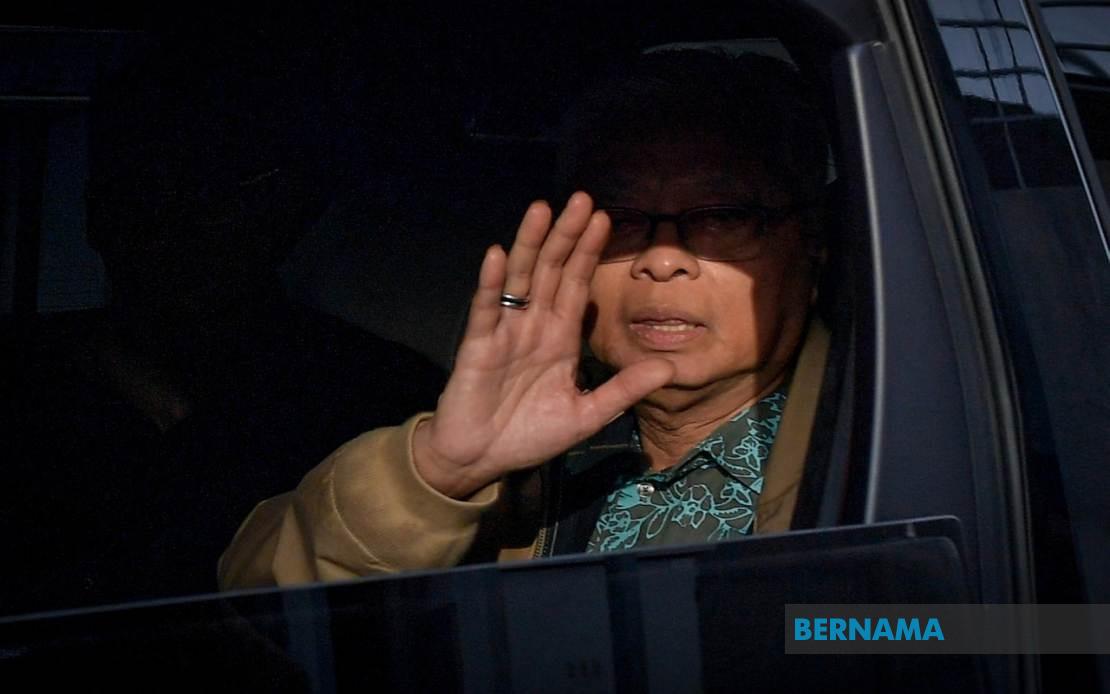
Malaysia's High Court has reinforced a pivotal ruling in the contentious case against blogger Jufazli Shi Ahmad, upholding his acquittal on charges linked to YouTube content critical of former Prime Minister Datuk Seri Ismail Sabri Yaakob and UMNO. Judge Datuk Aslam Zainuddin delivered the decision on October 18, 2024, dismissing the prosecution's appeal against the Sessions Court's earlier acquittal and confirming Jufazli's discharge.
The case centred on two distinct charges under the Communications and Multimedia Act 1998. The first involved allegations that Jufazli created and transmitted offensive communications through his YouTube channel, 'King Maker Politik', on June 27, 2022, with intent to cause annoyance to another individual. The video content was accessed and reviewed by authorities at the Criminal Investigation Division of Dang Wangi District Police Headquarters on July 1, 2022. The prosecution pursued this matter under Section 233(1)(a) of the Act, which carries potentially severe penalties including a maximum fine of RM50,000 and up to one year's imprisonment, plus a daily fine of RM1,000 for each day the offence continues after conviction.
The second charge alleged that Jufazli failed to furnish police with the password to his YouTube account when requested on July 5, 2022, at the same police headquarters. This charge invoked Section 249 of the Communications and Multimedia Act 1998, carrying penalties of up to RM100,000 in fines or two years' imprisonment. The charge represented a common enforcement tactic used by authorities to compel cooperation in digital investigations, though its application in this instance proved unsuccessful.
The High Court's decision carries significance beyond the individual case, as it represents a judicial endorsement of the Sessions Court's assessment of the evidence presented. Judge Aslam's ruling, delivered after careful examination of the appeal records and submissions from both the prosecution and defence, provides legal reinforcement for the principle that acquittals must be upheld when the prosecution fails to establish its case beyond reasonable doubt. The Deputy Public Prosecutor Mohamad Fadhly Mohd Zamry presented the state's argument for appeal, while Jufazli's legal representation through lawyer Ramesh N.P. Chandran successfully defended the earlier acquittal.
This case reflects broader tensions in Malaysia concerning the boundaries of online political discourse and the application of communications legislation to digital content. The 'King Maker Politik' channel had generated official concern due to its critical commentary on political figures and party operations, leading to the investigation and charges. The nature of the alleged offensive communications—posted on a public platform—raised questions about the proportionality of applying criminal sanctions to political speech, even when couched in caustic or confrontational terms.
The High Court's affirmation of the acquittal suggests that the Sessions Court found the prosecution's evidence insufficient to prove the charges beyond reasonable doubt. This outcome indicates that simply posting critical political commentary on YouTube, without additional elements establishing criminal intent or specific harmful consequences, may not constitute an offence under the Act. The decision potentially sets a precedent regarding the threshold for prosecuting online political speech in Malaysia's courts.
The password-related charge also merits consideration within the context of digital rights and police powers. While authorities possess legitimate investigative interests in accessing accounts relevant to criminal inquiries, the High Court's implicit acceptance of the earlier acquittal on this count suggests that failure to provide account credentials may not automatically constitute an offence, particularly when questions arise about the original investigation's foundation.
For Malaysian legal observers and digital rights advocates, the judgment represents a modest but meaningful assertion of judicial independence in evaluating prosecutions involving online political expression. The case demonstrates that even when charges are brought under broad-ranging communications legislation, courts retain the capacity to scrutinise whether evidence meets the threshold for criminal conviction. The confirmation that acquittals can withstand prosecutorial appeals reinforces the importance of rigorous evidentiary standards.
The ruling arrives amid ongoing debates in Southeast Asia regarding appropriate regulation of online political discourse. While governments across the region invoke communications laws to address misinformation and inflammatory content, the Malaysian High Court's decision reflects judicial caution about extending criminal liability to political commentary without establishing clear and demonstrable harm. This balance between protecting public discourse and maintaining order represents a continuing challenge for the region's legal systems.
For bloggers, content creators, and political commentators in Malaysia, the decision provides some reassurance that critical political content published online may not automatically trigger criminal liability under existing legislation. However, the existence of such charges and investigations, even when ultimately unsuccessful, creates a chilling effect on expression by imposing investigation burdens and legal costs on publishers. The acquittal removes one such case from the landscape of outstanding charges, yet the broader framework permitting such prosecutions remains intact.
The case also illustrates the enduring role of traditional courts in adjudicating digital-age disputes. As online political communication becomes increasingly prevalent in Malaysian public discourse, the judiciary's interpretation of whether existing legislation appropriately applies to this communication mode gains heightened importance. Judge Aslam's decision reflects a careful reading of statutory language and evidentiary standards, suggesting that courts may apply existing legal frameworks with appropriate restraint when examining online political speech.
Moving forward, the High Court's confirmation of Jufazli's acquittal may influence how authorities approach similar cases involving online political commentary. Prosecutors may recalibrate their evidentiary thresholds before initiating charges, recognising that courts apply scrutiny proportionate to the liberty-limiting nature of criminal sanctions. The decision thus contributes to a gradual refinement of how Malaysia's legal system addresses the intersection of digital expression and traditional criminal legislation, a process that will likely continue as online political discourse continues evolving.

