The Ministry of Higher Education (KPT) is moving swiftly to implement Prime Minister Datuk Seri Anwar Ibrahim's recent instruction regarding the review and potential reversal of disciplinary measures imposed on university students. The directive marks a significant policy shift in how Malaysian higher education institutions approach student conduct and freedom of expression on campuses, reflecting broader governance changes under the current administration.
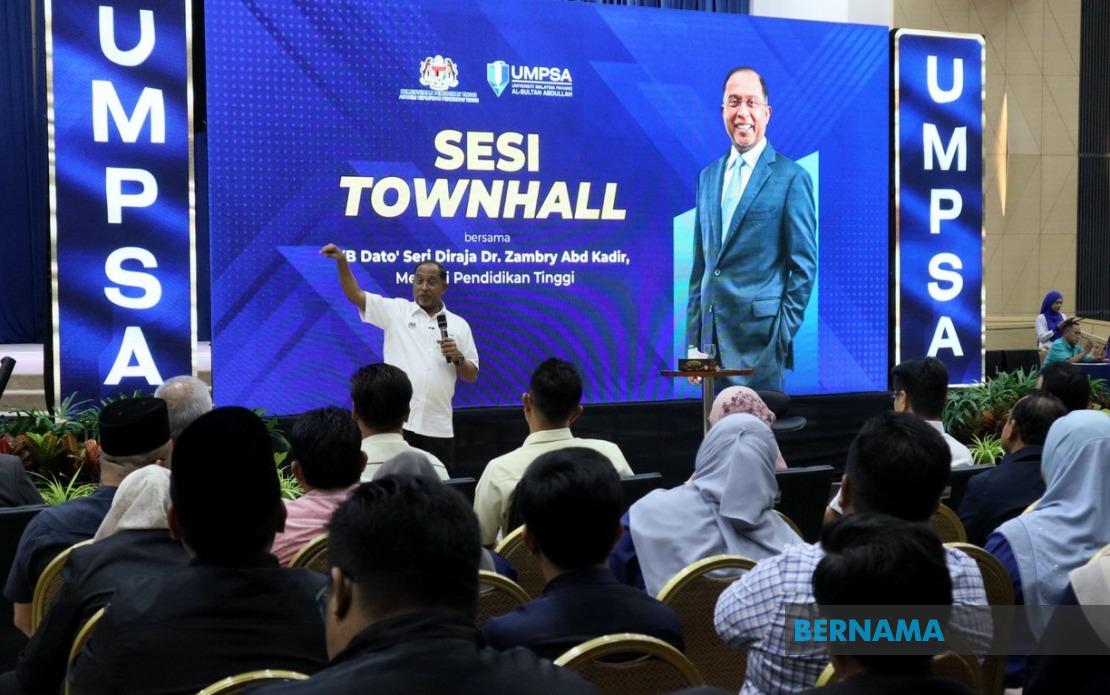
Higher Education Minister Datuk Seri Dr. Zambry Abd Kadir confirmed the ministry's action during remarks at Universiti Malaysia Pahang Al-Sultan Abdullah's convocation ceremony in Pekan. He explained that the follow-up measures encompass multiple dimensions, including legislative considerations and institutional regulations that directly affect student rights and freedoms within universities. The ministry is taking a comprehensive approach that acknowledges the complexity of student discipline systems operating across Malaysia's diverse higher education landscape.
The minister revealed that all university vice-chancellors have already engaged with the director-general of higher education in formal discussions to align their institutional policies with the new directive. A formal statement from these consultations is expected to be released, signalling the beginning of coordinated action across public universities. This coordinated approach suggests the ministry intends to establish consistent standards rather than allowing individual institutions to interpret the directive differently, which could create confusion or inconsistent application of student rights protections.
Dr. Zambry emphasised that the review process must consider matters previously decided at the legislative level, demonstrating awareness that student discipline intersects with multiple layers of governance. Where violations of university regulations occur, appropriate institutional action will still be taken through proper Student Affairs Department channels, indicating the review is not a blanket amnesty but rather a recalibration of which conduct warrants discipline. This nuanced approach attempts to balance student freedom with institutional accountability and educational standards.
The Prime Minister's instruction specifically addresses students who faced disciplinary action for criticising government officials and policies. During his speech at the Malaysia Madani Intellectual Forum Series 13, Anwar instructed that such students should be absolved of related offences immediately, viewing this step as essential pending longer-term legislative reform. His directive recognises that previous disciplinary actions may have been disproportionate to actual misconduct, particularly when criticism itself—rather than disruptive behaviour—triggered penalties.
This reversal is intrinsically linked to the government's announced intention to repeal the Universities and University Colleges Act (AUKU) 1971, a colonial-era statute that has historically restricted student political activity and expression. The PM indicated that while full AUKU repeal will require extended legislative processes, addressing existing injustices cannot wait. The immediate absolution addresses a credibility gap between policy intention and lived institutional reality for students already bearing consequences of stricter interpretation of old rules.
Crucially, the Prime Minister clarified that this absolution applies only to university disciplinary matters, explicitly excluding cases prosecuted under the Royal Malaysia Police (PDRM) criminal law. This demarcation is significant because it preserves the separation between institutional discipline and criminal prosecution, preventing the directive from appearing to interfere with law enforcement or create blanket immunity for conduct potentially violating criminal statutes. Students who face criminal charges remain subject to ordinary legal processes, maintaining an important boundary between educational institution governance and the criminal justice system.
The question of private higher education institutions (IPTs) presents a practical challenge requiring separate consideration. Dr. Zambry acknowledged that private institutions operate under different legal frameworks, particularly the Private Higher Educational Institutions Act 1996 (Act 555), which grants them greater autonomy than public universities. The ministry cannot unilaterally impose changes on private IPTs but can encourage cooperation, particularly from state-owned or state-linked private institutions. This suggests potential negotiation with the private sector rather than regulatory mandate, recognising institutional sovereignty while promoting consistent implementation of the underlying principle.
The directive also reflects broader regional and international currents regarding student rights. Universities across Southeast Asia increasingly face pressure to balance institutional discipline with academic freedom principles. Malaysia's move to recalibrate disciplinary approaches positions it alongside other regional governments reassessing restrictions imposed during earlier political eras. However, the specificity of Malaysia's action—targeting those disciplined for government criticism—underscores the particular history of AUKU's use to suppress legitimate student political expression.
Implementation will reveal whether the ministry's coordinated approach successfully reverses unjust past disciplinary actions. Key questions remain: what timeline applies for reviewing cases, how thoroughly will retrospective files be examined, and what remedies or exonerations will accompany removal of disciplinary records? These procedural details substantially affect whether the directive represents genuine reform or symbolic gesture. The effectiveness of this policy depends heavily on institutional commitment and resource allocation to case review processes.
For Malaysian students and academic stakeholders, the directive signals movement toward normalising campus debate and reducing institutional censorship of political speech. This aligns with Malaysia Madani's stated emphasis on institutional reform and democratic deepening. However, the distinction between disciplinary action and criminal prosecution suggests caution remains embedded in the policy—concerns about national security or public order could still trigger police intervention rather than educational consequences.
The higher education ministry's rapid convening of vice-chancellors demonstrates institutional responsiveness to executive direction. This efficiency in consultation suggests serious implementation intent rather than mere rhetorical gesture. The forthcoming joint statement from vice-chancellors will indicate the depth of commitment across the public university system and clarify implementation mechanisms for institutional leaders managing these policy changes.
Ultimately, this directive represents recognition that AUKU and associated disciplinary practices may have overreached in suppressing student expression. While not formally repealing the act, the policy modification acknowledges that universities serve educational rather than solely security functions. The success of implementation will determine whether this represents a genuine inflection point in Malaysian higher education governance or a temporary adjustment that preserves restrictive structures awaiting political shift.

