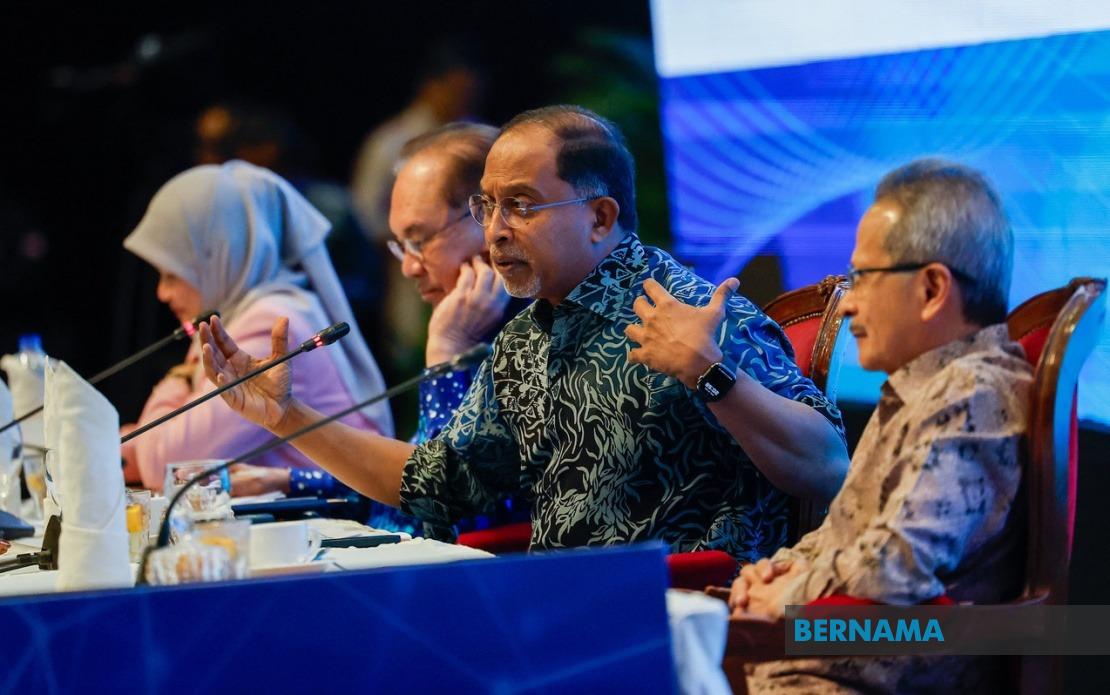
The Malaysian government is moving to fundamentally reshape its higher education legal framework, with Higher Education Minister Datuk Seri Dr Zambry Abd Kadir declaring that modernisation of existing legislation is essential for the sector's future viability. Speaking at the MADANI Malaysian Scholars Forum Series 13 held at University of Malaya, Zambry emphasised that the current regulatory landscape—particularly the Universities and University Colleges Act 1971 (AUKU)—contains outdated provisions that constrain institutional progress and restrict the freedoms necessary for contemporary scholarship and student development.
The call for legislative review represents a significant policy shift in how Malaysia approaches university governance. AUKU, which has been the legal bedrock for public university operations for over five decades, has increasingly become the subject of scrutiny from academics, student activists, and education reformers who argue that its restrictive provisions on academic expression and political engagement no longer align with global best practices or the needs of a knowledge-based economy. Zambry's acknowledgment that constraints exist signals a willingness from the highest education policy levels to confront longstanding tensions between institutional autonomy and state oversight.
Among the specific concerns flagged by Zambry are limitations on academic freedom and freedom of expression—areas that have generated considerable international attention regarding Malaysian universities' standing among global peers. The minister framed these concerns not as grievances to be suppressed, but as legitimate issues requiring fresh legislative consideration. This represents a departure from previous administrations' more defensive postures on such matters, suggesting that the current government views expanding intellectual latitude as compatible with, rather than threatening to, institutional stability and national development.
To facilitate this transformation, the Ministry of Higher Education has constituted an Independent Committee tasked with systematising feedback from academic staff, student representatives, and other stakeholders within the higher education ecosystem. This consultative approach implies that regulatory reform will not be top-down imposition but rather collaborative redesign grounded in lived experience within universities. By centralising memorandums and viewpoints from the ground level, the government aims to ensure that any legislative changes address genuine practical obstacles rather than responding to abstract theoretical concerns.
Beyond tweaking existing legislation, Zambry revealed that the ministry is contemplating a more ambitious restructuring: the drafting of a single, overarching Higher Education Act that would consolidate the various fragmented legislative instruments currently governing universities, colleges, and related institutions. Such consolidation could reduce administrative complexity, eliminate contradictions between overlapping provisions, and provide a coherent strategic foundation for the sector. The proposed "One Higher Education Act" reflects international trends toward streamlined, purpose-built university legislation in comparable nations seeking to enhance institutional competitiveness and research output.
The timing of this review occurs within a broader regional context where Southeast Asian governments are increasingly competing for academic talent and research prominence. Singapore, Thailand, and Indonesia have undertaken significant education law reforms in recent years, and Malaysia's move can be understood partly as an effort to maintain competitive parity. Universities ranked highly in international assessments tend to operate within regulatory environments that afford substantial autonomy in hiring, curricula development, and research prioritisation—areas where AUKU has traditionally been more prescriptive than permissive.
Education Minister Datuk Seri Fadhlina Sidek, participating in the forum alongside Zambry and Prime Minister Datuk Seri Anwar Ibrahim, articulated a complementary vision emphasising equity and holistic development across the education pipeline. Fadhlina outlined a "humane education" philosophy intended to nurture the full spectrum of student potential rather than narrowly optimising for examination performance. This conceptual framework, if operationalised across primary, secondary, and tertiary institutions, could create a more coherent national education ecosystem in which higher education reform serves as one component of systemic change.
Fadhlina's emphasis on expanding access through innovative institutional models—including Schools in Hospital for chronically ill students, rehabilitation centre schools, and specialised K9 and K11 models serving Orang Asli communities—underscores that education reform encompasses not merely legislative revision but also substantive expansion of educational opportunity across demographic lines. Her commitment to free pre-school access reflects recognition that educational equity must begin before formal schooling and that financial barriers disproportionately exclude disadvantaged families from early childhood development programmes.
The distinction Fadhlina drew between education as examination preparation versus education for human development carries significant implications for how universities themselves should function. If secondary education increasingly embraces a holistic paradigm emphasising emotional intelligence, resilience, and moral formation, higher education legislation and institutional practices must accommodate rather than contradict such values. A university system overly focused on credentialing and workforce production may frustrate the developmental orientation cultivated in earlier schooling, creating friction between educational levels.
Prime Minister Anwar Ibrahim's attendance and role as moderator elevated the forum's significance, suggesting that education policy and higher education law reform occupy prominent positions within the government's transformation agenda. The MADANI framework, under which this forum was organised, emphasises democratic renewal and institutional capacity-building—objectives that plausibly align with efforts to enhance university autonomy, strengthen academic freedom, and broaden student voice in institutional governance. This positioning suggests that higher education reform is being integrated into the broader political narrative of systemic modernisation.
The convergence of initiatives outlined—AUKU review, independent committee consultation, potential consolidated legislation, and complementary efforts in access expansion and holistic education—indicates that the government is approaching higher education reform as a multifaceted enterprise rather than a narrow technical exercise. Success in translating these ambitions into durable legislative and institutional change will require sustained political commitment, effective stakeholder coordination, and willingness to navigate tensions between autonomy and accountability that have complicated similar reforms internationally.
For Malaysian universities and the academic community, this reform process represents both opportunity and risk. The loosening of restrictions on academic expression and institutional autonomy could enhance research quality, faculty recruitment, and international standing, while also requiring institutions to develop stronger internal governance mechanisms and ethical frameworks. The next phase—translation of these principles into actual legislative text and implementation protocols—will substantially determine whether the reform agenda achieves its objectives or becomes another cycle of announced intentions that dissipate without substantive institutional change.

