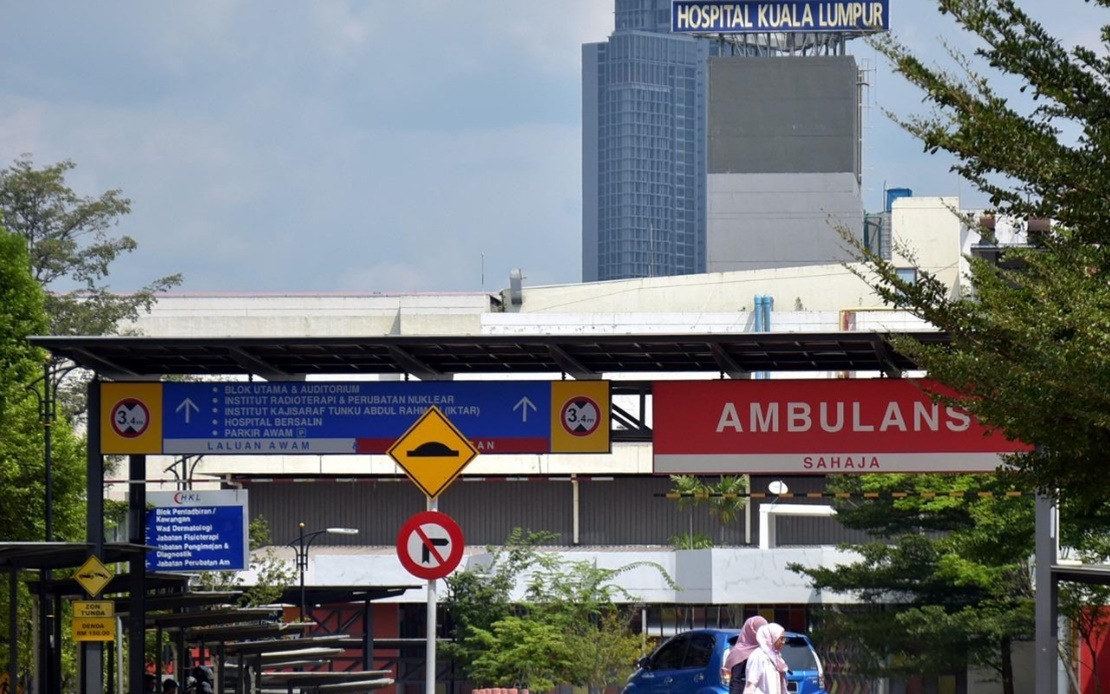
Hospital Kuala Lumpur issued a formal rebuttal on Thursday after a video depicting filthy toilet conditions circulated widely across social media platforms, with the institution's leadership asserting that the footage misrepresents conditions at their healthcare facility.
Datuk Dr Harikrishna K. R. Nair, the hospital's director, stated that HKL management immediately launched an investigation upon learning of the allegations. The hospital's subsequent review of all sanitary facilities under its jurisdiction led to a definitive conclusion: the toilet facilities shown in the controversial video are not situated within any area under HKL's operational control.
The distinction matters considerably. According to Dr Harikrishna, careful examination of the video revealed structural and design differences between the toilet shown and those actually installed throughout HKL's various departments and public areas. This disparity formed the basis of the hospital's categorical denial that the facility belonged to their institution. The clarification suggests the video may have originated from a different healthcare provider or public facility entirely, though HKL did not identify which institution might actually be responsible.
The viral footage had sparked considerable public concern regarding sanitation standards at Malaysia's premier teaching hospital. The video depicted what appeared to be overflowing urinals with waste water pooling across the floor, imagery guaranteed to provoke alarm among patients, their families, and the general public given ongoing sensitivity about hygiene in healthcare settings. Such content spreads rapidly through social networks, often outpacing official institutional responses and shaping public perception before corrections can be issued.
Dr Harikrishna characterised the circulation of the unverified video as an irresponsible action that jeopardised the professional standing of HKL's personnel. He emphasised that hospital staff remain dedicated to delivering quality healthcare services and that spreading misinformation about their workplace undermines morale and public confidence. This framing positions the hospital as a victim of misattribution rather than acknowledging broader questions about sanitation management across Malaysia's healthcare system.
The director underscored HKL's institutional commitment to maintaining elevated standards across sanitation, security, and user comfort for all constituencies including patients, visitors, and employees. He referenced the hospital's implementation of scheduled maintenance protocols designed to ensure facilities consistently meet stipulated benchmarks. These assurances, however, come without specific details regarding frequency of inspections, cleaning schedules, or measurable quality metrics that would allow independent verification.
HKL's statement explicitly cautioned the public against further sharing or amplifying the disputed video, framing such actions as potential contributors to public confusion and unfounded anxiety. This messaging reflects a broader institutional tendency to emphasise information control, though it stops short of addressing why similar allegations might periodically emerge regarding cleanliness at various Malaysian hospitals.
Simultaneously, the hospital signalled openness to legitimate feedback through established complaint mechanisms. Dr Harikrishna invited patients and visitors to submit concerns regarding facilities via official channels, suggesting the institution welcomes accountability mechanisms. This approach balances defensive denial with nominal receptiveness to criticism, though patients unfamiliar with bureaucratic procedures may face barriers in knowing how to lodge complaints effectively.
The incident illuminates persistent challenges within Malaysia's healthcare infrastructure. Public hospitals frequently operate under resource constraints that can affect maintenance capabilities. Viral videos have become increasingly common vehicles for raising facility concerns, though they occasionally misattribute problems to the wrong institution or fail to distinguish between isolated incidents and systemic failures. HKL's swift response indicates sensitivity to reputational risk in the social media age.
For Malaysian readers, the episode raises important questions about transparency and verification. While HKL's technical rebuttal may be accurate, the broader issue of sanitation standards across public healthcare facilities remains relevant to patient safety and public health. The hospital's assertion that the toilet shown belongs elsewhere cannot be independently verified by most social media users, creating an information environment where institutional denials compete with dramatic visual evidence.
The situation also reflects evolving healthcare management challenges in Southeast Asia, where rapid urbanisation and increasing hospital demand strain infrastructure. Malaysia's commitment to universal healthcare access through its public system depends partly on maintaining facilities that reassure users of safety and cleanliness. Individual incidents, whether at HKL or elsewhere, accumulate into broader public perception about the healthcare system's capacity to maintain standards.
Looking forward, HKL's response demonstrates that Malaysian healthcare institutions are monitoring social media and responding quickly to reputational threats. However, systemic improvement requires more than denial when problems are identified. Whether the viral video originated from HKL or another facility, the underlying conditions depicted somewhere in Malaysia's healthcare system warrant investigation and remediation to protect public health and maintain institutional credibility.

