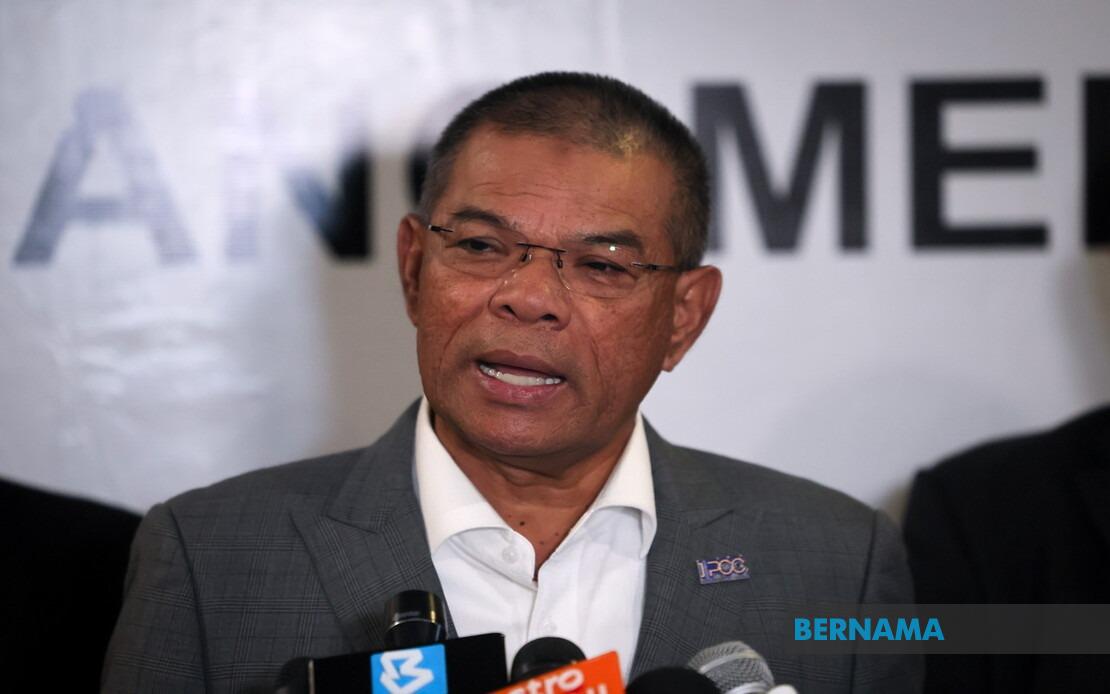
Home Minister Datuk Seri Saifuddin Nasution Ismail has moved swiftly to ensure full accountability following a tragedy in which an Immigration Department lorry struck and killed three members of the same family in central Kuala Lumpur. The minister issued a directive requiring the department to extend complete cooperation to investigating authorities, signalling the government's commitment to establishing the precise sequence of events that led to the early morning collision and its devastating human toll.
In a statement released via social media, Saifuddin Nasution emphasised that any findings of negligence, misconduct, or legal violations must result in decisive action against those found culpable. This unequivocal stance underscores the government's expectation that public institutions will be held to the highest standards of accountability, particularly when the actions of state agencies result in loss of life. The minister's language suggests an openness to pursuing criminal or administrative consequences regardless of the position or rank of individuals involved.
The minister extended formal condolences to the bereaved family, with both he and the broader Ministry of Home Affairs expressing prayers for the family's resilience during an exceptionally difficult period. Such expressions of sympathy, while customary in official responses to tragedy, carry particular weight given that the vehicle involved belonged to a government agency under the minister's oversight. The personal nature of the loss—three family members perishing together—compounds the emotional gravity of the incident and places heightened scrutiny on institutional responsibility.
The collision occurred at approximately 1 am along Jalan Sultan Ismail, near Maju Junction, when an unoccupied Immigration Black Maria lorry struck four pedestrians and a private Inokom Matrix vehicle. Three of the pedestrians were fatally injured, while a fourth sustained serious injuries requiring medical attention. The Proton Saga, which was travelling legitimately through the intersection on a green traffic signal, collided with the lorry after its driver proved unable to avoid impact.
According to eyewitness accounts and preliminary investigative findings, the Immigration lorry entered the Maju Junction intersection against a red traffic light, despite having its emergency beacon lights and siren activated. The lorry was en route to Chow Kit to conduct an enforcement operation targeting individuals residing in Malaysia without proper documentation. The activation of emergency signals did not afford the lorry legal exemption from observing traffic control protocols, particularly when other road users held legitimate right of way.
The force of the collision proved catastrophic. The lorry, upon impact, lost directional control and skidded across the road surface, striking the four pedestrians and colliding with the privately owned Inokom vehicle in its path. The sequence of events—involving multiple vehicles and pedestrians across a busy urban intersection—suggests the potential for complex causation factors that investigators must now methodically establish through forensic analysis, witness interviews, and vehicle examination.
Criminal investigations have been initiated under Section 41(1) of the Road Transport Act 1987, which addresses motor vehicle offences and related violations. This statutory framework governs the investigation and prosecution of driving offences in Malaysia, providing authorities with the legal instruments necessary to establish liability and determine appropriate sanctions. The specific application of this section indicates that investigators are treating the incident as a potential breach of road traffic legislation rather than exclusively as a tragic accident.
The incident raises important questions about the operational protocols governing Immigration Department enforcement vehicles and the training standards applied to their operators. Government agencies conducting enforcement activities during night hours face inherent operational challenges, yet must maintain rigorous safety standards that prioritize public protection. The activation of emergency signals, while necessary for operational purposes, does not substitute for careful navigation and adherence to traffic regulations designed to protect other road users.
For Malaysian families who rely on the safety of shared urban spaces, this incident underscores the vulnerability of pedestrians and ordinary motorists to institutional decisions made by state agencies. The case will likely prompt broader discussions about emergency vehicle protocols, the adequacy of driver training for government fleet operators, and the mechanisms through which accountability is established when state actions result in civilian casualties. Saifuddin Nasution's directive for full cooperation and decisive action if wrongdoing is established suggests awareness of these broader public concerns.
The investigation will necessarily examine whether standard operational procedures were followed, whether the driver received adequate training for night-time enforcement operations, and whether supervisory oversight mechanisms functioned adequately. Technical investigation of vehicle condition, road conditions, and visibility will provide objective data supporting the reconstruction of events. Witness testimony will help establish the sequence of actions taken by all parties and the visibility and visibility conditions at the time.
As Malaysian society continues grappling with rising urban traffic accidents and their devastating consequences, this case involving a government vehicle carries symbolic weight beyond the immediate tragedy. The commitment to accountability articulated by the Home Minister will be measured against the outcomes of the investigation and the subsequent actions taken. For the bereaved family and the broader community, the thoroughness and transparency of the investigative process will be vital in establishing whether institutional responsibility has been properly assigned and addressed.

