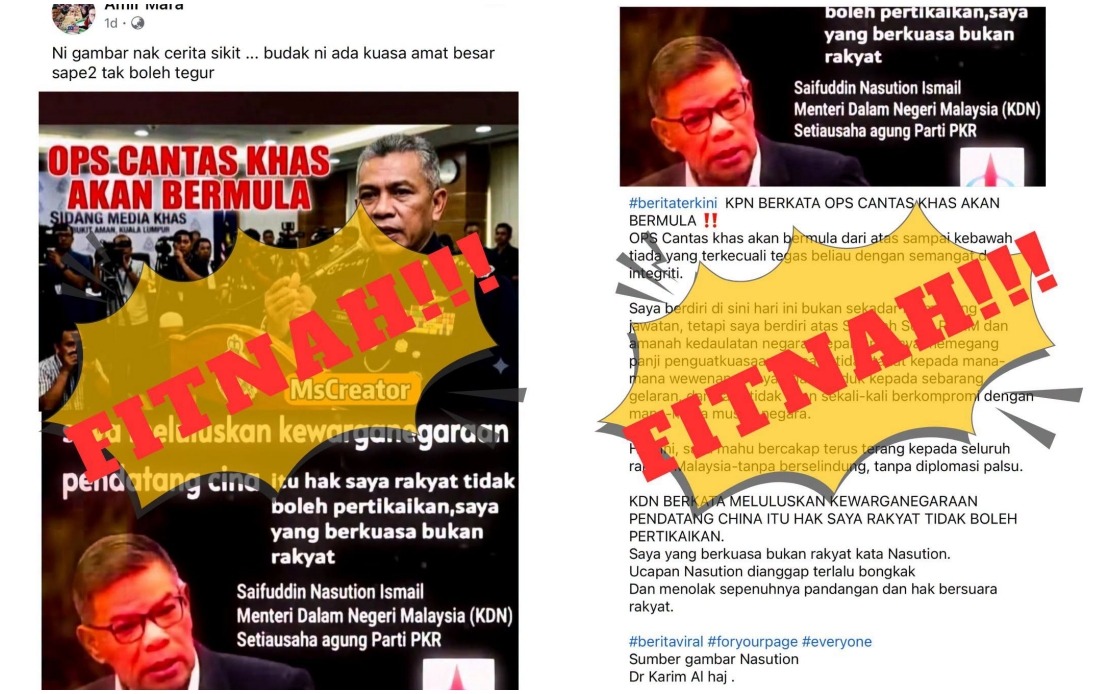
Home Minister Datuk Seri Saifuddin Nasution Ismail has categorically rejected allegations that his ministry granted citizenship to large numbers of foreign nationals, dismissing the claims as part of a sustained misinformation campaign designed to sow public discord. Speaking from Putrajaya on August 19, the minister emphasised that he has repeatedly debunked these assertions, yet they continue to resurface across social media platforms in the form of manipulated videos, posters and false narratives that have previously been addressed by government officials.
The minister's statement comes amid widespread circulation on social media of posts purporting to show evidence that the Home Ministry (KDN) had conducted mass naturalisation of foreign citizens. These claims have gained traction online despite previous official denials, reflecting a broader challenge facing Malaysian authorities in combating misinformation in the digital age. Saifuddin Nasution stressed that his ministry has consistently provided factual explanations grounded in official data, yet certain parties have deliberately chosen to ignore these corrections and continue spreading discredited allegations.
In his social media address, Saifuddin Nasution highlighted the deliberate nature of the misinformation campaign, accusing unnamed actors of recycling outdated and false claims to confuse the Malaysian public. The persistence of these narratives despite official refutations underscores a troubling pattern whereby falsehoods gain renewed life through social media sharing, even when comprehensively addressed by government institutions. The minister indicated that this cyclical pattern of misinformation suggests coordinated efforts to undermine public trust in state agencies rather than genuine grassroots concern.
The Home Minister warned of the serious consequences that flow from such misinformation campaigns. Beyond damaging individual reputations or institutional credibility, Saifuddin Nasution cautioned that mass circulation of false citizenship claims could erode public confidence in Malaysia's governance structures, trigger racial tensions, and create social instability. He further suggested that in extreme cases, such narratives might pose a threat to national security by fomenting inter-community hostility and weakening faith in the state's ability to maintain order and uphold the rule of law.
Saifuddin Nasution's warning reflects mounting concern among Malaysian policymakers about weaponised misinformation, particularly on sensitive topics touching on citizenship, immigration and ethnic relations. Given Malaysia's multi-ethnic composition and the historical significance of citizenship issues in the nation's political fabric, claims regarding mass naturalisation can inflame communal anxieties even when they are entirely fabricated. The minister's intervention suggests that authorities are treating these allegations seriously not because of their factual merit, but because of their potential to destabilise social cohesion.
The minister urged all segments of Malaysian society to exercise greater responsibility when consuming and sharing information on digital platforms. He called on citizens to verify claims against official sources before accepting or disseminating them further, emphasising that facts and data should not be displaced by unfounded allegations. This appeal reflects a broader governmental push to promote digital literacy and critical thinking among Malaysians, recognising that no amount of official denials can fully contain misinformation once it spreads across social media networks.
Saifuddin Nasution specifically cautioned against the exploitation of sensitive national issues for political advantage or social media engagement. His language suggests frustration with bad-faith actors who deliberately amplify contentious narratives to gain attention or undermine political opponents, regardless of factual accuracy. This dynamic represents a challenge facing democracies globally: how to combat deliberate falsehoods while protecting free speech and avoiding the perception that governments are attempting to suppress legitimate criticism.
The ministry has previously addressed these citizenship allegations through official statements and media reports, according to Saifuddin Nasution. However, the continued recirculation of the same false claims indicates that initial government responses have proven insufficient to permanently suppress the narratives. This gap between official refutations and persistent public belief underscores the challenges facing Malaysian authorities in an environment where social media algorithms reward sensationalism and where confirmation bias leads users to credit information aligned with their pre-existing worldviews.
For Malaysian readers and regional observers, this episode illustrates the broader challenges confronting Southeast Asian nations as they navigate the digital information landscape. Countries across the region have grappled with misinformation campaigns touching on immigration, citizenship and ethnic relations, often with destabilising consequences. Malaysia's experience suggests that technical government responses and factual corrections, while necessary, may be insufficient without broader societal commitment to information integrity and digital responsibility.
The Home Minister's intervention also reflects implicit acknowledgment that certain segments of the Malaysian public remain susceptible to false claims about citizenship and immigration. The resonance of these narratives likely stems from genuine public anxieties about immigration policy, demographic change and resource allocation, even if the specific allegations are fabricated. Addressing misinformation effectively may therefore require not only debunking false claims but also engaging substantively with the legitimate concerns that lend such narratives their persuasive power.

