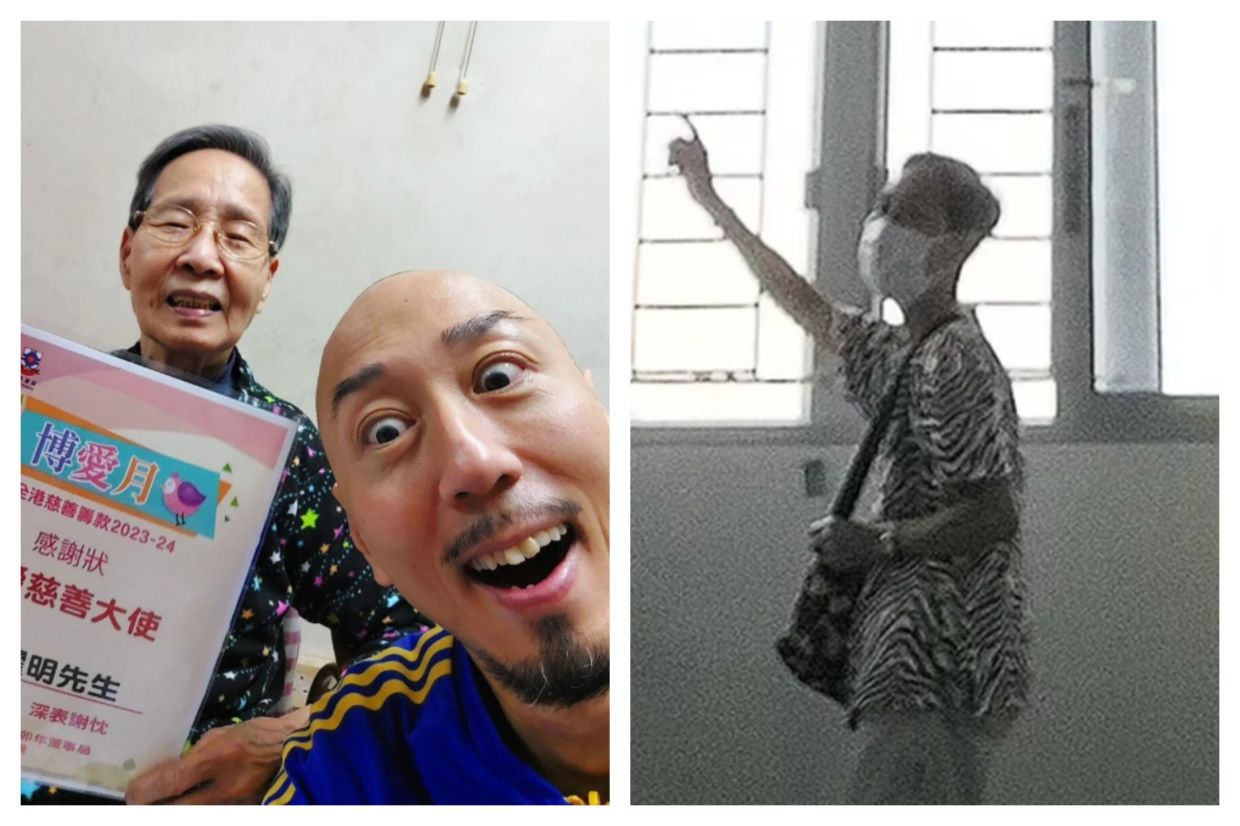
Hong Kong television actor Dai Yiu Ming has realised a cherished personal milestone by purchasing a residential property for his elderly mother, marking the culmination of years spent saving diligently and building a modest but steady career in the entertainment industry. The 54-year-old TVB performer recently announced the achievement publicly through social media, sharing glimpses of the new home alongside a heartfelt reflection on what the purchase represents for both himself and his aging parent.
In his Instagram post accompanying the announcement, Dai acknowledged the considerable financial strain required to complete the transaction, yet expressed complete satisfaction with the decision. His emotional statement underscored the profound significance of the moment, framing it not merely as a property acquisition but as a deeply personal expression of gratitude and filial responsibility. The actor's candid admission that the expense was substantial yet worthwhile provides insight into the considerable sacrifice involved in achieving homeownership within Hong Kong's notoriously expensive real estate market.
Dai's mother, now in her ninth decade, has endured a lifetime marked by material hardship and displacement. For the majority of her years, she has inhabited either improvised dwellings or basic public housing units, never experiencing the stability and dignity that a proper home provides. Through recollections shared by her son, she survived the wartime period by residing in air-raid shelters, where survival itself depended on gathering wild edible plants such as sweet potato leaves. These vivid details illuminate the generational gulf between a mother who survived through near-subsistence existence and a son determined to provide her with comfort and security in her final years.
In his message to his mother, Dai articulated both humility and determination, acknowledging his own financial limitations whilst expressing pride in overcoming them through disciplined frugality. His recognition that he lacks the earning capacity of wealthier individuals, combined with his demonstration that persistent modest effort can still achieve meaningful goals, resonates particularly with middle-income households throughout the region struggling against property price inflation. The actor's emphasis on temporal constraints—noting that their current lifetime together is finite and irreplaceable—reflects a cultural emphasis on filial duty that remains deeply embedded in Chinese society across Hong Kong, mainland China, and overseas Chinese communities.
The public response to Dai's announcement illustrates the cultural resonance of filial piety as a virtue transcending modern commercialism and material pursuits. Online commentators praised the actor not for accumulating wealth or achieving celebrity status, but specifically for prioritising parental care and demonstrating unwavering commitment to family obligations despite economic constraints. One admirer explicitly highlighted his "sense of filial piety and responsibility," suggesting that in contemporary Hong Kong society, such values command genuine respect and admiration even as urbanisation and globalisation reshape traditional family structures.
Dai's career trajectory reflects the precarious nature of employment within Asia's entertainment industries, particularly for supporting performers without major star status. He initially trained through ATV's talent development programme in 1991 and secured his acting debut through a television series in 1993. However, dissatisfaction with the broadcaster's recognition of his efforts prompted his departure after merely one year, necessitating a temporary shift into technical repair work before TVB signed him to a contract in 1994. Since then, he has established himself as a reliable character actor, building steady employment through consistent appearances in dramatic productions.
The consistency of Dai's career under TVB's contract underscores an important reality for Hong Kong entertainment professionals: sustainable income often derives not from lead roles commanding substantial fees, but from reliable secondary roles providing regular paycheques. This employment pattern, whilst less glamorous than mainstream stardom, offers the stability necessary for long-term financial planning and family support. Dai's ability to sustain both his mother and himself through decades of such work, whilst simultaneously accumulating sufficient capital for property purchase, demonstrates the cumulative power of disciplined savings across an extended career.
Dai's attempt to expand his professional horizons into mainland China during 2017 proved ultimately unsustainable, revealing the depth of his filial commitment. Despite the potential for enhanced earnings and broader career opportunities presented by the mainland market, his inability to abandon his elderly mother compelled his relatively rapid return to Hong Kong. This decision prioritising family presence over economic maximisation further crystallises his values and explains how property ownership became achievable only through years of accumulated modest earnings rather than through higher-risk, higher-reward entertainment ventures.
The actor's personal circumstances illuminate broader demographic and social challenges confronting East and Southeast Asia. Rapid urbanisation and property price escalation have rendered homeownership increasingly elusive for ordinary workers, even those with stable, decades-long employment records. Simultaneously, aging populations require intensive family care, yet the economic pressures of housing and living costs often force adult children into difficult compromises between filial responsibility and personal financial security. Dai's achievement, whilst individually admirable, implicitly highlights systemic challenges that structural inequality creates.
For Malaysian and regional audiences, Dai's narrative carries particular resonance given the significant Hong Kong migrant communities throughout Malaysia and the cultural affinities linking these societies. The struggle to balance parental care with property acquisition resonates across the region, where multigenerational housing challenges and rapid real estate inflation affect middle-income families across Singapore, Malaysia, and Taiwan. The profound cultural values embedded in Dai's decision—prioritising parental welfare even at considerable personal expense—reflect shared Confucian-influenced family ethics that remain influential across the region despite modernisation pressures.
The genuine warmth of public response to Dai's accomplishment suggests that in contemporary Hong Kong and across Chinese-speaking communities, individual character and moral commitment still command significant respect. At a moment when entertainment media frequently celebrates excessive consumption and celebrity excess, the positive reception surrounding Dai's modest yet meaningful achievement offers a counternarrative emphasising sacrifice, persistence, and intergenerational loyalty. His story demonstrates that meaningful life accomplishment need not involve spectacular wealth or fame, but can instead emerge through years of steady work devoted to fulfilling family obligations and honouring those who made earlier sacrifices for one's benefit.

