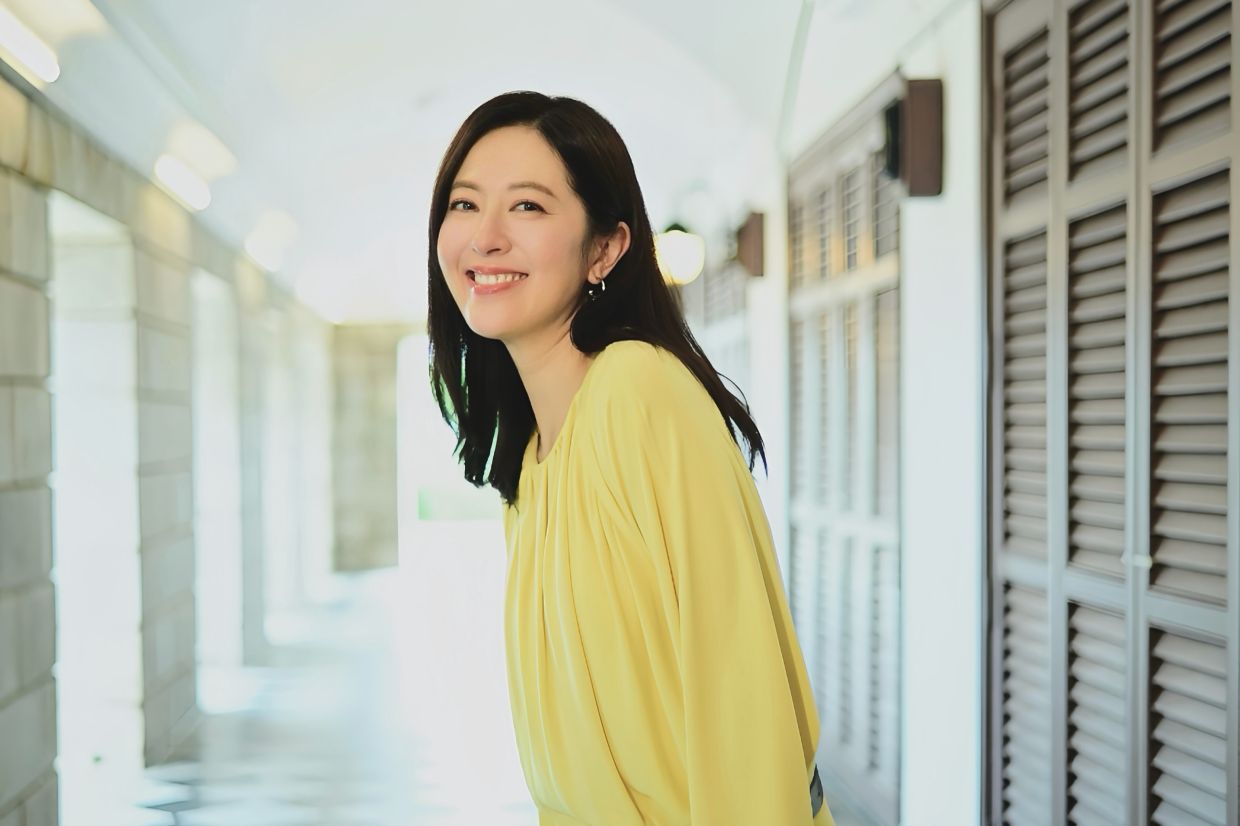
Hong Kong actress Natalie Tong has opened up about the profound emotional toll of losing her mother in 2009, describing how career ambitions during her peak professional years prevented her from cherishing family moments that could never be recovered. Speaking candidly during a recent television variety show appearance, the 45-year-old entertainer became visibly emotional while reflecting on a loss that continues to shape her life philosophy and personal choices more than a decade and a half later.
During the interview, Tong did not shy away from examining her own role in the circumstances surrounding her mother's death, candidly acknowledging that her single-minded focus on building a successful acting career had come at a considerable personal cost. She expressed deep remorse over the amount of parental care and attention she had failed to provide during the years when her mother was alive, describing how she had channelled virtually all her energy and time into professional pursuits while her family's needs took a back seat. The actress characterised this imbalance as a form of neglect, one that haunted her long after it was too late to make amends.
The catalyst for Tong's regret centred on her mother's medical condition. Years before her death, her mother had undergone a delicate procedure to implant a pacemaker, a life-sustaining device that required periodic replacement to continue functioning properly. When the time came to schedule the necessary replacement surgery, the family encountered a significant obstacle: limited financial resources made it difficult to afford the procedure without substantial sacrifice. Rather than finding a way to prioritise the mother's health, the decision was made to postpone the medical intervention, a choice driven by economic necessity but one that Tong now views through a lens of regret and what-if scenarios.
Tong reflected that at the time, she held a youthful and somewhat naive conviction that her mother would remain with her indefinitely. There was an implicit assumption that more time would come later, that opportunities to spend quality moments together would present themselves in the future when her professional demands had lessened. This assumption proved tragically mistaken. Her mother subsequently embarked on a trip, but upon returning home, her health deteriorated rapidly and catastrophically. Within a short timeframe, her mother began experiencing severe internal bleeding, vomiting blood as her body failed, necessitating an emergency hospital admission.
When Tong received word of her mother's hospitalisation, she rushed to the hospital, but the visit was shrouded in an overwhelming sense of foreboding. The moment she arrived, medical staff delivered news that shattered her world: her mother had already passed away. The shock proved too much for the actress to process rationally. She collapsed physically, overwhelmed by the sudden realisation that the person she had been taking for granted was simply gone, that the time she had assumed would come never would arrive.
In her television appearance, Tong articulated how the passage of years had brought intellectual understanding of life's impermanence and mortality's inevitability, yet emotional wounds remained unhealed. She identified regret as the true source of her lingering pain—not an abstract fear of death itself, but the concrete realisation of missed experiences, unspoken words, and moments of connection that had slipped away irretrievably. The sadness came not from accepting her mother's mortality, but from recognising that she had squandered opportunities to demonstrate love and appreciation while her mother was alive.
This profound loss became the catalyst for a significant life realignment that extended well into Tong's professional career. In 2022, after nearly two decades of service to TVB, the Hong Kong broadcasting corporation where she had built her on-screen reputation, Tong made the difficult decision to walk away from the company. The departure represented more than a career shift; it symbolised an intentional decision to recalibrate her life's priorities and values. She consciously chose to redirect her energies toward rebuilding relationships with her remaining family members and reclaiming personal time that had been surrendered to professional obligations.
Tong has been transparent about the motivational forces behind this career transition, linking it directly to her desire to avoid repeating the same patterns of regret that had defined her relationship with her mother. By severing ties with TVB, she created space in her life to cultivate deeper connections with loved ones still living. The actress emphasised that while she cannot undo the past or recover lost time with her mother, she possesses the agency to make different choices going forward—to build a life structured around values other than career advancement and professional achievement.
In practical terms, Tong's post-TVB trajectory has reflected this philosophical shift. In 2023, she ventured into entrepreneurship, establishing her own bakery business in the Causeway Bay district of Hong Kong. This venture represents both a new professional identity and a lifestyle change that allows her greater flexibility and autonomy compared to her previous work as a contracted television actress. The bakery operates as both a commercial enterprise and a tangible manifestation of her commitment to personal satisfaction and independence from the entertainment industry's demanding schedules.
Despite the major career transition, Tong has maintained a selective presence in entertainment. She has occasionally appeared on variety show programming, continuing to engage with the medium that made her a household name while maintaining boundaries that protect her newfound work-life balance. Additionally, in 2025, Tong expanded her creative portfolio by making her debut on the theatrical stage, demonstrating that her departure from traditional television acting did not signal a complete withdrawal from performance but rather a more intentional curation of projects aligned with her personal values.
Throughout her public reflections, Tong has resisted framing herself as a cautionary tale or dwelling solely in regret and loss. Instead, she has positioned her story as one about the possibility of redemption and course correction. While she acknowledges that the past cannot be rewritten, she emphasises the importance of recognising when one's life trajectory has become misaligned with one's deepest values. For Tong, the ability to make deliberate changes—to step away from lucrative professional opportunities in favour of time with family and personal growth—represents a form of power and agency that she wishes she had exercised earlier.
Her message to audiences, though not explicitly stated as advice, carries implicit wisdom for those caught in similar patterns of career-driven sacrifice. Tong's public vulnerability suggests that the price of professional success, when measured against time with loved ones, warrants careful reconsideration. In Southeast Asia, where career ambition often intersects with family obligations and economic pressures similar to those that complicated Tong's own situation, her story resonates as a reminder that life's most important moments cannot be permanently postponed or indefinitely deferred.

