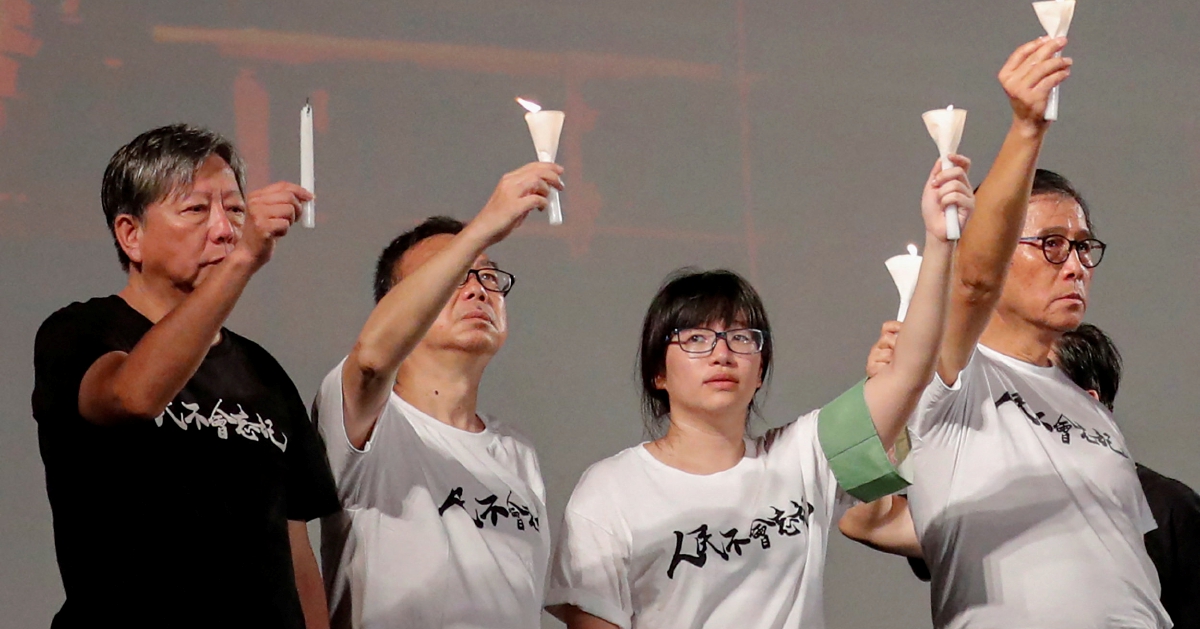
A Hong Kong court delivered guilty verdicts on Friday against two pro-democracy activists who have led the annual candlelit vigils honouring victims of China's 1989 Tiananmen Square military crackdown. The convictions on subversion charges represent a significant tightening of restrictions on public commemoration of sensitive historical events in the territory, signalling how far-reaching the application of national security laws has become in Hong Kong's judicial system.
The case underscores the deepening divide between Hong Kong's traditional freedoms and the mainland's grip on political expression. For three decades, the June 4 vigils at Victoria Park attracted tens of thousands of residents who lit candles and observed moments of silence to remember those killed during the 1989 military intervention. The annual ritual stood as one of Asia's most visible demonstrations of collective memory and dissent, a stark contrast to the official silence surrounding the event across mainland China.
Hong Kong's National Security Law, imposed by Beijing in 2020 following pro-democracy protests, dramatically expanded authorities' power to prosecute activities deemed subversive. The law's broad definitions of political crimes have created chilling effects throughout civil society. Organisers of cultural events, academic forums, and historical commemorations now calculate legal risks when planning public activities. What previously existed in the realm of free speech and assembly has increasingly migrated into prosecutorial scrutiny.
The convictions carry implications that extend beyond the two individuals. They suggest that organising or participating in future vigils could expose participants to similar legal jeopardy. This creates practical uncertainty for Hong Kong residents considering whether to attend or promote such events. The psychological impact of prosecution against organisers may prove as significant as the sentences themselves in dampening public participation in commemoration activities.
For Southeast Asian observers, the ruling demonstrates how national security frameworks adopted in recent years can be weaponised against activities that Western democracies would routinely protect as free expression. Countries in the region examining their own security legislation might note how Hong Kong's experience shows the trajectory from broad legislative language to enforcement against symbolic political acts. The case raises questions about how definitional boundaries between legitimate expression and criminal subversion become constructed and applied.
International human rights organisations have documented how the Tiananmen vigils' suppression reflects a broader pattern of constraint on Hong Kong's once-distinctive freedoms. The timing of Friday's verdict arrives as authorities continue dismantling structures of autonomous civil society that distinguished the territory before 2020. Democratic institutions, independent media, and public spheres for political discourse have contracted markedly under national security enforcement.
The two activists convicted have become symbols of resistance to this tide. Their willingness to continue organising vigils despite mounting legal risks earned them prominence among pro-democracy circles. However, their prosecution also illustrates how individual conscience and commitment, while morally significant, offer limited protection against state machinery determined to eliminate particular forms of public expression. The conviction sends unmistakable signals about costs attached to sustaining commemorative practices.
Historically, Hong Kong's ability to openly discuss Tiananmen distinguished it from mainland China, where discussion of the event remains censored across media, education, and public forums. The vigils served as a geographical exception to China's broader strategy of historical erasure. The court verdict signals the erosion of that exception, bringing Hong Kong's official approach toward mainland practices of managed historical narratives and controlled public memory.
The ruling also reflects shifting judicial interpretation in Hong Kong courts. Judges appointed or influenced under post-2020 governance structures increasingly adopt interpretations of national security law that expand criminal liability. What previously would have been analysed as protected political expression now receives treatment as subversive intent. This evolution in jurisprudence represents perhaps the most consequential institutional change occurring in Hong Kong's legal system.
Regional implications merit attention. Hong Kong's experience offers lessons—both cautionary and instructive—to neighbouring democracies contemplating security legislation. Malaysia, facing periodic debates about laws addressing national security and sedition, observes how such frameworks function in practice within a developed common-law system. The trajectory Hong Kong has followed demonstrates how security legislation, once enacted, tends toward expanding application and narrowing interpretations of permissible speech.
Moving forward, the question facing Hong Kong's pro-democracy movement involves calculating continued resistance against consolidated state power. Whether vigils will continue underground, in diaspora communities, or cease altogether remains uncertain. International attention on the convictions reflects broader concern about democratic spaces contracting across Asia. The case has become emblematic of Hong Kong's transformation from a territory whose freedoms impressed international observers to one where exercising basic liberties increasingly carries criminal risk.
The verdict represents another chapter in Hong Kong's accelerating political change since 2020. Each court decision, each prosecution, each conviction solidifies new norms about what constitutes permissible civic activity. For activists and ordinary residents alike, navigating Hong Kong's evolving legal landscape requires constant reassessment of boundaries that previously seemed stable. The conviction of these two Tiananmen vigil organisers marks how thoroughly those boundaries have shifted.

