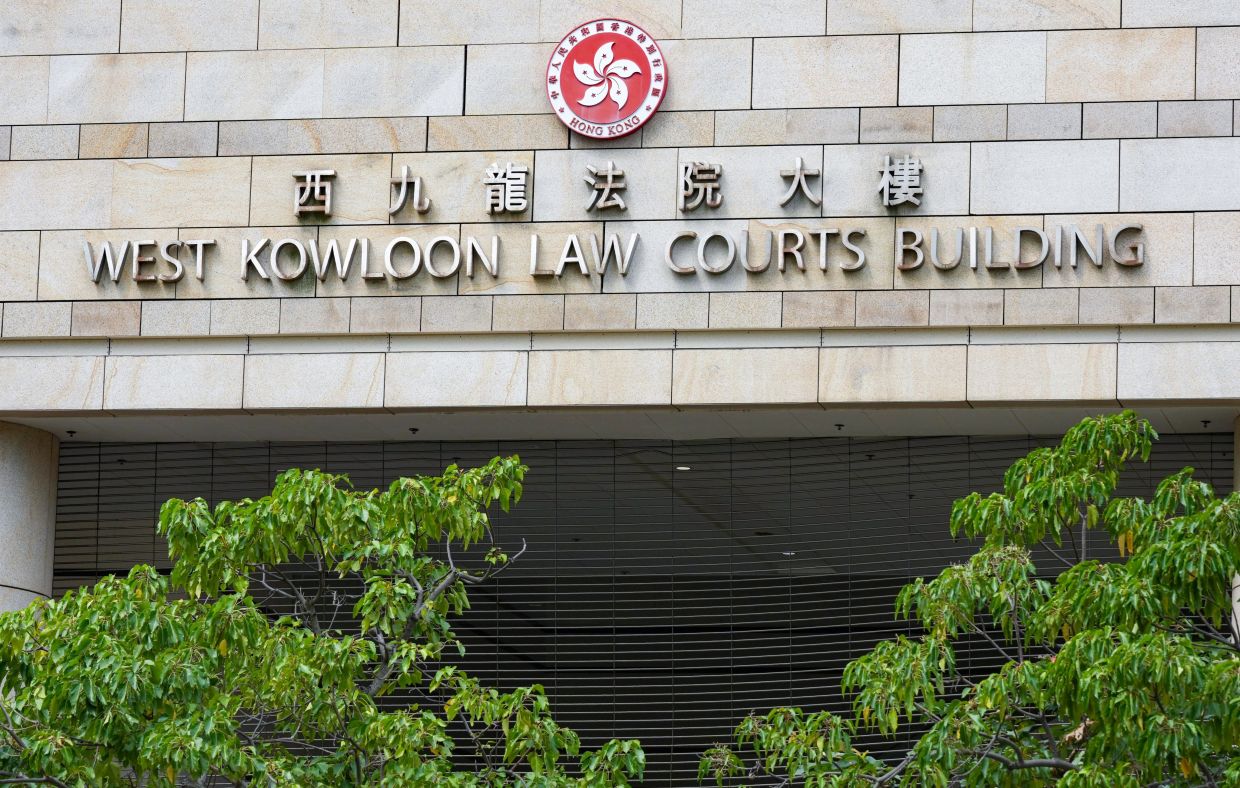
A 65-year-old repeat sex offender in Hong Kong has been handed a four-month prison term after sexually assaulting a 17-year-old secondary school student aboard a bus in broad daylight, an incident that gained significant traction on social media when a bystander recorded and uploaded footage of the attack. The West Kowloon Court delivered the sentence to William Wu Yiu-shing on Tuesday, concluding legal proceedings against the former household hardware salesman who pleaded guilty to the indecent assault charge last month.
The assault took place on 5 June when Wu boarded a KMB double-decker bus in the busy Mong Kok district. As the vehicle approached the intersection of Mong Kok Road and Sai Yeung Choi Street South around midday, Wu seated himself on the upper deck directly behind a Form Three student. The 37-second video footage that emerged subsequently showed Wu, dressed in a white tank top, extending his left arm to grope the girl's chest as she sat in the row in front of him. Despite verbal warnings from pedestrians outside the bus, Wu continued the assault as the vehicle moved away from the traffic light.
The teenager later recounted to police that she experienced unwanted contact to her armpit and witnessed Wu attempting to grab her. Overwhelmed by fear in the moment, she did not respond verbally to the assault and instead rushed home immediately after the bus reached her destination. The incident, documented through the quick-thinking of an outsider, sparked public discourse about safety on mass transit systems and predatory behaviour in crowded urban spaces—a persistent concern for commuters across Southeast Asia and Hong Kong alike.
Authorities apprehended Wu the same day when he attempted to cross the Hong Kong-Zhuhai-Macau Bridge border checkpoint upon returning from Macau. During questioning, the defendant admitted that he had committed the assault to satisfy sexual urges. This confession, combined with his willingness to cooperate with investigators, appeared to have influenced the prosecution's approach and ultimately the court's sentencing decision.
Wu's criminal history significantly shaped the case's trajectory and public perception. The defendant carried three prior convictions for indecent assault, making this latest incident part of a troubling pattern of similar offences. His lawyer acknowledged during Tuesday's court appearance that Wu had frankly admitted to his wrongdoing and explicitly recognised that he had engaged in comparable criminal conduct previously. This candid admission of recidivism underscored the systemic nature of his behaviour rather than a one-time lapse in judgment.
The defence presented rehabilitation prospects as a mitigating factor, with Wu's legal representative informing the court that the defendant expressed willingness to undergo psychological treatment as part of his rehabilitation programme. Such therapeutic intervention remains controversial in cases of repeat sex offenders, with criminologists and victim advocacy groups in the region frequently debating whether treatment-based approaches adequately protect public safety or inadvertently provide false reassurance to communities. The court's acceptance of this commitment suggests some optimism regarding behavioural modification, though Wu's history raises legitimate questions about the efficacy of such interventions for entrenched offenders.
The sentencing framework applied in Hong Kong reflects the jurisdiction's legal approach to indecent assault. The offence carries a maximum penalty of ten years' imprisonment in higher courts, though when heard by a magistrate—as in Wu's case—the maximum custodial term is capped at two years. The four-month sentence, while falling well below the statutory ceiling, still represents meaningful custody and reflects the seriousness with which the court treated both the conduct and Wu's prior record. The relatively modest sentence has prompted discussion about whether magistrate court ceilings adequately reflect the gravity of repeat sexual violence.
Wu has been held in remand since his prosecution commenced on 8 June, meaning he has already served approximately two months of his sentence. Authorities expect him to become eligible for early release within approximately one month from the sentencing date, a timeline that has generated concern among victim advocates who view early release provisions as potentially inadequate protection for public safety, particularly given the defendant's established pattern of predatory conduct.
The case resonates powerfully across Southeast Asian cities where similar public transport assaults occur with alarming regularity but often go unreported or undocumented. The viral nature of the bus footage—amplified through social media platforms—transformed what might otherwise have been an isolated incident into a catalyst for broader conversations about street harassment, consent, and systemic failures in protecting vulnerable commuters. The incident highlights how surveillance, whether intentional or incidental, can serve as both a deterrent and accountability mechanism in jurisdictions where victims may otherwise feel hesitant to report assault.
Beyond the immediate case, Wu's sentencing underscores the challenge that repeat offenders pose to justice systems across the region. With multiple prior convictions, this individual had already cycled through the criminal justice apparatus multiple times, yet continued to pose a threat to the public. The intersection of psychological treatment, sentencing severity, and early release protocols remains a contentious policy arena, particularly as cities grapple with how to balance rehabilitation ideals against victim protection imperatives. For commuters and public safety advocates in Hong Kong and beyond, Wu's case epitomises the persistent vulnerability of ordinary citizens utilising shared public spaces and the ongoing struggle to create genuinely safe urban environments.

