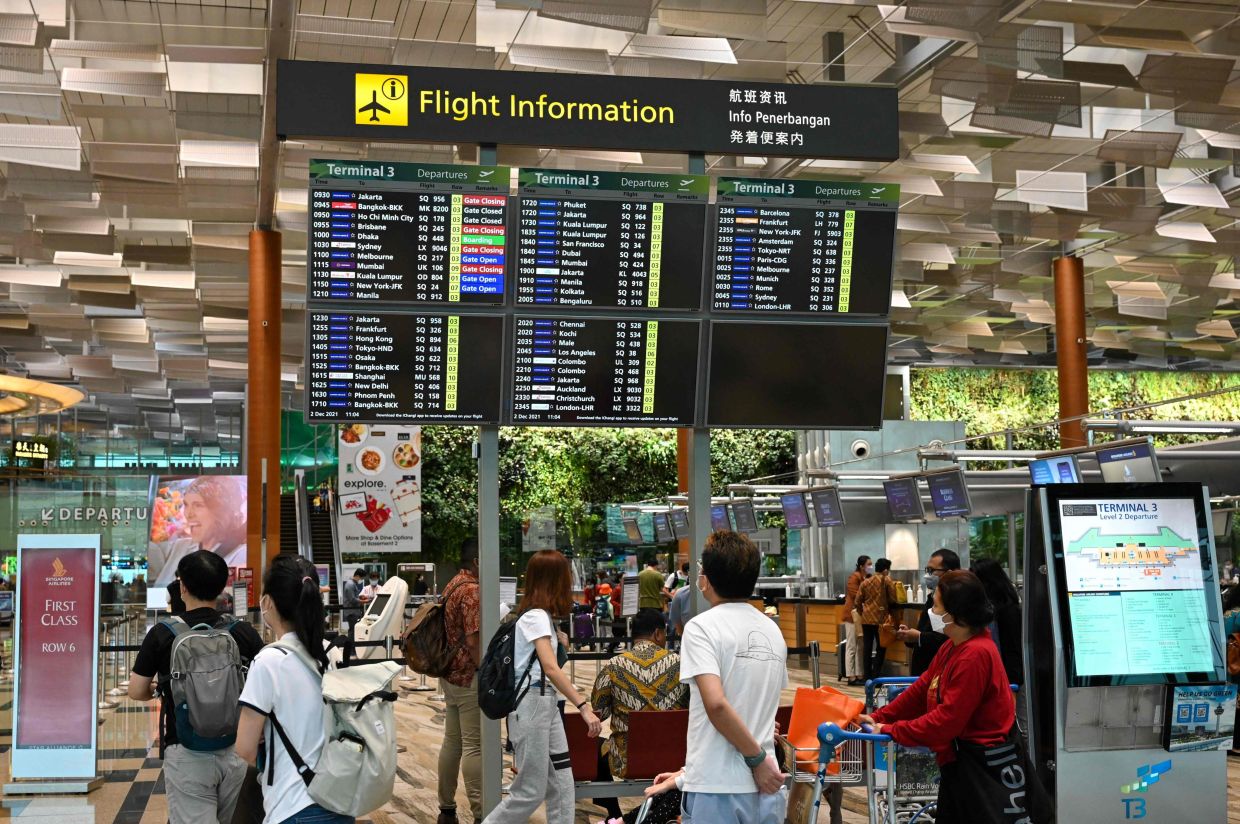
A Singapore court has sentenced a Hong Kong mother and her adult son to jail time following a violent altercation that erupted at Changi Airport's terminal 3 on the afternoon of June 30, 2024. Chan Sui-kwan, aged 65, received a six-month prison term for voluntarily causing hurt to deter a public servant from performing his duties, while her son, Chan Wing-kwan, aged 42, was handed a 10-day custodial sentence for voluntarily causing hurt. The incident highlights the serious consequences that can follow from public disturbances at major transportation hubs, where tensions can quickly escalate in close quarters with limited space and high passenger volumes.
The altercation began when Chan Wing-kwan became visibly agitated after misinterpreting the actions of nearby travellers, believing they were directing mockery towards him. In his heightened emotional state, he kicked his own mother, prompting a 69-year-old bystander to intervene and express concern for her welfare. Rather than defusing the situation, this well-intentioned assistance merely intensified the confrontation. The mother instructed the bystander to leave her alone, while her son issued an aggressive challenge, daring him to engage in physical combat. The bystander's attempt to help effectively placed him in the middle of what appeared to be a family dispute that had spiralled into violence.
The situation deteriorated markedly when the pair relocated to another floor of the terminal, where Chan Wing-kwan once again kicked his mother. The bystander, still concerned for the woman's safety, attempted to summon police assistance by dialling emergency services. This action triggered an immediate and violent response from Chan Wing-kwan, who lunged towards the man in an attempt to prevent him from contacting authorities. A prolonged physical struggle ensued between the son and the bystander, during which Chan Wing-kwan repeatedly punched the elderly man. The sustained assault left the bystander with significant injuries, including a head haematoma—a collection of blood beneath the skin that typically indicates substantial blunt force trauma—along with abrasions to his knees and bruising on his fingers.
Police officers responded to the scene and conducted an initial investigation of the incident. During this first encounter, authorities recorded the personal details from both the mother and son's travel documents before returning their passports, allowing them to remain in the airport's public areas. This decision to release them provisionally, rather than immediately detaining them, would later prove problematic as the situation was far from resolved. Their presence at the airport continued through the afternoon without apparent restriction.
Hours later, during the late afternoon period, police officers encountered the Hong Kong pair again, this time in the airport's departure hall. When approached by authorities, Chan Sui-kwan refused to surrender her passport as requested and began causing a further disturbance in the busy departure area. Her non-compliance and disruptive behaviour prompted officers to move towards making an arrest. Rather than submitting to lawful custody, the mother actively resisted the police officers, escalating the confrontation significantly. During the struggle to subdue and arrest her, she bit a police officer on his right forearm, causing a bite mark approximately one centimetre in size and leaving surrounding bruising despite the officer wearing protective clothing.
The legal proceedings that followed unfolded over several months, introducing additional complications to an already serious matter. Chan Sui-kwan was not brought to court until November 18, 2024, months after the incident occurred, while her son faced charges on April 24 the following year. This extended timeline between the incident and legal proceedings is not unusual in complex cases involving international travellers and multiple victims, as investigations must account for witness statements, injury documentation, and coordination with immigration authorities.
The court process encountered further delays when both the mother and son failed to appear for a scheduled court hearing on July 22 this year. Their absence triggered the issuance of arrest warrants, escalating the severity of their legal jeopardy by adding failure to appear charges to their existing violations. Following their eventual apprehension and return to court, both were convicted on July 29 and subsequently sentenced on Monday, concluding the protracted legal process.
The sentencing carries significant implications for understanding how Singapore's legal system handles violent conduct in public spaces, particularly involving foreign nationals. The six-month sentence imposed on the mother reflects the gravity with which courts view assaults on police officers, especially those involving resistance to lawful arrest and physical injury inflicted on law enforcement personnel. The lesser 10-day sentence for the son, despite his instigating role in the initial violence, may reflect his early involvement in the sequence of events compared to his mother's later assault on an officer. Both sentences underscore Singapore's zero-tolerance approach to airport disruptions and violence against authorities.
For Malaysian travellers and regional passengers, this case serves as a stark reminder of how quickly situational awareness and emotional control can determine the difference between a travel inconvenience and serious legal consequences. Changi Airport, as one of Southeast Asia's busiest aviation hubs, maintains rigorous security and law enforcement protocols. The presence of substantial police resources and surveillance systems means that incidents are documented thoroughly, providing prosecutors with clear evidence for criminal proceedings. The fact that neither party successfully disputed their conviction suggests the evidentiary case was overwhelming, likely supported by airport CCTV footage and multiple witness accounts.
The extended timeline from incident to sentencing also illustrates the resource-intensive nature of prosecuting cases involving foreign nationals. Immigration records must be verified, international communication may be necessary, and bail or release conditions must be carefully managed to ensure defendant availability for hearings. The failure of both parties to appear in July this year suggests they may have attempted to evade the judicial process, a serious matter that compounds their original offences.
This incident serves as a cautionary tale about the convergence of interpersonal conflict, public spaces, and law enforcement authority. The mother's decision to resist arrest and bite a police officer—actions that undoubtedly worsened her legal position—demonstrates how momentary choices made under stress can result in dramatically harsher penalties. Had she simply complied with the initial police request and surrendered her passport, her sentence might have been substantially reduced, as her original involvement stemmed from a family conflict rather than calculated defiance of authority.

