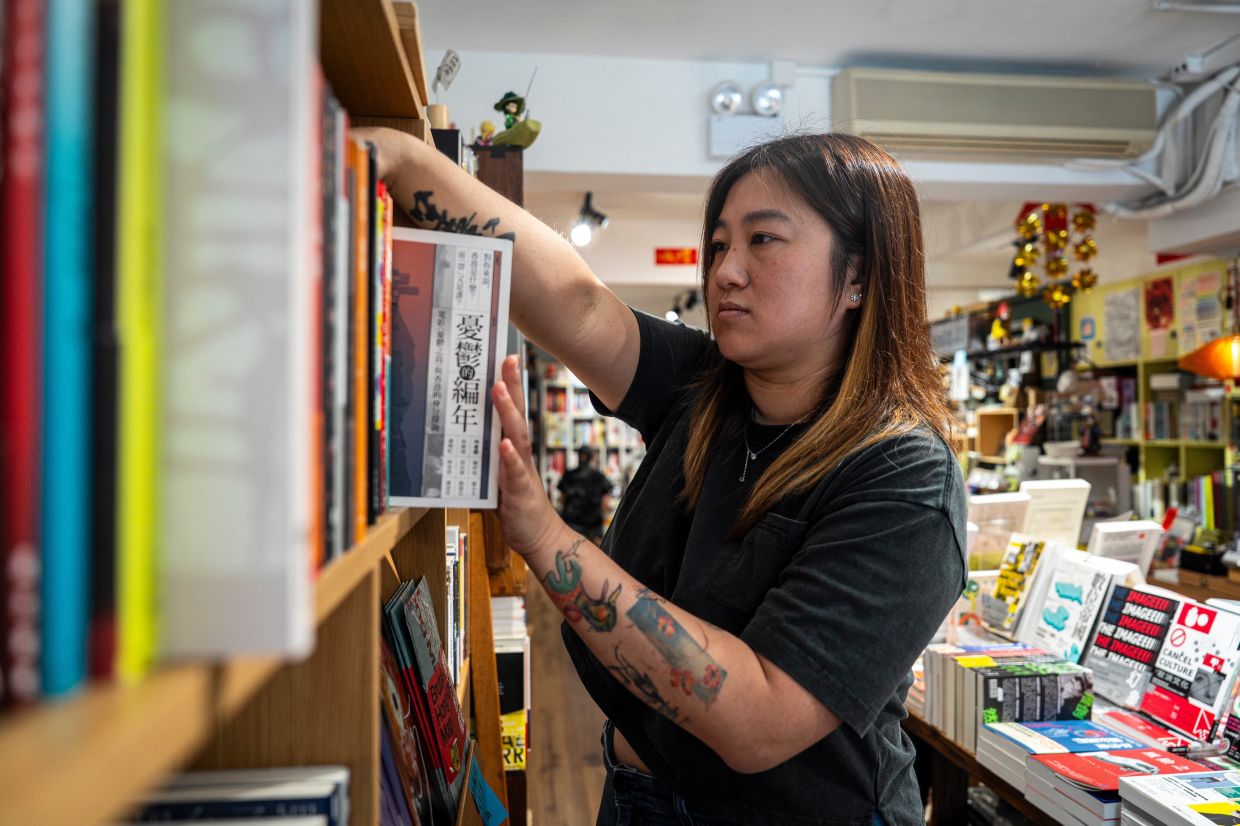
Hong Kong's police force has taken action against two individuals accused of distributing seditious materials and accepting financial support from overseas political groups, employing provisions of the territory's 2024 national security legislation. The arrests occurred on Wednesday, with official confirmation coming through a government statement released the following morning, though authorities declined to name those detained. Multiple local media sources, particularly the Chinese-language Ming Pao newspaper, attributed one of the arrests to Leticia Wong, proprietor of Hunter Bookstore in the Sham Shui Po district, based on unnamed informants. Wong, a former district councillor with a track record of supporting democratic causes, has maintained a visible advocacy presence even as many prominent democracy activists have faced imprisonment following the turbulent 2019 pro-democracy demonstrations that convulsed the city.
The timing of these arrests carries symbolic weight within Hong Kong's political calendar. They occurred just a week before June 29, which marks the 29th anniversary of Hong Kong's transition from British to Chinese sovereignty in 1997. This temporal proximity underscores a deepening tension between Beijing's original pledges regarding Hong Kong's autonomy and the observable tightening of political restrictions. International observers and Hong Kong's civil society have grown increasingly vocal about what they characterise as the erosion of the "one country, two systems" framework that was supposed to guarantee the city's distinct legal and political identity. The 1997 handover was accompanied by explicit assurances that Hong Kong would retain its Western-style legal protections and civil liberties for at least fifty years, yet critics argue these commitments have become progressively hollow.
According to the official government announcement, the pair operating the bookshop face dual accusations. First, they allegedly displayed and distributed materials with seditious content designed to incite animosity toward Hong Kong's government institutions, judicial system, and law enforcement agencies. Second, they are suspected of receiving financial remittances originating from foreign political organisations, which constitutes a separate legal violation. The statement provided no specifics regarding which particular publications were deemed problematic or which overseas organisations allegedly provided funding. This vagueness reflects a broader pattern in Hong Kong's enforcement of national security statutes, where the specific legal and factual basis for accusations sometimes remains undisclosed, complicating independent assessment of the allegations.
Wong's bookstore has become a focal point for authorities' attention and scrutiny. According to Wong's own account provided during an interview with international media last year, her shop experienced ninety-two distinct interventions by government authorities spanning the period from July 2022 through June 2025. These interventions ranged from formal inspections and conspicuous police patrols stationed outside the premises to official warning letters alleging regulatory breaches. Additionally, Wong reported receiving an anonymous letter that prompted a planned event organiser to cancel their booking at her venue, suggesting a climate of intimidation affecting her business operations. These documented experiences illustrate the cumulative pressure applied to independent booksellers and venues perceived as sympathetic to pro-democracy movements.
The specific focus on a biography of Jimmy Lai, the imprisoned pro-democracy media magnate, demonstrates the authorities' strategy of targeting content related to prominent opposition figures. Last year, a pro-Beijing newspaper published an analysis of an independent book fair previously held at Wong's bookstore, characterising it as embodying "soft resistance" and specifically objecting to plans to sell Lai's biography. This journalistic framing preceded and likely influenced subsequent police investigations. In March of this year, police had already arrested the proprietor and staff of another bookstore on suspicion of distributing seditious publications, with Lai's biography again figuring prominently in the allegations. Those individuals were subsequently released on bail, indicating that authorities may pursue similar approaches with the current detainees.
The arrests represent the latest manifestation of Hong Kong's progressively stringent application of national security legislation. The 2024 national security law under which these individuals were detained represents an expansion of security frameworks that have increasingly criminalised forms of political expression and association previously protected. The vague parameters of "seditious" content, combined with broad definitions of foreign political interference, create legal instruments capable of extensive application. Bookstores, being repositories and distribution points for ideas, have become particularly vulnerable to this enforcement framework. Independent publishers and booksellers operating outside state-controlled media channels represent potential vectors for information and perspectives deemed threatening by security authorities.
For Southeast Asian observers, particularly those in Malaysia and other regional democracies, Hong Kong's trajectory offers cautionary lessons regarding the trajectory of civil liberties under national security regimes. The region has witnessed similar expansions of security legislation in recent years, raising questions about the adequacy of legal safeguards and judicial review mechanisms. Hong Kong's situation demonstrates how national security frameworks, once established, can gradually reshape the permissible boundaries of public discourse and political organisation. Business operators and civil society actors across Southeast Asia are watching closely as Hong Kong's experiences unfold, recognising potential parallels to pressures they themselves might face.
The Hong Kong government's official position maintains that both the original 2020 national security law and the 2024 legislation are essential prerequisites for maintaining urban stability and preventing subversion. Officials contend that freedom of expression remains robustly protected within the city's legal system and that enforcement actions target only genuinely harmful activities rather than legitimate political speech. This characterisation stands in sharp contrast to assessments by international human rights organisations and press freedom advocates, who have documented a measurable contraction in political expression and journalistic liberty. The divergence between official claims and documented enforcement patterns reflects a fundamental disagreement about whether the security laws represent legitimate safeguards or instruments of political control.
Wong's case exemplifies the challenges facing individuals attempting to maintain oppositional visibility after the 2019 upheaval. Many prominent democracy activists have been imprisoned under various security provisions, while others have fled abroad. Those remaining in Hong Kong who continue advocating for democratic reforms operate within an increasingly constrained environment. Wong's decision to persist with her bookstore operations and community activities, despite documented harassment, positions her as a symbol of continued resistance. However, the latest arrests signal that such persistence carries substantial personal legal jeopardy. The cumulative effect of multiple enforcement actions, whether resulting in criminal charges or merely in disruption and intimidation, functions to gradually narrow the space for independent civic activity.
The investigation methodology and its underlying assumptions merit scrutiny. Authorities appear to be interpreting receipt of any funding from overseas organisations with democratic orientations as evidence of foreign political interference, a capacious understanding that could apply to many civil society entities receiving international donor support. Similarly, the categorisation of certain publications as inherently seditious, without nuanced consideration of context or intent, represents an expansive application of sedition law that departs from narrower historical definitions focused on direct incitement to violence or armed rebellion. These interpretive choices reflect broader philosophical positions about state security and political regulation that have shifted markedly in Hong Kong over recent years.
The broader implications for Hong Kong's status as a regional financial and cultural centre merit consideration. International business confidence and expatriate populations have historically relied on Hong Kong's distinctive legal protections and cosmopolitan character. Progressive tightening of political restrictions and expansion of surveillance capabilities may affect perceptions of safety and autonomy, particularly among creative professionals, intellectuals, and knowledge workers. The arrest of bookstore operators and the targeting of intellectual content signal to such populations that the operating environment has fundamentally changed. Over time, such signals could influence decisions about investment, relocation, and long-term commitment to the territory.
As Hong Kong approaches the thirtieth anniversary of its handover to Chinese rule, the city stands at a conceptual crossroads. The promises made in 1997 about maintaining Hong Kong's distinctive character and legal protections have proven conditional and increasingly contingent upon political alignment with Beijing's preferences. The arrest of individuals engaged in the peaceful circulation of books and ideas represents a significant step in the direction away from the pluralistic model originally envisioned. For democracy advocates throughout Asia and globally, Hong Kong's trajectory demonstrates both the fragility of democratic institutions when subjected to sustained legal and political pressure and the determination of activists to maintain their convictions despite escalating costs.

