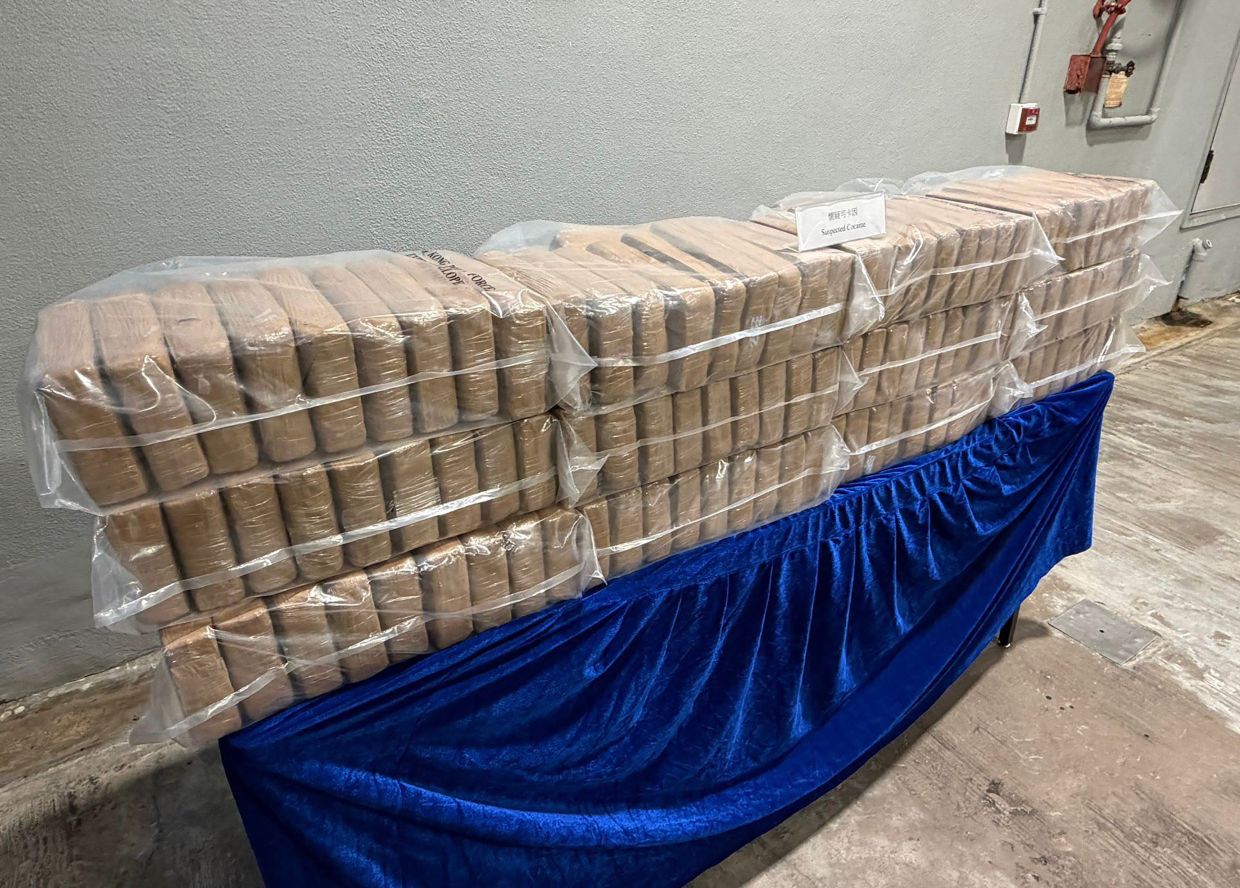
Hong Kong's narcotics authorities have uncovered what appears to be a major international cocaine trafficking operation following the discovery of approximately 120 kilograms of the drug aboard a six-metre yacht on Sunday, just days after an initial seizure netted 241 kilograms from a vessel moored in the same waters. The combined haul of 361 kilograms, valued at HK$270 million on the street, represents the largest cocaine trafficking case the city's police have documented within the past twelve months, signalling an escalation in organised drug smuggling through Hong Kong's busy harbours.
The sequential raids paint a picture of a sophisticated supply operation exploiting the territory's maritime infrastructure to stockpile narcotics destined for distribution across Asia. Officers from the narcotics bureau targeted the second yacht after investigating links between the initial discovery in Aberdeen Typhoon Shelter on Friday and subsequent intelligence suggesting additional caches remained concealed in nearby vessels. The tactical approach—identifying and systematically dismantling multiple storage points rather than striking a single target—demonstrates how international trafficking syndicates have adapted their methods to distribute risk across several locations within proximity of one another.
Investigators have concluded that the two seizures almost certainly represent contraband from an identical shipment, based on matching packaging materials and consistent weight specifications across both batches. This assessment strongly suggests that the trafficking network was operating a coordinated storage and distribution system utilising multiple floating assets, a methodology increasingly common among criminal organisations seeking to evade detection whilst maintaining rapid access to inventory. The deployment of separate vessels as holding facilities allows smugglers to rotate stock, stage shipments for onward transport, and maintain operational flexibility should authorities move against any single asset.
The arrest of a 45-year-old local woman, identified as the registered owner of the second yacht, occurred on Monday as interrogations commenced. Authorities disclosed that the woman claimed unemployed status during initial questioning, a standard cover story deployed by those fronting vessels for trafficking operations—a transparent arrangement designed to distance actual syndicate leadership from direct ownership and operational control. Her cooperation, or lack thereof, will likely prove instrumental in determining the hierarchy and international connections of the criminal network behind the smuggling operation.
Police had previously apprehended a suspected kingpin alongside two individuals described as core members of the trafficking syndicate following Friday's initial raid. These detainees similarly offered implausible employment narratives, variously claiming unemployment or subsistence-level fishing activities. The consistency of these cover stories across multiple detainees suggests operational training within the organisation, indicating a degree of structural sophistication and planning rather than opportunistic criminal activity. Syndicate members are clearly briefed to present uniform false narratives to authorities, a practice that often signals larger, transnational criminal enterprises rather than localised drug operations.
The Aberdeen Typhoon Shelter location deserves scrutiny as a transit point for international narcotics smuggling into Asia. This anchorage, situated within Hong Kong's bustling Victoria Harbour precinct, operates adjacent to one of the world's busiest container ports and sits strategically positioned along major maritime trafficking corridors linking Southeast Asia, South Asia, and the wider Pacific region. The selection of this particular location by smugglers reflects calculated judgment about vessel monitoring patterns, port authority oversight, and accessibility to distribution networks throughout Greater China and beyond.
For Malaysian authorities and regional law enforcement, the Hong Kong bust underscores the vulnerability of maritime corridors to cocaine trafficking operations despite intensified surveillance efforts across Southeast Asia. The cocaine almost certainly originated from South American production facilities, travelled through intermediate transit points—potentially including countries across the region—and was destined for consumption markets and redistribution hubs throughout East and Southeast Asia. Malaysian ports, particularly in the Straits of Malacca and Klang, face identical vulnerabilities as trafficking organisations exploit shipping volumes and maritime complexity to move contraband.
The financial scale of the operation merits consideration: HK$270 million represents substantial investment capital, suggesting sophisticated financing mechanisms behind the trafficking network. Such sums typically derive from established organised crime structures with access to international banking, money laundering infrastructure, and established customer networks. This indicates the operation extends far beyond simple import-export schemes, instead representing embedded criminal enterprise with institutional capacity to sustain losses and maintain operations despite law enforcement intervention.
Regional implications extend beyond immediate drug supply dynamics. Hong Kong's status as a major financial centre and international trading hub makes it attractive for organised crime networks seeking to integrate narcotics proceeds into licit financial systems. The visible success of this operation in moving hundreds of kilograms through Hong Kong waters suggests that regional maritime security frameworks may require enhanced coordination and intelligence-sharing protocols among Southeast Asian governments, Hong Kong authorities, and international agencies tackling transnational drug trafficking networks.

