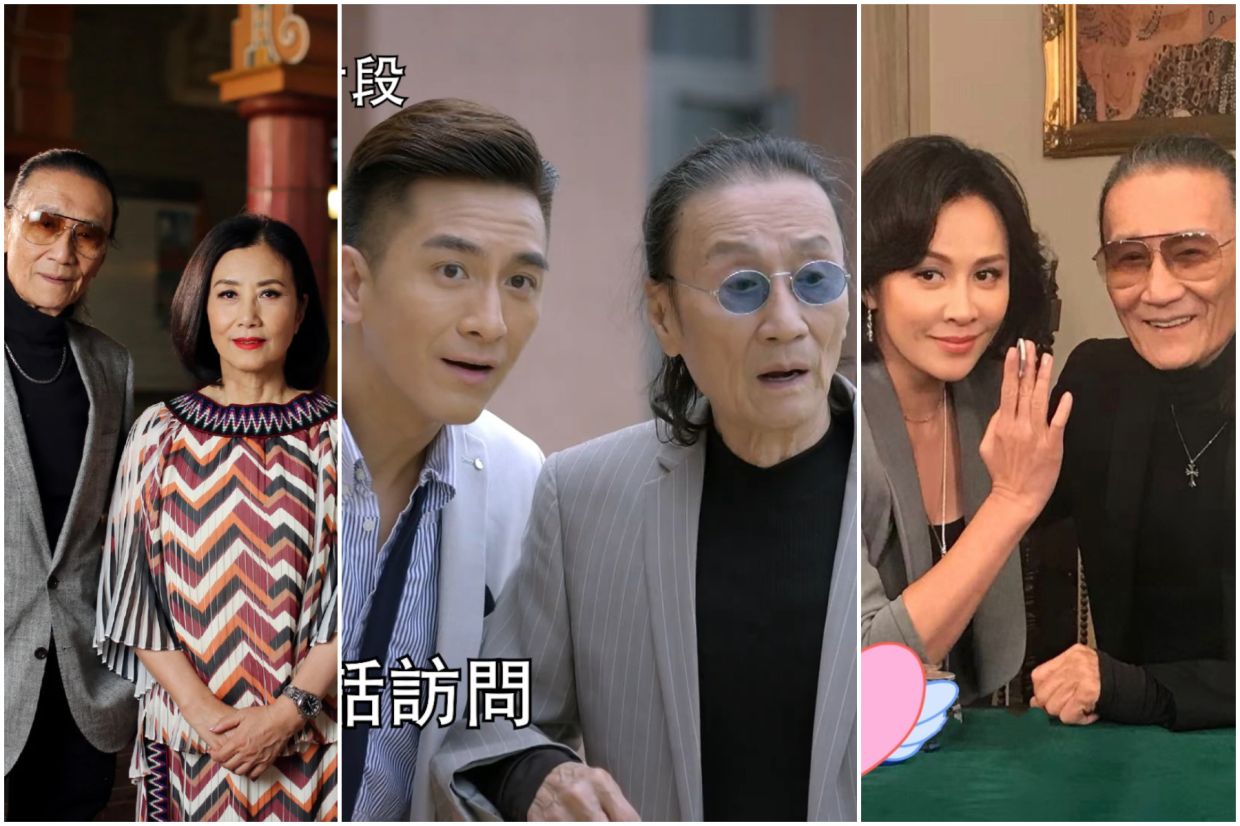
Hong Kong's entertainment sector continues to pay respects to one of cinema's most celebrated figures following the recent death of Patrick Tse, the veteran actor revered across decades of film and television work. Known affectionately throughout the industry as Sei Gor, or Fourth Brother, Tse died from pneumonia on July 16 at the age of 89, with his family making the announcement public four days later. His departure marks the end of an era for a performer whose grace, professionalism, and commanding presence defined Hong Kong's golden age of entertainment.
Carina Lau, among the first to publicly commemorate the late actor, shared reflective images on Instagram showing moments captured with Tse alongside her husband Tony Leung Chiu Wai. In her caption, Lau emphasised how Tse's legacy extended far beyond his individual performances, noting that his life exemplified elegance and wit while leaving an indelible imprint on Hong Kong cinema itself. Her words captured not merely personal loss but a collective recognition that the industry had lost one of its most defining personalities, someone whose career trajectory influenced generations of performers who followed.
Veteran actress Liza Wang, who collaborated with Tse across multiple TVB drama productions, offered particularly intimate recollections of their professional relationship. Beyond their on-screen partnership, Wang held a deeply personal connection to Tse, serving as godmother to his daughter Jennifer. Wang's reflection emphasised how Tse transcended the role of mere co-star, functioning instead as a mentor figure who actively invested in younger colleagues' development. She recalled his consistent generosity in sharing professional insights and the protective manner he maintained throughout their collaborations, painting a portrait of someone whose status never diminished his willingness to nurture talent around him.
Wang described Tse as embodying qualities that extended well beyond technical acting prowess. His radiance and gentlemanly demeanour created an environment on set where colleagues felt valued and supported. The actress acknowledged that Tse's absence would create a profound void in her professional memory, with the joyful moments they shared during filming remaining among her most treasured career experiences. Such recollections underscore how Tse's influence operated on multiple levels—as inspiration, protector, and genuine friend to those fortunate enough to work alongside him.
Michelle Ye, who appeared opposite Tse in the 2005 drama production, reflected on their professional bond through social media, describing their working relationship in terms that suggested emotional significance beyond typical industry collaboration. According to Ye's recollection, Tse filled an emotional space that had remained vacant throughout her formative years, providing the kind of fatherly presence and guidance that shaped her own development as an artist. This testimony demonstrates how Tse's influence extended into the personal sphere for many colleagues, becoming woven into their individual life narratives rather than remaining confined to professional contexts.
Actor Kenneth Ma, who shared screen time with Tse on Wong Jing's 2017 TVB drama, focused his tribute on the late performer's remarkable work ethic and physical commitment to his craft. Despite his advanced age, Tse refused to employ stand-ins for action sequences, insisting on executing those demanding scenes himself. Ma presented this dedication as exemplary behaviour worthy of emulation by younger performers, highlighting how Tse refused to compromise on authenticity or to use his seniority as justification for reduced effort. This aspect of Tse's professional character—his refusal to diminish standards regardless of age—appeared to resonate particularly strongly with Ma, who positioned Tse's approach as a philosophical framework that the entertainment industry broadly should embrace.
Ma also recalled Tse's playful disposition during production, suggesting that his professionalism coexisted comfortably with genuine enjoyment of creative work. The actor emphasised that collaborating with Tse produced not merely professional satisfaction but authentic joy, transforming what could have been routine dramatic scenes into memorable experiences characterised by warmth and mutual respect. This quality—the ability to maintain rigour while cultivating genuine connection and humour—appears to have been central to why so many colleagues maintained affectionate, lasting bonds with Tse throughout their careers.
Director Wong Jing, whose extensive experience in Hong Kong cinema provided particular authority on Tse's historical significance, declared the late actor as occupying the most prominent position in the landscape of male film stars throughout the region's entertainment history. Wong's assessment carried weight drawn from firsthand observation spanning decades, having first encountered Tse in 1977 when Wong himself was a nascent scriptwriter at TVB at just twenty-two years old. The filmmaker recounted how Tse would transport him in his Mercedes-Benz sports car during casual outings, conversations about cinema unfolding against the backdrop of Hong Kong's bustling streets.
During one such exchange, Tse imparted a piece of wisdom that crystallised his entire approach to performance and public presence: "Once you're a star for a day, you have to be a star for life." Wong identified this observation as perfectly encapsulating Tse's unwavering commitment to his professional identity and reputation. The remark transcended typical mentorship, offering instead a philosophical principle about the inherent responsibility accompanying celebrity status. For Wong, this memory remained among his most treasured, symbolising how Tse understood that fame imposed obligations extending far beyond individual performances into the realm of personal conduct and industry stewardship.
Tse's trajectory through Hong Kong entertainment reflected a particular historical moment when screen performers functioned as cultural ambassadors and moral exemplars within society. His insistence on maintaining standards, his mentorship of younger talent, and his refusal to diminish effort despite age all contributed to an image of professionalism that contrasted sharply with more contemporary approaches emphasising convenience or efficiency. The widespread nature of tributes from colleagues across different generations and production contexts suggests that Tse's influence operated systemically throughout Hong Kong's creative industries, establishing benchmarks for conduct that outlasted individual projects or careers.
For Malaysian and Southeast Asian audiences, Tse's legacy carries particular resonance given Hong Kong cinema's historical influence across the region. Generations of viewers throughout the broader Asian entertainment market grew up consuming productions featuring Tse, whose work helped establish standards for dramatic performance that influenced regional industry development. The manner in which his peers mourned his passing—emphasising grace, dedication, mentorship, and integrity—offers contemporary performers across Southeast Asia a framework for considering how professional excellence and personal character might intertwine, demonstrating that sustained significance in entertainment extends well beyond individual talent into the domain of how one treats colleagues and conducts oneself within the industry ecosystem.

