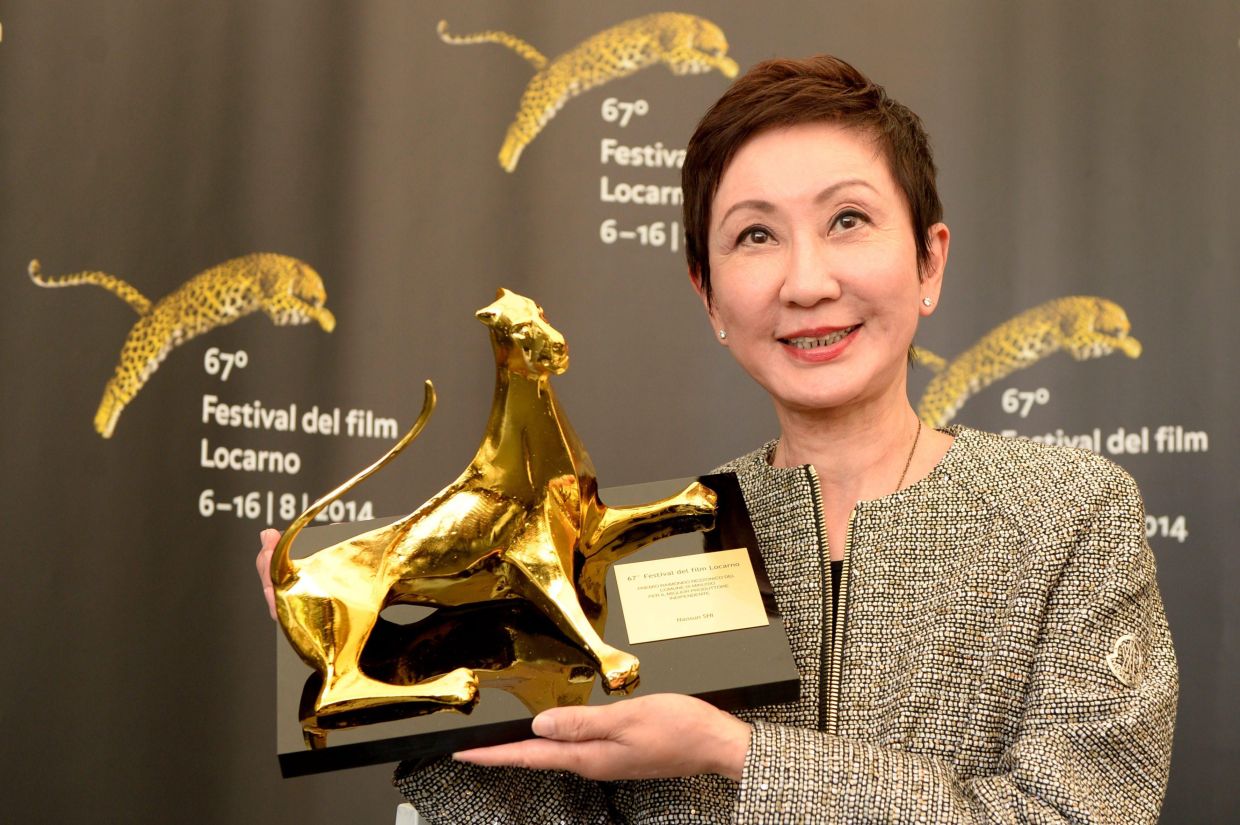
The Hong Kong film industry is mourning the loss of one of its most transformative figures after Shi Nan-sun, the pioneering producer whose influence shaped Asian cinema for four decades, died this week at the age of 75 following multiple organ failure triggered by a severe bacterial infection. Surrounded by family and close friends at Hong Kong Sanatorium & Hospital, Shi passed away peacefully on Monday evening, leaving behind a legacy that extends far beyond the territory's borders into the broader Asian entertainment landscape.
The passing of Shi represents a watershed moment for regional cinema, particularly at a time when Southeast Asian film industries are increasingly looking to Hong Kong's historical model of professionalism and international reach as a template for their own growth. Her death comes just months after she and her former husband, acclaimed director Tsui Hark, jointly received a lifetime achievement award at the Hong Kong Film Awards in recognition of their revolutionary contributions to the sector. The timing underscores how her generation of industry leaders established the infrastructure and practices that continue to define how regional productions compete globally.
Shichanged the landscape of film production through her operational expertise rather than through creative direction. Beginning her career in 1981 at Cinema City, she brought a business sophistication to an industry that had previously operated with less formal structures. Her meticulous attention to financing, contract negotiations, and international distribution networks introduced professional standards that elevated the entire regional sector. Three years later, when she and Tsui co-founded Film Workshop in 1984, they created an entity that would become synonymous with Hong Kong's golden age of cinema during the late 1980s and 1990s, a period when the territory's films achieved unprecedented international recognition.
What distinguished Shi's approach was her recognition that Asian films could succeed on the world stage if they were properly financed, strategically marketed, and distributed through established international channels. She established Distribution Workshop to manage this crucial aspect of the business, understanding that creative excellence alone was insufficient without the machinery to transport those works across borders and into cinemas worldwide. This operational vision proved prescient, as Hong Kong productions she championed went on to define an entire era of Asian action cinema and influenced filmmakers across the globe. For Malaysian and Southeast Asian industry observers, her model of combining local creative talent with international distribution expertise remains relevant as regional producers seek greater overseas exposure.
The challenges that ultimately claimed her life emerged gradually, according to statements from Film Workshop. Since 2022, Shi had contended with complications affecting her immune system, and in recent months, recurring infections precipitated the organ dysfunction that proved fatal. Those who saw her in public appearances, most notably at the funeral of fellow veteran producer Linda Kuk Mei-lai in May, noted her use of a walking stick, a visible indication that her health was deteriorating despite her efforts to maintain her presence in industry circles.
Tributes from Hong Kong's entertainment elite revealed the profound respect Shi commanded across generations. Jackie Chan, the international film star, posted his condolences on Weibo, describing her as a "legendary figure" whose vision shaped classic works that will endure in collective memory. Actress Carina Lau Ka-ling shared a deeply personal reflection, crediting Shi with teaching her invaluable lessons about character and conduct, while fellow cinema figures including Brigitte Lin Ching-hsia, Donnie Yen Chi-tan, and Shu Qi publicly acknowledged their debt to her mentorship and professional guidance. Brigitte Lin, who had known Shi for more than five decades, expressed particular gratitude for her friend's unwavering devotion to artistic excellence.
The Hong Kong government also formally recognised her contributions through Secretary for Culture, Sports and Tourism Rosanna Law Shuk-pui, who described Shi as a distinguished producer whose impact on the local film industry had been transformational and enduring. Law emphasised that Shi's dedication to both film and television left behind "precious cinematic memories" for Hong Kong audiences and represented "extraordinary contributions" to the sector's development. Such official acknowledgement underscores how Shi's work had transcended commercial success to become embedded in Hong Kong's cultural identity.
Shicareer trajectory reflected the educational and professional opportunities available to Hong Kong residents during the post-war era. Born and educated in the territory, she pursued studies in statistics and computing at the Polytechnic of North London, equipping herself with analytical and technical skills that she would later apply to film industry management. This background in quantitative disciplines proved instrumental in her approach to business operations, as she brought data-driven decision-making to an industry traditionally dominated by creative instincts. Her combination of technical competence and artistic sensibility created a rare professional profile.
Her personal relationship with Tsui Hark, whom she married in 1996 after their professional partnership had already transformed the industry, demonstrated a capacity for maintaining both romantic commitment and professional collaboration. The couple's eighteen-year marriage ended in 2014, yet they sustained a close friendship and continued to support each other's cinematic endeavours. Brigitte Lin once remarked, quoting the legendary novelist Jin Yong, that Shi was "the only wife who is completely infatuated with her husband," characterising her as someone who "devoted herself entirely" to Tsui while viewing him as a true artist.
Beyond her roles at Cinema City and Film Workshop, Shi became an instrumental promoter of Hong Kong films internationally, serving as a jury member and festival president for major global film festivals. Her honours included France's prestigious Ordre des Arts et des Lettres, recognising her contribution to global cultural exchange, and the best independent producer award at the Locarno International Film Festival. These accolades reflected her success in positioning Hong Kong cinema as a sophisticated cultural export rather than merely a commercial product. Her global vision and marketing acumen fundamentally altered how Asian films were perceived and distributed internationally.
For Southeast Asian film industries observing Hong Kong's trajectory, Shi's legacy offers instructive lessons about the importance of professional infrastructure, international partnerships, and the willingness to invest in developing new talent. While Hong Kong's dominance in regional cinema has diminished since its 1980s and 1990s peak, the operational frameworks and distribution networks that Shi helped establish remain influential. Her death represents not merely the loss of an individual, but the closing of a chapter in Asian cinema history that saw the territory punch well above its weight on the global stage through the vision and determination of leaders like her.

