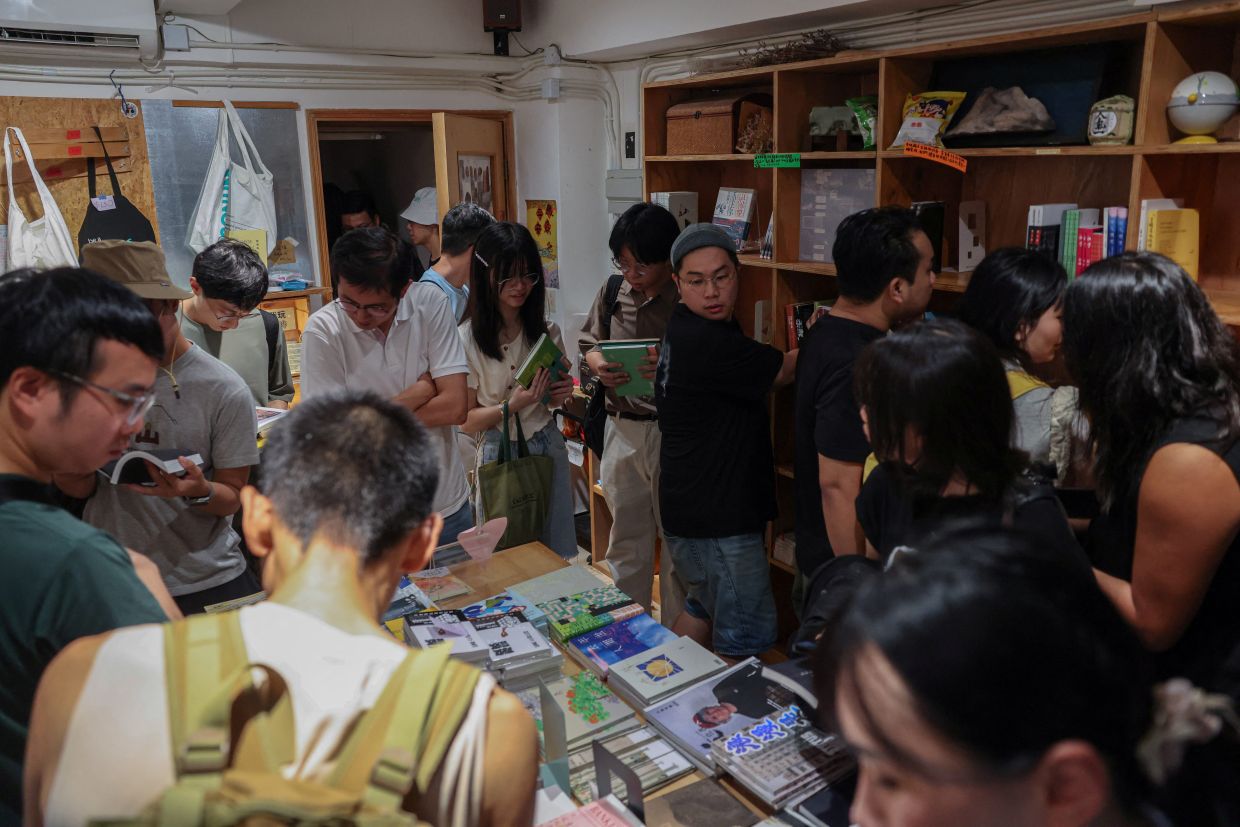
The closure of Hong Kong's independent bookstores represents far more than the loss of retail outlets; it signals the progressive dismantling of intellectual sanctuary in a territory once celebrated for its open exchange of ideas. Fleming Cheng, a university student from mainland China, discovered this refuge last year when he entered Greenfield Book Store and for the first time held physical copies of politically sensitive works—titles that existed for him only as pixelated images glimpsed through VPN connections back home. That tactile encounter with banned narratives, including critical examinations of China's governance and accounts of the 1989 Tiananmen Square crackdown, represented something increasingly rare across the region: genuine access to divergent perspectives.
These independent bookstores have functioned as informal libraries of resistance throughout the past two decades, quietly stocking titles that mainland authorities deemed threatening. Yet the past year has witnessed an accelerating assault on their existence. Four establishments—Book Punch, Hunter Bookstore, Greenfield, and Have A Nice Stay—faced police action within just four months, with booksellers arrested on sedition charges under the recently introduced 2024 national security legislation. Greenfield announced its closure following the end of its lease, while Have A Nice Stay shuttered on 30 August, citing ambiguous "elusive red lines" that made continued operation untenable even before the arrest warrants were executed.
The trajectory from Hong Kong's earlier independence to today's constraints reveals a deliberate pattern. When five booksellers affiliated with Causeway Bay Books vanished in 2015—later revealed to have been detained by mainland Chinese authorities—the incident should have warned of things to come. The disappearance of Lam Wing-kee and his colleagues, all connected to a store famous for publishing politically sensitive works about Chinese leadership, presaged the systematic approach authorities would later adopt. Following the 2020 National Security Law, the erosion accelerated markedly. Anti-Tiananmen titles vanished from public libraries. Pro-democracy authors' works were systematically removed. Even at the annual book fair, smaller independent publishers found themselves barred from exhibiting, dismissed by pro-Beijing media as practitioners of "soft resistance."
What distinguishes the current crisis is the deliberate opacity surrounding enforcement. Secretary for Security Chris Tang has insisted that the security laws are transparent, claiming no banned book list exists and that booksellers simply need to exercise responsibility—drawing a peculiar analogy to food safety standards. Yet this rhetorical clarity masks a chilling reality: authorities have never publicly specified which titles constitute seditious material. Instead, observers must glean prohibited content from anonymous government sources quoted in news reports, creating an environment where self-censorship becomes the rational response to undefined legal jeopardy. A bookseller interviewed anonymously revealed the genuine predicament: unable to discern objective criteria for what constitutes sedition, they have grown cautious about stocking works examining contemporary Chinese politics, while landlords have begun withdrawing cooperation after experiencing government pressure.
The implications extend far beyond Hong Kong's borders into the broader Southeast Asian information ecosystem. Mainland readers who once treated Hong Kong bookstores as windows onto uncensored discourse now find those windows systematically sealed. Iris Wang, a university student from neighbouring Guangdong, recognized that stores like Hunter offered something her home region's commercialized bookshops do not—an encouragement to think independently rather than merely consume pre-approved narratives. For such readers, the closures represent not merely inconvenience but the elimination of a critical intellectual lifeline.
Taiwan has emerged as an alternative publishing hub, though with its own vulnerabilities. Between 2020 and 2024, Taiwan's publishers released six times more titles about Hong Kong compared to the preceding quinquennium, according to Tunghai University sociology professor Cheng Tsu-Bang. This surge reflects a deliberate shift whereby Taiwan's more permissive publishing environment has become a crucial conduit for Hong Kong-related discourse. Yet even this backup system shows signs of strain. In July, logistics firms began refusing shipments of Taiwan-published books to Hong Kong bookstores under investigation, while imposing stringent documentation requirements for other destinations. One Hong Kong author who relocated to Taiwan and now publishes there under anonymity out of security concerns described bookstores as bridges connecting diaspora writers with their homeland—structures now crumbling.
The closure cascade strikes at the heart of what distinguished Hong Kong from its mainland counterpart. For two decades following the 1997 handover, the territory maintained a peculiar liminal status where freedoms persisted despite nominal integration with Beijing's political system. Independent bookstores symbolized and substantiated that distinction, offering physical proof that alternative voices retained platforms. Brian Leung, a Hong Kong resident, articulated the profound loss: spaces he had grown accustomed to viewing as permanent features of his city's character were being systematically dismantled. Each bookstore, he noted, possessed distinctive personality—not interchangeable commercial franchises but repositories of curated intellectual identity.
The government's official position insists that security legislation protects freedoms of expression and publication while preventing seditious incitement against either the Chinese or Hong Kong governments. Yet the practical implementation tells a different story. The authorities have never specified which books trigger sedition charges, leaving booksellers navigating legal minefields without maps. This ambiguity functions as its own enforcement mechanism, more effective than explicit bans precisely because it generates paralyzing uncertainty. Why risk stocking a title when the consequences of miscalculation might include arrest?
The compression of Hong Kong's intellectual space carries particular significance for Southeast Asian readers and activists. The territory once served as a crucial node in regional networks of uncensored information exchange, a place where politically engaged individuals from across the Chinese diaspora could access materials prohibited in their home territories. As that function diminishes, pressure intensifies on alternative hubs—Taiwan foremost among them—to fill the void. Yet Taiwan itself faces escalating pressure from Beijing, and the viability of cross-strait publishing networks cannot be presumed indefinite.
The deeper tragedy extends beyond immediate policy implications. Lee, the Hong Kong author now published in Taiwan, employed an evocative metaphor: the collapse of civil society resembles a boulder rolling downhill, accumulating destructive momentum through successive impacts. Independent bookstores represented cultivated spaces where citizens could collectively preserve and nurture what remained of their freedoms—not grand gestures but small acts of intellectual preservation. Their closure signals not merely commercial failure but the elimination of shared sanctuary where people could momentarily escape the encompassing constraints of security-first governance.
For mainland Chinese readers like Fleming Cheng, the loss carries particular poignancy. He had discovered in Hong Kong's bookstores proof that his government's narrative was not universal, that alternatives existed, that critical distance remained possible. As those spaces contract, such proof becomes increasingly difficult to access. The implications ripple through the entire region: what diminishes in Hong Kong presages restrictions that may eventually spread throughout the Chinese-speaking world, foreclosing alternative information pathways precisely when such pathways matter most. The bookstores' decline represents not isolated commercial events but markers of narrowing intellectual freedom across the region.

