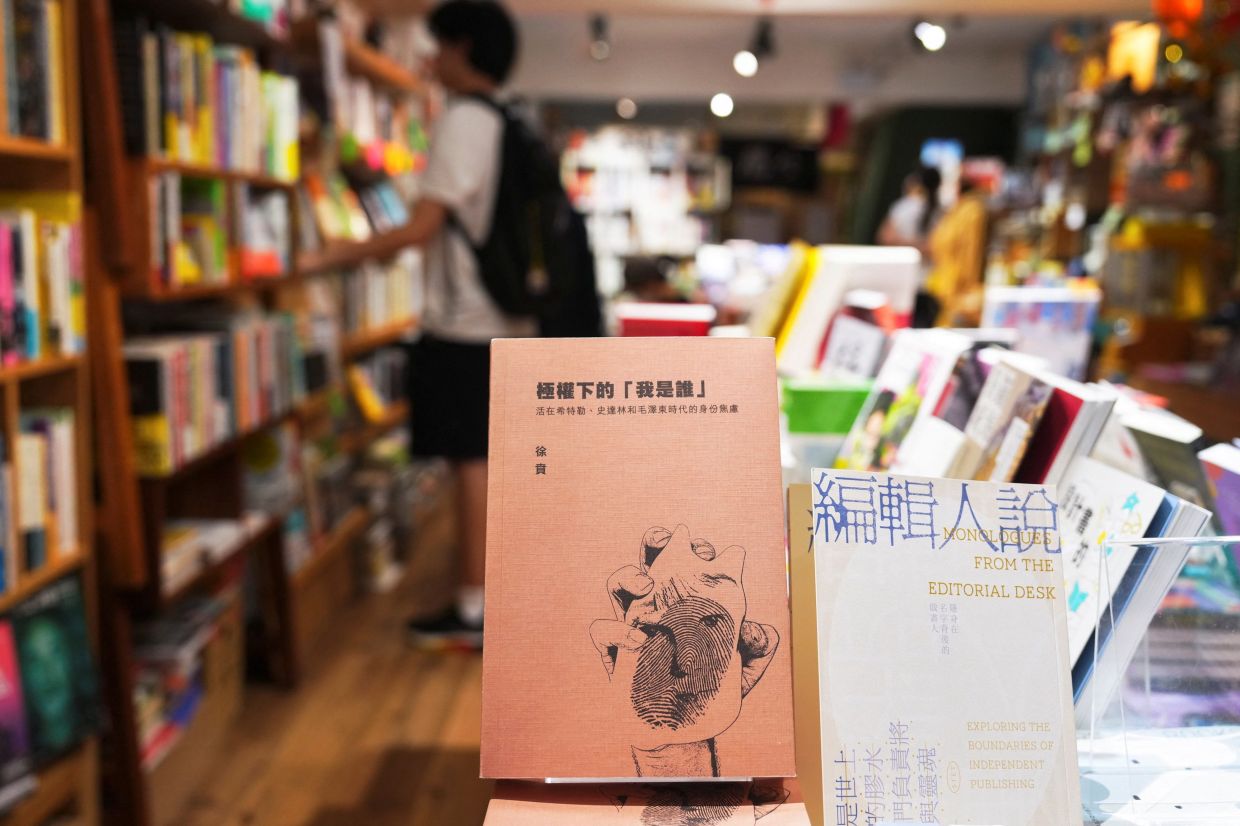
Hong Kong's top security official has escalated pressure on the territory's independent bookstores, insisting that retailers bear responsibility for ensuring their inventory poses no threat to national security. The directive from Secretary for Security Chris Tang follows the arrest of five people connected to two prominent bookshops, marking the third enforcement action targeting independent publishers in four months and intensifying debates about the boundaries of permitted speech in the financial hub.
The police raids on Wednesday focused on Have A Nice Stay, a bookstore launched by former journalists, and the longstanding Greenfield Book Store. Authorities alleged that the detained individuals were suspected of displaying and selling seditious materials designed to incite hostility toward Hong Kong's government institutions, courts, and law enforcement bodies. Two of the five were subsequently released on bail Friday morning, though the full implications of the operations remain unclear as investigations continue.
Tang's Thursday statement attempted to frame the government's position as straightforward legal compliance rather than arbitrary censorship. In a food safety analogy that critics argue obscures the complexity of literary content, the security chief compared book sales to food retail, suggesting that just as vendors must prevent foodborne illness, booksellers must prevent titles from endangering national security. However, his comparison falters under scrutiny—unlike toxic food, the threat posed by written material remains fundamentally subjective and dependent on interpretation, leaving booksellers navigating an inherently ambiguous legal landscape.
When pressed on whether authorities would publish a definitive list of prohibited titles, Tang rejected the notion, arguing that such a catalogue would undermine effective enforcement against works intentionally designed to harm the country. This refusal to establish clear parameters has become a focal point of concern for civil liberties advocates, who contend that the absence of explicit guidance creates a chilling effect on the industry. Booksellers face genuine uncertainty about which publications might trigger legal scrutiny, forcing them to engage in self-censorship to avoid potential prosecution.
Have A Nice Stay had already announced its closure on August 30, citing financial strain and the elusive nature of the legal standards governing acceptable inventory. The bookstore's statement publicly acknowledged the impossibility of evaluating every volume in its collection to determine what might be deemed problematic under Hong Kong's national security framework. This predicament reflects the practical difficulties facing independent publishers who lack resources to conduct the extensive legal analysis that regulators increasingly appear to demand.
The current enforcement wave represents an acceleration of pressure that intensified following pro-democracy upheaval in the territory. In March, police arrested staff at Book Punch, citing suspicion of selling seditious publications. The targeted titles included a biography of Jimmy Lai, the pro-democracy media proprietor sentenced to two decades imprisonment in a separate national security prosecution that drew international criticism. In June, two additional booksellers faced arrest on charges of selling seditious materials and allegedly receiving funding from foreign political organisations.
The implications extend beyond Hong Kong's borders, triggering alarm among neighbours already sensitive to Beijing's expanding influence. Taiwan's President Lai Ching-te issued a Facebook statement pointedly defending Hong Kong's freedom of expression and publication as foundational to democratic society. He characterised independent bookstores as essential guardians of intellectual liberty, an implicit rebuke to the enforcement campaign unfolding in the territory just across the Taiwan Strait.
Taiwanese government officials have taken the concerns sufficiently seriously to monitor responses within their own publishing ecosystem. Liang Wen-chieh, deputy minister of Taiwan's Mainland Affairs Council, disclosed that certain Taiwanese publishers have voluntarily removed titles from their catalogues when participating in Hong Kong's book fairs, evidencing how enforcement pressure in one jurisdiction can ripple across the region through self-censorship. Publishers based in democratic Taiwan are reportedly making editorial decisions based on anticipated reactions in Hong Kong, a troubling indication of how expansive security regimes can restrict speech even beyond their immediate borders.
The enforcement pattern raises questions about the sustainability of Hong Kong's position as an international publishing and intellectual centre. For decades, the territory attracted authors, publishers, and readers from across Asia seeking an open marketplace for ideas. The gradual tightening of controls threatens that historical role, potentially driving publishing operations to other cities and consolidating China's soft-power influence over the region's literary landscape.
For Malaysian policymakers and civil society organisations, the Hong Kong experience offers instructive lessons about how security frameworks, once established, tend toward expansive interpretation and application. The trajectory in Hong Kong demonstrates how vague legal standards—particularly those grounded in concepts like national security or sedition—create perpetual uncertainty for content creators and distributors. The absence of clear boundaries, combined with enforcement unpredictability, generates compliance costs that disproportionately burden independent operators unable to absorb legal risks.
The bookstore crackdowns also highlight how digital connectivity enables regulatory spillover across borders. Publishers and booksellers now operate within interconnected supply chains where enforcement actions in one jurisdiction reverberate through entire regions. Malaysian stakeholders engaged in publishing, distribution, or retail therefore cannot view Hong Kong's enforcement campaign as geographically isolated, particularly given Malaysia's own complex relationship with media regulation and national security frameworks.
The broader pattern suggests a concerning trend across parts of Asia toward weaponising national security concepts to manage political and ideological expression. As governments from various political backgrounds invoke security justifications for content controls, the cumulative effect narrows the space for diverse intellectual discourse that has historically underpinned the region's cultural vitality and economic dynamism.

