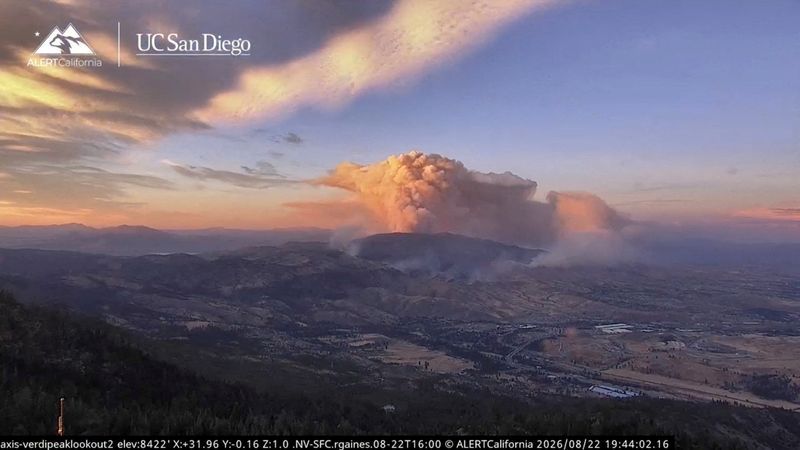
The explosion of smartphones and social media has fundamentally reshaped how news breaks and spreads globally. Eyewitnesses equipped with cameras now document everything from natural disasters to political upheaval in real time, creating an unprecedented archive of events as they unfold. Yet this same technological revolution that democratized newsgathering has also created a crisis of credibility. Artificial intelligence now generates photorealistic videos and images of events that never occurred, or fabricates alternate versions of real incidents that are nearly impossible to distinguish from authentic footage with the naked eye. For international news organizations serving audiences across Asia and beyond, the stakes of this challenge have never been higher.
Reuters, the world's largest news agency with approximately 2,600 journalists stationed across some 200 locations worldwide, confronts this reality through a specialized unit dedicated entirely to visual verification. Despite its vast global footprint, Reuters recognises a fundamental truth: journalists cannot be everywhere news happens. Breaking events occur unpredictably across the planet at any hour, often in remote or conflict-affected areas where traditional correspondents cannot reach. This has made publicly submitted images and videos an indispensable resource, one that the agency has built rigorous authentication protocols around to maintain its reputation for accuracy and integrity.
The decision to rely on verified public submissions aligns with Reuters' foundational Trust Principles, a framework that has guided the agency since the Second World War. These principles mandate unbiased reporting and continuous improvement of journalistic standards. High-profile investigations demonstrate the value of this approach: verified public images helped establish that a U.S. missile strike on an Iranian school killed dozens of children, while citizen footage documented the fatal shooting of American protesters in Minneapolis during demonstrations against immigration enforcement. In each case, ordinary people with cameras provided evidence that shaped global understanding of significant events.
Artificial intelligence has evolved with alarming speed. Early deepfakes contained telltale flaws—hands with too many fingers, garbled text in backgrounds, unnatural lighting patterns. Modern AI systems produce imagery virtually indistinguishable from authentic photographs and video. The technology becomes even more dangerous when bad actors feed real images of actual people, places, and events into AI systems, which then manipulates them to generate convincing false narratives. Following the reported January capture of Venezuelan President Nicolás Maduro, social media users circulated AI-generated images depicting him in handcuffs, creating a fabricated visual record of a real event. Similar concerns have emerged surrounding the 2026 U.S. midterm elections, where AI-generated advertisements have misrepresented candidates' positions and appearances.
Beyond AI-generated content, older forms of visual manipulation persist and proliferate. Bad-faith actors frequently extract authentic videos of past protests or demonstrations and recirculate them with false timestamps and locations, claiming they document current events elsewhere. This mislabelling happens organically across social media platforms where context collapses and misinformation spreads faster than corrections. For newsrooms serving Malaysian and Southeast Asian audiences, who rely heavily on social media for news consumption, distinguishing between authentic eyewitness footage and manipulated content has become a critical professional responsibility.
Reuters' visual verification team employs a systematic, multi-layered authentication process that resembles detective work as much as journalism. The process begins with locating the person who captured the image or video. Verification journalists contact these individuals, confirm their identity through whatever means available, and interview them about their experience and the circumstances surrounding the capture. This human element—direct communication with eyewitnesses—remains foundational even as technology evolves.
Digital metadata embedded within image files provides crucial evidence. Photographs and videos typically contain information about the device used, the exact time of capture, and geographic coordinates. When this metadata is intact and consistent, it significantly strengthens authentication. However, experienced manipulators can strip or falsify metadata, forcing verification teams to rely on other techniques. Journalists compare visual elements against publicly available reference materials: satellite imagery of locations, historical street-view photographs, weather records, and archived news reports all serve as benchmarks for authenticity. The direction and length of shadows in an image reveals the time of day it was taken and the geographic latitude, details that can confirm or contradict claimed circumstances.
Corroborating content from multiple angles strengthens conclusions considerably. When several eyewitnesses capture the same incident from different vantage points, the convergence of these perspectives significantly reduces the likelihood of coordinated manipulation. Official reports from government bodies, NGOs, and other news organisations provide additional context against which to evaluate submitted material. These various sources form an interlocking web of evidence that, when aligned, creates a persuasive case for authenticity.
Technology adds another layer to verification work. Reuters' team deploys multiple AI detection tools trained to identify artificial generation or manipulation at scales invisible to human perception. These systems scan for subtle digital artifacts that indicate AI involvement in image creation or modification. Yet these tools remain imperfect; they sometimes yield ambiguous results that leave verification journalists unable to reach definitive conclusions. The final judgment call—whether to publish, hold, or reject a submission—ultimately rests with human journalists who must weigh incomplete evidence and make decisions with profound consequences.
The workload facing these teams is staggering. Reuters journalists process hundreds of photographs and videos daily, yet validate and publish perhaps only a dozen. This extraordinarily high bar reflects the stakes involved. A single published falsehood can reshape global perceptions of significant events, particularly in regions where media literacy varies and social media algorithms amplify sensational content. For Malaysian readers and Southeast Asian audiences generally, understanding how international news organisations authenticate visual content is increasingly vital. Misinformation spreads with particular virulence in this region, where diverse communities consume news through multiple languages and cultural lenses.
The challenge confronting Reuters and similar organisations will only intensify. Artificial intelligence capabilities continue advancing exponentially, and bad actors grow increasingly sophisticated in deploying them. Verification teams must simultaneously master evolving technology while maintaining the human judgment and investigative instinct that no algorithm can replace. This tension—between technological tools and editorial discretion—defines modern journalism in an age of perfect fakery. For news organisations serving global audiences, especially in regions vulnerable to coordinated disinformation campaigns, visual verification has evolved from a speciality into a core journalistic function essential to maintaining public trust and informing democratic discourse.

