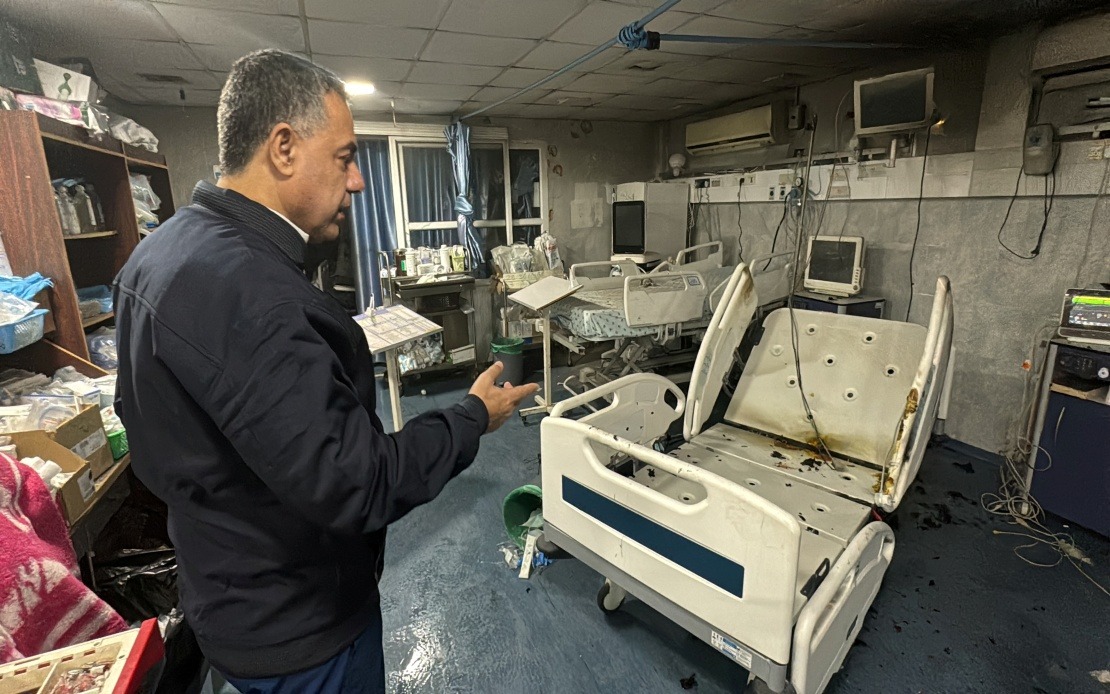
Physicians for Human Rights has issued an urgent warning regarding the welfare of Dr Hussam Abu Safiya, director of Kamal Adwan Hospital in northern Gaza, following his incarceration at Israel's Nitzan Prison. The development marks an escalating concern over the treatment of medical personnel caught in the ongoing conflict, with the international human rights community increasingly focused on documenting allegations of mistreatment within the Israeli detention system.
During a legal visit on July 2, the organisation's lawyer Nasser Odeh conducted a detailed examination of the hospital director and documented a pattern of concerning physical findings. According to Odeh's formal assessment, Dr Abu Safiya exhibited fresh wounds, substantial bruising across his head and facial region, including marks around the eyes, ears, and neck area. These injuries have rendered him difficult to identify compared to his previous appearance, suggesting a recent and traumatic incident.
The documented observations extend beyond visible injury marks. Dr Abu Safiya reportedly experienced multiple episodes of respiratory distress and recurrent loss of consciousness during the legal consultation. These symptoms point to potentially serious underlying medical complications that require urgent clinical evaluation. The combination of physical trauma and neurological symptoms raises critical questions about whether appropriate medical care has been provided to someone in custodial detention.
During the prison meeting, security procedures added to the apparent severity of the situation. Dr Abu Safiya was brought to the consultation with his hands and feet restrained in shackles, while uniformed guards wearing face coverings maintained a visible presence throughout the exchange. The staging of this encounter reflects standard detention protocols but, when combined with the documented injuries, has prompted heightened concern from monitoring organisations.
Naji Abbas, who directs the Prisoners and Detainees Department at Physicians for Human Rights Israel, characterised the lawyer's report as among the most alarming testimonies the group has compiled since military operations commenced. The hospital director allegedly expressed explicit fear to his legal representative that he would not survive his time in detention. This statement, combined with the physical evidence, has prompted the organisation to demand immediate action.
A critical aspect of the case centres on the legal status of Dr Abu Safiya's detention. Physicians for Human Rights has emphasised that he is being held without formal charges or trial proceedings. This procedural dimension adds a layer of concern regarding due process protections, particularly when coupled with allegations of physical deterioration during incarceration. The absence of transparent legal proceedings has made independent verification of conditions and treatment considerably more difficult.
The organisation has connected the apparent worsening of Dr Abu Safiya's physical condition to recent court proceedings. According to their analysis, his health declined noticeably following his legal challenge to the continuation of his detention before the courts. This temporal relationship raises questions about whether detention conditions or treatment may have been altered in response to legal advocacy efforts, a pattern that human rights monitors typically scrutinise closely.
Physicians for Human Rights has positioned the case within the broader context of medical professionals detained during the conflict. The group has renewed calls for Dr Abu Safiya's release and has highlighted that other medical practitioners remain incarcerated under similar circumstances. The focus on healthcare workers reflects international humanitarian law principles that traditionally afford protections to medical personnel and facilities during armed conflicts.
The organisation has assigned clear responsibility for Dr Abu Safiya's safety to Israeli authorities, emphasising that custodial states bear fundamental obligations to maintain the health and physical integrity of detained persons regardless of the circumstances of their apprehension. This legal principle, rooted in international detention standards, applies universally and has been repeatedly affirmed by international bodies overseeing human rights compliance.
For Malaysian readers and Southeast Asian observers, this case illustrates broader concerns regarding detention practices during protracted regional conflicts. The documentation method employed by Physicians for Human Rights—wherein legal representatives systematically record physical findings and testimony during prison visits—represents a crucial accountability mechanism when independent inspections are restricted. Such monitoring becomes particularly significant in conflicts where access to detainees by international humanitarian bodies remains contested or limited.
The case also reflects the complex position of healthcare workers in conflict zones, where medical personnel may face targeting or detention despite nominal protections under international law. Dr Abu Safiya's status as a hospital director who remained at his post during military operations has drawn international attention, yet his detention without formal charges highlights vulnerabilities that medical professionals face when caught between military objectives and humanitarian obligations.
Physicians for Human Rights has called for an independent investigation into allegations of mistreatment, a demand that underscores the organisation's assessment that credible evidence of abuse now exists. Such investigations typically require cooperation from relevant authorities and international oversight bodies, though obtaining such cooperation in active conflict situations frequently proves challenging. The organisation's public statement serves to document concerns for the international record while applying pressure for policy responses.
The broader implications extend to international humanitarian organisations operating throughout the region, many of which maintain careful documentation of detention conditions as part of their advocacy and monitoring functions. The case of Dr Abu Safiya exemplifies the tension between security considerations that governments cite and transparency requirements that human rights frameworks demand, a balance that continues to shape global responses to detention practices during armed conflicts.

