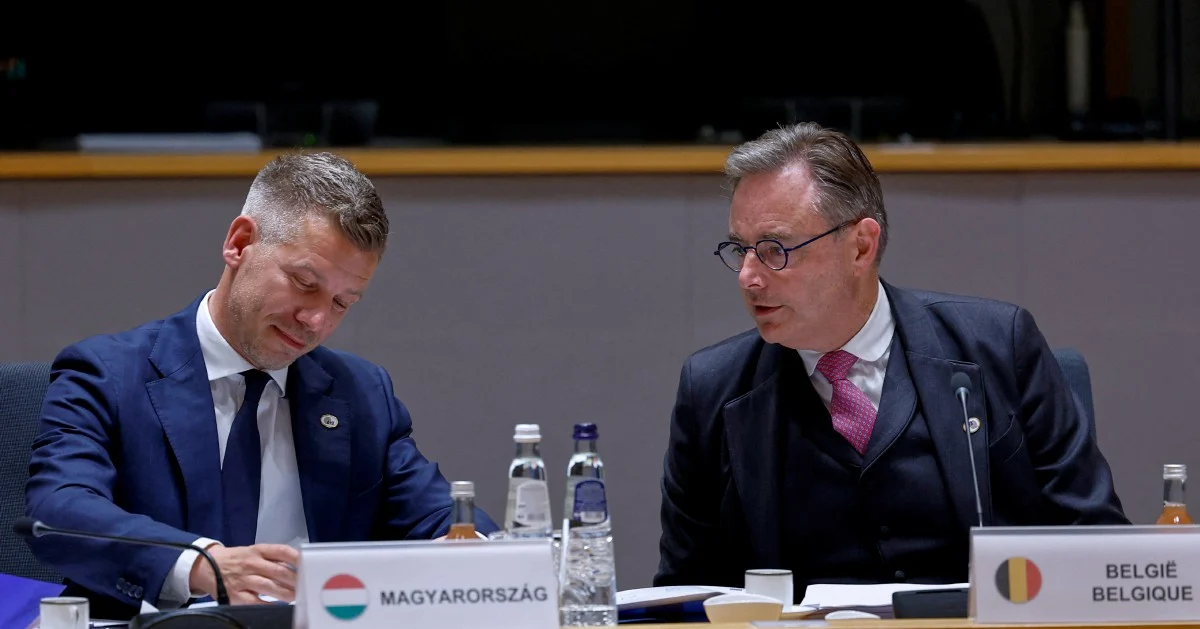
Hungary is poised to take a significant step toward recovering frozen European Union funding by advancing a comprehensive anti-corruption agenda under newly installed Prime Minister Peter Magyar. The country's lawmakers are anticipated to greenlight a suite of anti-graft measures this week, marking a pivotal moment in the nation's efforts to satisfy Brussels and regain access to billions of euros in development grants and recovery funds that have been suspended pending democratic and governance reforms.
The reform package represents more than a routine legislative exercise. It signals a fundamental shift in Budapest's relationship with EU oversight mechanisms, particularly following years of tensions between Hungary's previous administration and EU institutions over concerns regarding judicial independence, media freedom, and government transparency. Peter Magyar's ascension to the premiership has created political space for these reforms to advance, and parliament's expected approval would demonstrate a willingness to implement the institutional changes that EU leadership has demanded as preconditions for financial support.
The withheld funds constitute a substantial economic resource for Hungary. Access to these EU resources is critical for the country's infrastructure development, social programmes, and economic recovery efforts, particularly as central Europe navigates post-pandemic economic challenges and elevated energy costs. The suspension of these funds has created fiscal pressure on Budapest, making the completion of anti-corruption reforms not merely a political objective but an economic necessity with immediate implications for public spending and investment capacity.
Understanding the significance of these measures requires appreciating the broader context of EU-Hungary relations. The previous government's approach to constitutional amendments and judicial appointments generated sustained criticism from Brussels, the European Commission, and international observers monitoring rule-of-law standards. These concerns were sufficiently grave that EU mechanisms designed to protect member-state compliance with democratic principles were activated, resulting in the conditional withholding of disbursements from the Recovery and Resilience Facility and other funding streams. The current reform initiative represents an attempt to address these underlying institutional deficiencies rather than offering cosmetic adjustments.
For Magyar's administration, the anti-corruption measures serve multiple strategic purposes simultaneously. They provide a concrete demonstration of commitment to governance reform at a critical moment when the new government is establishing its credibility with both domestic constituents and external stakeholders. The legislation also positions Hungary to participate more effectively in EU decision-making processes, as ongoing funding disputes have constrained Budapest's diplomatic influence and complicated its participation in collective European responses to emerging challenges ranging from energy security to geopolitical tensions.
Regional observers across Southeast Europe and Central Europe are watching Hungary's trajectory with considerable interest. The country's progress toward resolving its funding dispute has implications for how EU governance frameworks are understood and applied across the bloc. A successful Hungarian resolution could establish precedent for other member states facing similar scrutiny, while conversely, failure to implement genuine reforms could trigger further institutional tensions and set patterns for how Brussels manages future governance disputes with member states.
The specific content of the anti-corruption legislation will likely address judicial independence mechanisms, government transparency requirements, and accountability frameworks that were identified in prior EU assessments as requiring strengthening. These technical measures, while less visible than headline political announcements, constitute the machinery through which actual institutional change occurs. Their effective implementation will ultimately determine whether the funding recovery represents a durable reorientation of Hungarian governance or a temporary convergence of interests.
For Malaysia and other Southeast Asian nations monitoring global governance developments, Hungary's situation illustrates the increasing interconnection between domestic institutional standards and access to international financial resources. As multilateral development institutions expand their scrutiny of anti-corruption and transparency standards, countries across the region face similar pressures to strengthen governance mechanisms and accountability frameworks. Hungary's experience suggests that such reforms, while administratively demanding, can unlock substantial financial resources necessary for development objectives.
The timeline for Magyar's government remains consequential. The expected parliamentary approval this week initiates what will likely be an extended implementation and verification period. EU leadership will monitor compliance with the committed reforms before releasing withheld funds, creating ongoing accountability mechanisms that extend beyond the legislative vote itself. This phased approach reflects European Commission experience with reform commitments that require sustained institutional change rather than one-time legislative acts.
Economically, the recovery of these EU funds would provide Budapest with resources to address infrastructure gaps, support healthcare and education investments, and strengthen social safety nets. The exact magnitude of recovered funding will depend on the comprehensiveness and credibility of implementation efforts, but estimates suggest access to multiple billions of euros represents a meaningful boost to Hungary's fiscal capacity. For Magyar's government, delivering tangible economic benefits from reform efforts constitutes essential political capital for sustaining domestic support for governance changes that may prove administratively complex or institutionally disruptive.
The broader significance of Hungary's reform initiative extends beyond bilateral EU-Hungary relations. It underscores the reality that even substantial economies must ultimately align their governance frameworks with international standards to maintain access to development resources and preserve their role in multilateral institutions. The measures being advanced this week represent Hungary's acknowledgment of these realities and its leadership's calculation that the long-term benefits of institutional reform outweigh the near-term political costs of implementing significant governance changes.