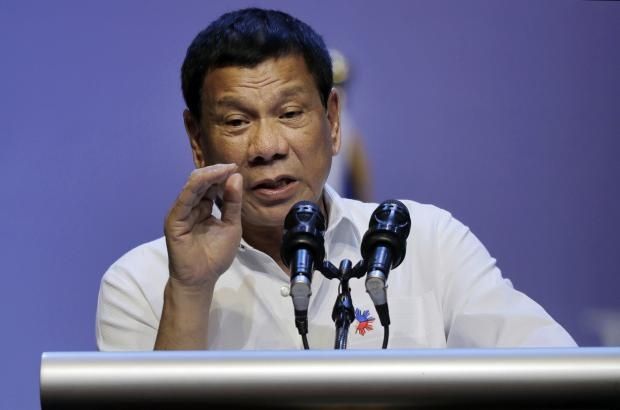
The International Criminal Court's Trial Chamber has cleared the way for prosecutors to maintain custody of funds taken from former Philippine President Rodrigo Duterte, ruling that the money could serve as restitution for victims should he be found guilty of crimes against humanity charges. The decision, rendered in late May, represents a significant development in the high-profile case against the controversial leader who governed the Philippines for six years before surrendering himself to ICC custody in March of the previous year.
Duterte arrived in The Hague, Netherlands, after being arrested at Ninoy Aquino International Airport in Manila and transported to the tribunal's headquarters in Europe. During his apprehension and subsequent transfer, authorities seized various personal items and an unspecified quantity of currency. The prosecution subsequently sought to utilise these seized assets as potential compensation mechanisms for those harmed by the alleged unlawful killing campaign that defined much of his presidency.
The court's legal framework permits the forfeiture of assets belonging to convicted individuals, with proceeds directed towards reparations programmes under Article 75 of the Rome Statute. Trial Chamber III recognised this principle in authorising the freeze, emphasising that the Registry—the ICC's administrative component—must implement protective measures to prevent the funds from losing value during the detention period. This preservation requirement acknowledges the practical challenges of managing seized assets over potentially lengthy proceedings.
Beyond the financial ruling, the court also granted prosecutors limited access to inspect other personal belongings recovered from Duterte, finding sufficient grounds to believe such examination could uncover evidence pertinent to their investigation. The chamber determined that the items in question likely possessed relevance to the allegations, warranting their examination as part of the prosecution's case-building efforts. However, the court expressed concern about the timing of this request, noting that prosecutors had delayed seeking such access without providing justification for the postponement.
The most contentious aspect of the prosecution's petition involved obtaining access to a set of keys seized from Duterte during his Hong Kong visit—the final international trip he made before his arrest. His legal representatives mounted a vigorous defence of his privacy rights, arguing that the keys were obtained while he travelled with family members and therefore deserved protection from investigative scrutiny. This argument resonated with Trial Chamber III, which determined that accessing the keys served no investigative necessity and represented a disproportionate intrusion into the former leader's personal sphere.
The chamber's reasoning in rejecting the key seizure reflected broader judicial principles governing the balance between prosecutorial investigation and individual rights even for those facing serious criminal allegations. The decision signals that the ICC recognises limits to investigative overreach, particularly when the requested access extends to items bearing minimal evidentiary value relative to the privacy implications. This restraint, while permitting substantial asset freezing, demonstrates judicial gatekeeping against expansive prosecution demands.
For Malaysian observers, the case illustrates how international criminal accountability mechanisms handle former heads of state and the practical complexities that emerge when national leaders face cross-border prosecution. The Philippine situation presents a cautionary narrative about leadership trajectories and the lasting consequences of governance decisions that provoke international scrutiny. The tribunal's willingness to freeze assets while protecting core privacy interests reflects evolving standards in international justice practice.
The broader implications extend to Southeast Asia's relationship with international accountability frameworks. The region has long maintained ambiguous positions regarding ICC jurisdiction, with several nations neither ratifying nor fully cooperating with the tribunal. Duterte's case—involving a major Southeast Asian nation's recent leader—demonstrates how international criminal processes operate even when governments prove reluctant participants. The decision to prosecute rests on the Philippines' own ICC membership, a detail that underscores the potential consequences of international treaty obligations.
The asset-freezing decision carries practical ramifications for Duterte's extended detention in The Hague, as his financial resources now face significant constraints. Whether this affects his ability to mount a robust legal defence remains to be seen, though international legal aid mechanisms exist to support defendants unable to afford counsel. The frozen funds simultaneously serve an important symbolic function, signalling that accountability encompasses not merely criminal conviction but also material restitution to affected communities.
The contrast between the court's willingness to freeze substantial assets and its rejection of the keys request reveals nuanced judicial thinking about proportionality. Prosecutors must establish clear connections between seized items and alleged crimes; vague speculation about keys' potential relevance fails to meet this threshold. This principled approach, while frustrating to investigators, reinforces that even in serious international crimes cases, legal standards protecting accused persons remain operative.
As the case progresses through trial phases, similar disputes over evidence access and asset management will likely recur. The May and June rulings establish important precedents for how the ICC balances prosecution prerogatives against defendants' residual rights. For the Philippines, these legal developments occur against the backdrop of intense domestic political divisions regarding Duterte's legacy, with his supporters viewing international prosecution as politically motivated persecution while critics see accountability as long overdue.

