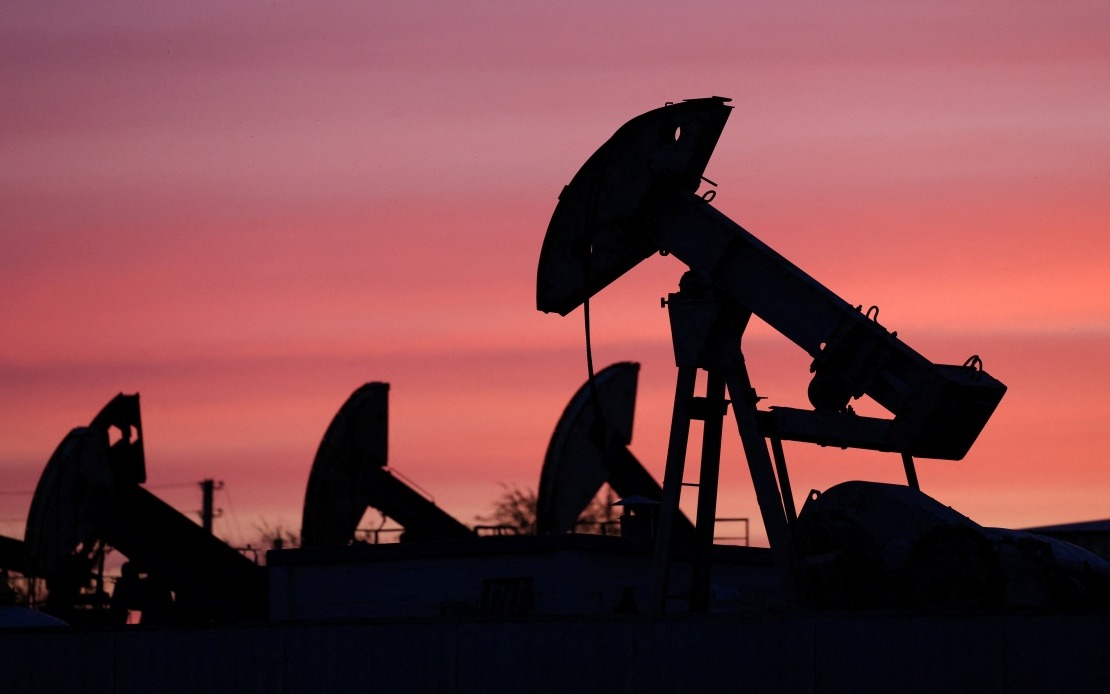
The International Energy Agency has signalled a modestly more optimistic outlook for global oil markets in 2026, revising upward both its demand and production forecasts in a report released on Friday. The adjustments reflect shifting expectations about energy consumption patterns and production capabilities as major economies navigate the transition toward sustainable energy sources whilst managing near-term demand pressures. The adjustments, though incremental in nature, underscore the complexity of forecasting energy markets in an increasingly volatile geopolitical and economic environment.
According to the IEA's latest assessment, global oil demand in 2026 is now projected to reach 103.463 million barrels per day, a revision upward from the previous estimate of 103.292 million barrels per day issued one month earlier. The change, whilst representing an increase of 0.171 million barrels per day, appears modest on its surface but reflects the agency's recalibration of expectations regarding industrial activity, transportation demand, and energy consumption across both developed and emerging markets. This revision suggests that demand trajectories may prove somewhat resilient to the economic headwinds that many forecasters have been monitoring.
Simultaneously, the IEA has adjusted downward its expectations for demand contraction this year, now estimating a decline of 1.047 million barrels per day compared to the previously forecast decline of 1.118 million barrels per day. This 71,000 barrel-per-day reduction in the anticipated contraction signals that current market dynamics may be supporting oil consumption at higher levels than anticipated in the previous month's assessment. The moderation in expected decline suggests that factors such as industrial recovery, aviation demand, and petrochemical consumption continue to provide ballast for the global oil market even as efficiency improvements and renewable energy deployment accelerate.
On the production side, the IEA has upgraded its 2026 forecast by 0.22 million barrels per day, now expecting global production to reach 102.6 million barrels per day. This revision represents a meaningful shift from the previous projection of 102.37 million barrels per day, indicating the agency's growing confidence in production capacity additions coming online over the forecast period. The adjustment reflects anticipated investment in conventional oil fields, particularly in offshore operations and strategic reserves, as well as expectations regarding the continued operation of existing facilities.
The previous month's assessment had anticipated a steeper production decline of 3.87 million barrels per day in 2026 relative to current levels. The more optimistic revision in the latest report suggests that supply-side disruptions and depletion rates may prove less severe than initially anticipated, or that new production from various regions and projects will more than offset natural field declines. This upward revision could reflect confidence in continued operations from major producers including OPEC+ members and non-OPEC producers that have committed to maintaining output levels.
For Malaysia and Southeast Asia, these forecasts carry significant implications for regional energy security and economic planning. The upgrading of production outlooks may offer reassurance to countries that rely on oil imports for energy security and economic growth. Higher global supply expectations could potentially moderate prices over the medium term, benefiting refining economies and transportation sectors across the region. Thailand's extensive refining industry, Singapore's petrochemical sector, and Vietnam's growing energy demand could all be affected by changes in global oil market dynamics.
The IEA's pattern of successive forecast revisions also reflects the inherent uncertainty in long-term energy projections, a reality increasingly familiar to policymakers managing energy transitions. Disruptions ranging from geopolitical tensions to technological breakthroughs can rapidly alter both supply and demand calculations. The relatively modest magnitude of these particular revisions suggests that the IEA maintains a cautious stance toward market fundamentals even as it adjusts specific figures upward.
The agency's assessment of production capabilities carrying forward to 2026 implicitly reflects its view of investment trends, technological progress, and operational continuity across the global oil industry. Whether from shale operations in the United States, deep-water projects offshore Brazil and West Africa, or continued extraction from mature fields in the North Sea and Southeast Asia, the upgraded production forecast encompasses a diverse range of supply sources and operational contexts. Each represents different cost structures, technical challenges, and geopolitical considerations that collectively influence global market dynamics.
For energy-dependent economies across Southeast Asia, monitoring the IEA's periodic revisions serves as a critical input into energy policy decisions, infrastructure investments, and economic forecasting. The organization's biannual assessments and monthly updates help guide investment decisions by both public and private entities seeking to balance supply security with cost efficiency. The latest upgrade, whilst modest, may provide a basis for greater confidence in medium-term energy availability and potentially more stable pricing expectations that can support business planning and development projects.
These forecast adjustments also arrive at a moment when global energy markets are simultaneously grappling with accelerating renewable energy deployment, evolving consumer preferences, and structural shifts in industrial organization toward decarbonization. The continued relevance of oil demand projections well into the 2030s, even as renewables expand, underscores the reality that fossil fuels will continue playing a significant role in global energy systems for years to come. For policymakers across Asia-Pacific, understanding these intermediate-term energy outlooks remains essential for managing the complex transition toward lower-carbon economies whilst meeting immediate development and growth objectives.

