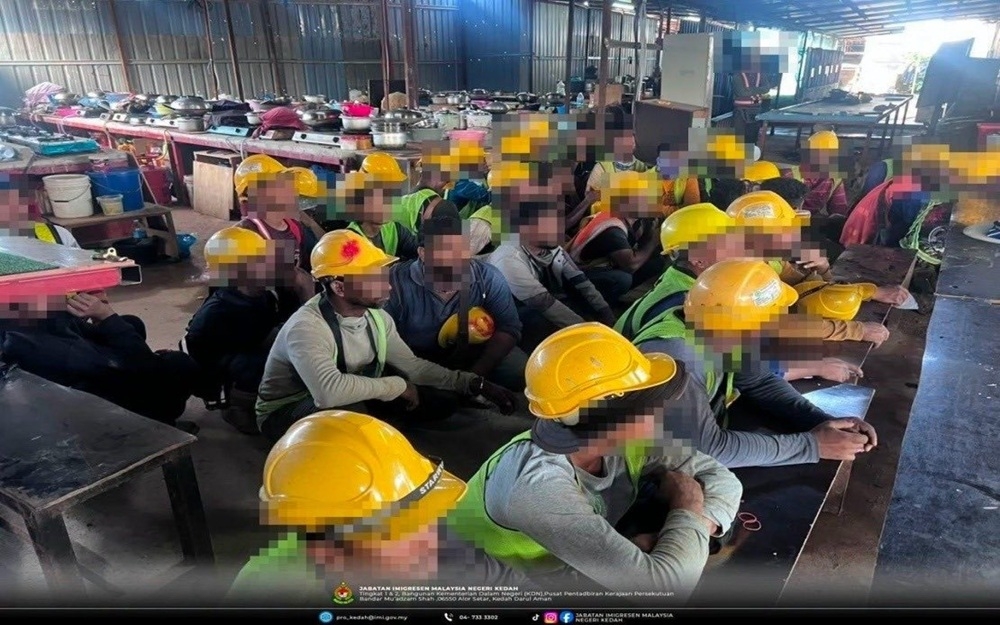
The Kedah Immigration Department has intensified its border and workplace enforcement activities, securing 81 undocumented migrants during a raid at a construction site in Alor Setar on August 5. The operation, known as Ops Sapu, represents a continuation of the department's systematic approach to identifying and apprehending foreign nationals without proper documentation working across the state's various industrial sectors.
Construction remains one of Malaysia's most significant employers of migrant labour, and Kedah's development projects have increasingly become focal points for immigration compliance operations. The reliance on foreign workers in this sector has long created vulnerabilities to exploitation and regulatory breaches, with undocumented individuals often subject to substandard wages, unsafe working conditions, and vulnerability to trafficking. The concentration of enforcement resources on construction sites reflects authorities' recognition that large-scale building projects frequently attract workers operating outside legal frameworks.
Ops Sapu, which translates to the sweep operation, has become a standard enforcement mechanism employed by the Immigration Department across Malaysia to conduct surprise raids on worksites suspected of harbouring undocumented workers. These operations serve multiple objectives: they remove foreign nationals from the labour market without proper permits, they generate deterrence against employers willing to hire illegally, and they gather intelligence on smuggling networks and trafficking routes. The August 5 operation demonstrates the department's continued commitment to this enforcement strategy despite resource constraints.
The 81 individuals detained represent a significant single-operation catch, indicating either substantial undocumented presence at the specific construction site or heightened enforcement activity in Kedah during this period. The arrests highlight persistent challenges in verifying worker documentation across the construction industry, where rapid labour turnover, subcontracting arrangements, and pressure to meet project deadlines can create environments where compliance oversight becomes difficult. Employers may face penalties ranging from substantial fines to criminal prosecution for knowingly employing undocumented workers, yet enforcement capability remains stretched across the country's extensive worksite landscape.
From a Malaysian policy perspective, these operations underscore the tension between labour market needs and immigration control objectives. Malaysia's construction sector has struggled with labour shortages, particularly for lower-skilled positions, and foreign workers have become essential to project completion. However, allowing unregulated migration undermines wage standards for all workers, distorts market competition, and creates public safety concerns related to background vetting and identification. Balancing these competing interests remains a persistent challenge for policymakers attempting to liberalise labour access while maintaining border sovereignty.
The broader regional context matters significantly here. Kedah's proximity to the Thai border and its role as a gateway for cross-border commerce and labour movement make it a strategic area for immigration enforcement. Undocumented workers often transit through Kedah en route to peninsular employment centres, making the state a critical interception point. The timing and location of Ops Sapu operations are frequently coordinated with intelligence suggesting higher migrant concentrations, though exact targeting methodologies remain opaque to public scrutiny.
For the detained individuals, the operation sets in motion formal removal procedures that typically involve processing at immigration detention facilities, administrative review, and deportation arrangements through their respective embassies or government agencies. The costs associated with detention and repatriation, while ultimately borne by government, represent substantial public expenditure that some economists argue could be reduced through legalised labour frameworks that permit regulated migration at lower administrative cost. However, political considerations regarding citizen employment and sovereignty typically outweigh such economic efficiency arguments.
Employer accountability in construction remains inconsistent across jurisdictions. While the Immigration Act provides clear penalties for hiring undocumented workers, enforcement against employers often proves less vigorous than enforcement against workers themselves. This asymmetry creates perverse incentives where employers face manageable financial penalties relative to the cost savings achieved through undocumented labour, while workers bear the full weight of criminal proceedings and deportation. Strengthening employer accountability mechanisms could theoretically reduce demand for undocumented workers more effectively than supply-side enforcement alone.
The Kedah operation also reflects evolving immigration enforcement priorities at the federal level. Recent years have witnessed increased emphasis on workplace raids as authorities recognise that securing construction sites and manufacturing facilities represents a more efficient enforcement approach than reliance on conventional border enforcement. This represents a strategic shift toward inland immigration control that attempts to address labour market dynamics directly rather than exclusively at points of entry.
Looking forward, the detection and arrest of 81 undocumented workers in a single operation suggests that Kedah's construction sector continues employing significant undocumented labour despite previous enforcement campaigns. This pattern indicates either inadequate deterrence from existing penalties, persistent information asymmetries where employers remain unaware of enforcement risks, or simply that cost savings from hiring undocumented workers exceed expected penalty liabilities. Addressing the root causes driving employer demand for undocumented labour will likely prove more effective than escalating workplace raid intensity alone.
The operation also raises questions about coordination between immigration enforcement and labour department inspections. Construction sites typically require multiple regulatory compliance frameworks including safety standards, wage regulations, and workers' compensation arrangements. Integrating immigration verification into comprehensive worksite inspections could simultaneously address multiple compliance areas while reducing operational redundancy and improving detection rates.

