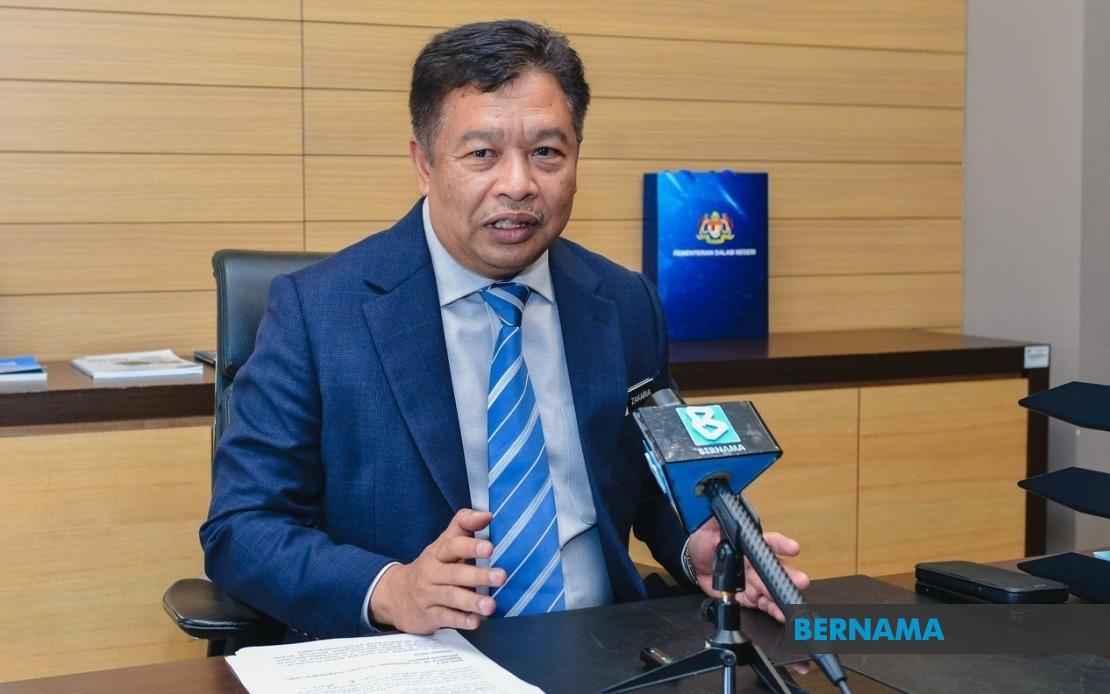
The Immigration Department has elevated its operational readiness to maximum capacity ahead of the Johor state election, positioning itself to manage what officials anticipate will be a significant influx of returning voters crossing from Singapore. Datuk Zakaria Shaaban, the department's director-general, confirmed that enhanced monitoring protocols are now in effect across the country's primary entry points, with particular focus on the infrastructure serving the heavily trafficked Johor-Singapore corridor.
Current inspection systems at the Sultan Abu Bakar Complex in Tanjung Kupang and the Sultan Iskandar Building connecting JB Sentral to Woodlands are functioning normally under existing operational frameworks. Rather than introducing new technological infrastructure that might introduce unforeseen vulnerabilities, the department has opted to fortify its present setup whilst maintaining elevated vigilance. Zakaria emphasised that the department's technical personnel will maintain round-the-clock system monitoring to rapidly identify and rectify any anomalies that might otherwise compromise border processing efficiency.
The contingency architecture reflects broader government concern about maintaining seamless voter access during the democratic process. Should the primary inspection systems experience unexpected downtime, the Immigration Department stands prepared to immediately activate manual inspection procedures across all Immigration, Customs and Quarantine complexes. This failsafe approach ensures that technical disruptions will not prevent eligible voters from returning to fulfil their constitutional responsibilities, even if processing times extend considerably.
Home Minister Datuk Seri Saifuddin Nasution Ismail has provided parallel assurances that his ministry will actively facilitate traveller movement across the border, encompassing the activation of a comprehensive contingency programme should system interruptions occur. This ministerial commitment signals that border management during the election period represents a priority requiring coordination across multiple governmental agencies beyond the Immigration Department itself.
The two primary checkpoints mentioned represent among the world's most congested international gateways. The Sultan Iskandar Building, which facilitates movement between JB Sentral and Woodlands via the Malaysia-Singapore Second Link (Linkedua), and the Sultan Abu Bakar Complex handling traffic via the same corridor, collectively process approximately 300,000 individuals daily during routine periods. Election-day traffic patterns will almost certainly exceed these baseline figures, creating operational challenges that extend beyond typical border management scenarios.
The Johor state election will determine representation across 56 constituencies, with 172 candidates competing for these seats. Polling is scheduled for Saturday, July 11, whilst eligible voters choosing early voting options can exercise their franchise on July 7. This compressed timeframe between early voting and general polling means that border operations must accommodate voters who may defer their return journey until the final feasible moment, potentially creating concentrated demand surges during specific hours.
The significance of this election planning extends beyond immediate operational logistics. Historically, Malaysian state elections in Johor have witnessed participation from workers and residents based across the causeway in Singapore, a demographic that comprises both long-term expatriate workers and Malaysian citizens maintaining employment in the republic. Ensuring frictionless border crossing for this population represents both a practical logistical challenge and a political commitment to inclusive electoral participation.
For Malaysian voters residing in Singapore, cross-border travel has become increasingly routine, yet election periods introduce variables that standard procedures may not fully anticipate. Enhanced immigration staffing, expedited processing lanes, and clear communication about documentation requirements all contribute to reducing friction for returning voters. The department's acknowledgment that problems might emerge, coupled with explicit preparation of manual backup procedures, suggests an organisation attempting to learn from previous election cycles.
The broader regional context matters significantly here. Singapore represents the primary overseas destination for Malaysian workers seeking employment opportunities, with tens of thousands crossing the causeway daily for employment. When major electoral events occur in Malaysia, these cross-border commuters face the dual pressure of maintaining employment commitments whilst meeting civic obligations back home. Immigration planning that acknowledges this tension demonstrates governmental awareness of the lived experience confronting this voter cohort.
The decision to maintain existing systems rather than implementing new technological solutions immediately prior to election day reflects pragmatic risk management. Introducing untested infrastructure days before a high-stakes electoral event carries obvious hazards; conversely, proven systems operating at elevated capacity under enhanced supervision offer predictable performance parameters. This conservative approach prioritises reliability over innovation, suggesting the Immigration Department understands that election integrity partially depends on administrative infrastructure functioning without disruption.
Technical contingency planning represents merely one dimension of election readiness. The coordination between the Immigration Department and the Home Ministry indicates that border management during elections receives cabinet-level attention, signalling that voter access constitutes a matter the government treats as fundamentally important. This institutional commitment shapes how individual officers at border posts approach their responsibilities during the voting period.
As the election approaches, continued communication from immigration authorities regarding expected congestion, optimal crossing times, and documentation requirements will likely assist voters in planning their return journeys strategically. The government's emphasis on problem-free operations suggests that election-day experiences at the border will serve as public indicators of administrative competence, with both successful and problematic outcomes carrying political significance beyond the immediate operational sphere.

