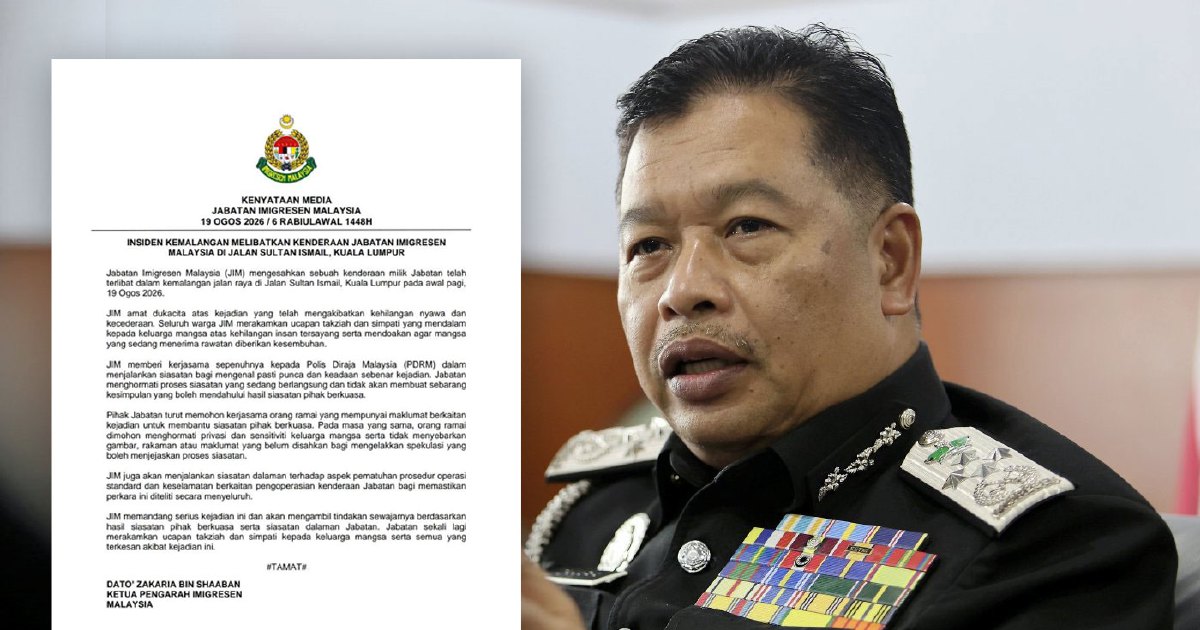
The Immigration Department of Malaysia has launched an internal investigation into the circumstances surrounding a fatal traffic accident that claimed lives on Jalan Sultan Ismail in central Kuala Lumpur in the early hours of today. The probe will examine whether the department's established standard operating procedures and safety measures were properly followed at the time of the incident. This marks a significant response from one of the country's key government agencies to a tragedy that has raised questions about vehicle safety protocols and compliance within federal departments.
The accident involved a vehicle operated by the Immigration Department, suggesting the incident took place during official operations rather than private circumstances. Early morning traffic collisions on major arterial roads like Jalan Sultan Ismail, a heavily congested corridor in the heart of the capital, often raise broader concerns about fatigue management, vehicle maintenance standards, and driver training protocols across government agencies. The decision to conduct a comprehensive internal review reflects the seriousness with which the department is treating the incident.
Jalan Sultan Ismail remains one of Kuala Lumpur's most critical transport arteries, connecting multiple business districts and residential areas. The timing of the accident—occurring in the early morning hours—could indicate various operational factors that warrant scrutiny, including driver fatigue after extended shifts, visibility conditions, vehicle roadworthiness, and adherence to speed and safety regulations. Government vehicle accidents carry particular significance because they often involve public resources and can affect public confidence in institutional accountability.
The internal investigation will likely examine several key areas within departmental operations. These would typically include whether drivers underwent proper safety training and held valid driving licences, whether vehicles were subject to regular maintenance and pre-trip safety checks, and whether the department had clear protocols for managing driver rest periods and shift patterns. Additionally, the probe may assess whether the vehicle involved met current safety standards and whether any mechanical failures contributed to the accident.
For Malaysian readers and the broader Southeast Asian context, this incident raises important questions about occupational safety in government operations. Many federal departments operate extensive vehicle fleets for field officers, enforcement personnel, and administrative staff. The safety standards applied to these fleets directly affect not only government employees but also members of the public who share roads with official vehicles. Standards of maintenance, driver training, and operational oversight vary considerably across different agencies.
The Immigration Department specifically operates a significant fleet for enforcement activities, border management, and administrative functions. Officers conduct regular field operations across the country, often working extended hours to manage immigration-related responsibilities. Any investigation into this accident will need to balance operational demands with realistic safety measures, potentially setting precedents for how other departments manage their own vehicle safety protocols.
This internal review will likely inform broader discussions within the civil service about vehicle safety standards. Following high-profile incidents, government agencies frequently revise their operating procedures to strengthen compliance and prevent similar tragedies. The findings could potentially influence policies across multiple departments, affecting how agencies manage driver training, vehicle maintenance schedules, and fatigue management systems.
Public agencies in Malaysia have increasingly faced scrutiny regarding workplace safety and accountability. An internal investigation conducted transparently and thoroughly can help rebuild public confidence in institutional responsibility. However, the effectiveness of such probes depends on whether findings are properly documented, recommendations are clearly communicated, and implementation is monitored with measurable outcomes.
The timing and scope of this investigation will be closely watched by other government agencies, labour advocates, and transportation safety experts. How the Immigration Department responds to the findings, whether it implements structural changes, and whether it enhances safety protocols across its fleet will serve as an indicator of institutional commitment to preventing similar incidents. The investigation also provides an opportunity to assess whether existing SOPs were adequate or whether they require fundamental revision to reflect current operational challenges.
For the families affected by this tragedy, the investigation represents an institutional acknowledgment of the incident's gravity. Beyond internal procedures, this accident underscores the human cost of traffic safety lapses and the responsibility government agencies bear toward their employees and the public. The findings will likely influence how the Immigration Department approaches safety culture going forward, potentially extending beyond vehicles to broader occupational health and safety measures affecting its workforce.

