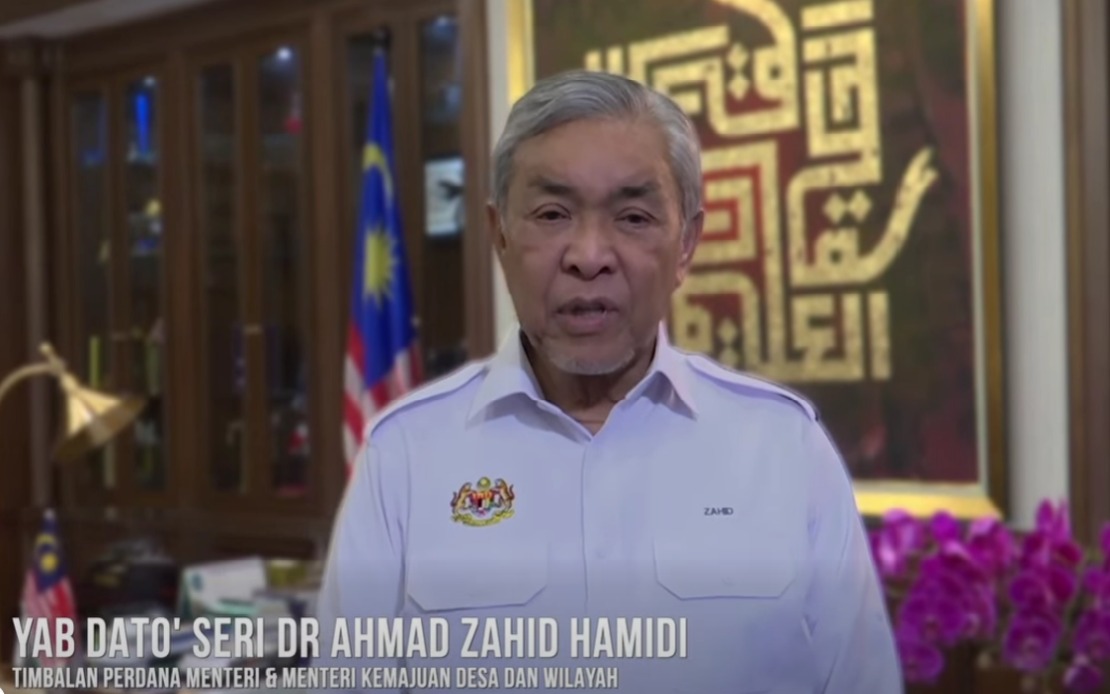
The meaning of national independence extends far beyond the historical moment of breaking free from colonial rule—it must be actively reflected in the tangible wellbeing and advancement of ordinary Malaysians, Deputy Prime Minister Datuk Seri Dr Ahmad Zahid Hamidi argued in conjunction with the nation's 69th National Day celebration. Speaking through a video message released on social media, Ahmad Zahid repositioned the independence narrative away from past achievement and towards present-day obligation, suggesting that Malaysia's true test lies not in what it has already accomplished but in how equitably it distributes the fruits of development among its citizens.
The Deputy Prime Minister's framing of independence as an ongoing project rather than a completed milestone carries particular significance for Southeast Asian readers who understand that post-independence governance remains contested terrain across the region. Ahmad Zahid specifically highlighted skills development and vocational education as central to meaningful independence, arguing that equipping young Malaysians with Technical and Vocational Education and Training (TVET) qualifications directly enables them to access higher-paying employment. This emphasis on economic empowerment through education speaks to regional concerns about youth unemployment and underemployment, which have plagued several Southeast Asian economies despite overall economic growth.
Beyond individual advancement, Ahmad Zahid articulated a vision of independence that encompasses entrepreneurial opportunity. He called for creating pathways through which small business operators can expand their enterprises and enable families across the income spectrum to improve their material circumstances. This inclusive economic framework reflects growing regional demands for shared prosperity models, particularly as income inequality has widened in many Southeast Asian nations. The Deputy Prime Minister's assertion that government must actively facilitate rather than merely permit such advancement suggests a more interventionist approach to development policy than purely market-driven alternatives.
A particularly revealing dimension of Ahmad Zahid's statement concerns the government's responsibility during crises. He stressed that independence demands state capacity to protect citizens during disasters and to support recovery and reconstruction efforts. This formulation gains added weight in Southeast Asia, where natural disasters frequently strike multiple nations within the region, and where state resilience and emergency response capabilities have become measures of effective governance. The implicit message—that independence without disaster preparedness and recovery support remains hollow—resonates across a region vulnerable to typhoons, floods, and earthquakes.
As Rural and Regional Development Minister, Ahmad Zahid brought his portfolio directly into the independence discussion, arguing that genuine national development cannot conclude at city boundaries but must reach villages, rural areas, and remote regions. This commitment to geographic equity addresses a persistent challenge across Southeast Asia, where urban-rural divides have deepened alongside rapid modernisation. He offered concrete examples of transformative infrastructure—a single road revitalising a village, electricity bringing hope to modest households, a small classroom nurturing future aspirations—suggesting that true greatness emerges not from monumentalism but from inclusive infrastructure that serves ordinary people.
The Deputy Prime Minister also brought Malaysia's burgeoning halal industry into his independence narrative, framing it not merely as commercial opportunity but as a source of national pride and global economic positioning. By connecting halal industry development to independence's meaning, Ahmad Zahid linked domestic policy to international competitiveness, reflecting how Southeast Asian nations increasingly view niche sectors as drivers of regional economic influence. The halal sector, in which Malaysia holds significant market share, exemplifies how post-colonial nations leverage distinctive capabilities on the global stage.
Central to Ahmad Zahid's vision is intergenerational responsibility. He positioned current Malaysians as trustees obligated to hand the nation to the next generation in demonstrably improved condition—more prosperous, fairer, and more equitable than they inherited it. This framework redefines independence not as a past event to commemorate but as an ongoing commitment each generation must renew and deepen. For Malaysian and Southeast Asian readers accustomed to nation-building narratives, this perspective suggests that independence requires active maintenance rather than passive preservation.
Deputy Prime Minister Datuk Seri Fadillah Yusof complemented Ahmad Zahid's economic and development emphasis with a social and spiritual dimension, urging Malaysians to liberate themselves from division, hatred, prejudice, and extremism that threaten national harmony. Fadillah's framing of independence as both freedom from external rule and freedom from internal toxins reflects anxieties across Southeast Asia regarding social cohesion amid religious and ethnic pluralism. His call to reject destructive emotions while maintaining religious and cultural diversity articulates a delicate balance that several regional democracies continue to navigate.
Fadillah's invocation of the Federal Constitution and Rukun Negara principles grounds his independence message in established constitutional and civic frameworks. By linking contemporary governance to constitutional foundations and founding principles, he suggests that independence's meaning derives not from abstract ideals but from concrete institutional commitments and shared civic values. This institutional grounding appeals to Malaysian audiences concerned about constitutional governance and rule of law, issues relevant across Southeast Asia where constitutional frameworks face periodic stress.
The emphasis on the Malaysia MADANI framework—explicitly themed around "Well-being for All"—signals an attempt to modernise independence rhetoric for contemporary contexts. Rather than celebrating martial or nationalist achievements, this framing prioritises the distribution of prosperity and wellbeing across all societal segments. For Southeast Asian observers, this represents a pivot toward results-oriented governance metrics, suggesting that independence's legitimacy ultimately depends on improving citizens' quality of life rather than merely administering territory.
Fadillah's assertion that independence requires Malaysians to give it meaning through daily actions—safeguarding unity, respecting differences, rejecting hatred, and exercising responsible citizenship—democratises independence beyond elite rhetoric. He positions every citizen as an active participant in independence's ongoing realisation rather than passive beneficiary of historical achievement. This citizen-centred approach reflects broader regional trends toward civic engagement and personal responsibility in democratic governance.
Both Deputy Prime Ministers' statements reflect a broader strategic recalibration of how Malaysia positions independence in the 21st century. Rather than emphasising historic grievances against colonialism or celebrating military or political victories, they focus on present-day obligations to ensure that independence translates into measurable improvements in citizens' lives—better jobs, more robust infrastructure, social cohesion, and institutional integrity. For a region where independence celebrations sometimes feel repetitive or disconnected from contemporary governance challenges, this reframing toward practical outcomes and inclusive development offers a potentially more resonant vision.

