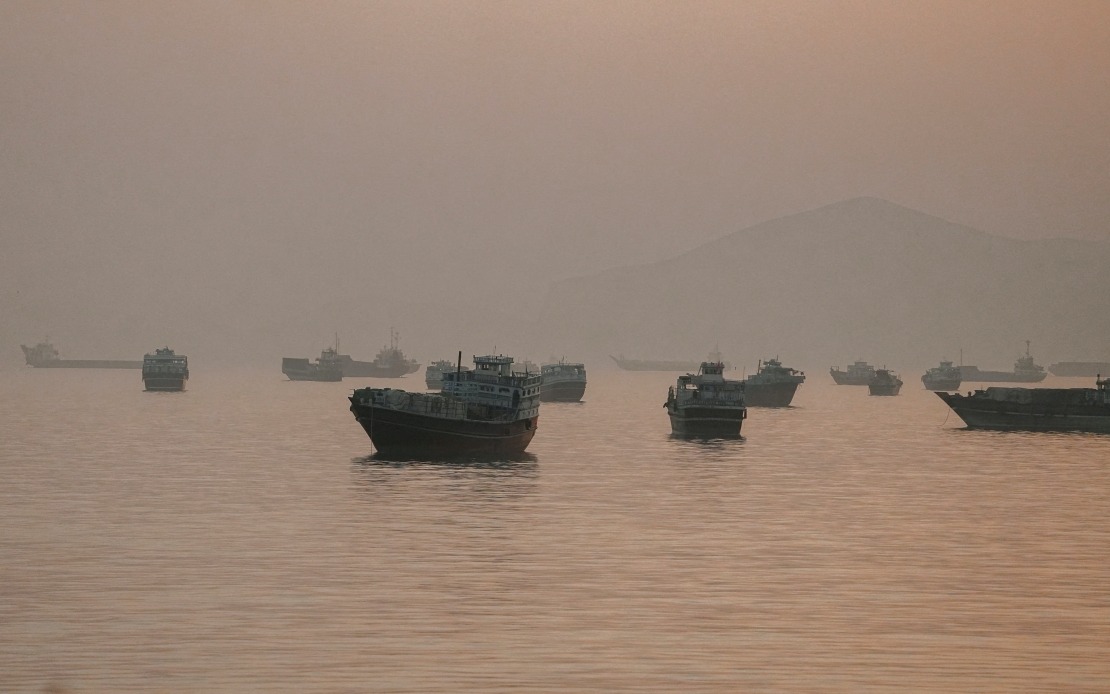
India has moved to protect its seafaring workforce by imposing a broad restriction on vessel assignments in one of the world's most volatile maritime corridors. The Directorate General of Shipping, New Delhi's top maritime authority, issued the directive late Wednesday, instructing shipowners, vessel managers, and crew recruitment agencies to refrain from deploying Indian nationals aboard ships navigating through the Strait of Hormuz. The decision reflects mounting concern over the safety environment in this critical Persian Gulf gateway, where geopolitical tensions have created an increasingly hazardous operating environment for commercial shipping and its crews.
The deteriorating security situation forms the backdrop to India's unilateral action. Renewed hostilities involving the United States and Iran have substantially amplified regional instability, with the Strait of Hormuz bearing the brunt of these tensions. This crucial waterway, through which roughly one-third of the world's seaborne oil trade passes annually, has become a flashpoint for maritime incidents in recent weeks. The concentration of military activity and the potential for accidental escalation have transformed transit through the passage into a genuinely perilous undertaking for merchant vessels and their international crews.
The immediate catalyst for India's intervention was a series of attacks on commercial shipping that have claimed lives and caused injuries among Indian personnel. Within the preceding seventy-two hours alone, two Indian seafarers lost their lives in separate incidents on vessels operating in the region, while several others sustained injuries. These casualties underscore the tangible human cost of the deteriorating security environment and represent a direct threat to the livelihoods and safety of India's substantial maritime workforce. For a nation with significant dependence on seafaring employment, such losses carry both emotional weight and practical implications for recruitment and retention in the sector.
India's maritime sector constitutes a cornerstone of both national commerce and employment. Indian seafarers represent a critical component of global shipping operations, filling technical and operational roles aboard vessels worldwide. The Strait of Hormuz assignment represents a significant share of employment opportunities for Indian maritime workers, making the restriction a consequential policy intervention that will reverberate through the industry. Recruitment agencies, shipowners, and vessel managers operating in India face immediate constraints on their ability to deploy crews to this lucrative but now-restricted market segment.
The broader implications of this directive extend beyond India's maritime borders. The region's geopolitical dynamics significantly impact regional stability and economic connectivity, with profound consequences for Southeast Asian nations that depend heavily on unimpeded passage through these critical sea lanes. For Malaysia and other ASEAN members, the security situation in the Strait of Hormuz carries direct relevance to energy security, trade volumes, and insurance costs associated with maritime commerce. Any sustained restriction on shipping activity or heightened risk perceptions in this corridor will have cascading effects throughout the Indo-Pacific supply chains that regional economies depend upon.
The Directorate General of Shipping's assessment that recent incidents have materially increased risks to seafarers and vessels reflects a professional maritime judgment about operational safety thresholds. When the apex regulatory authority determines that conditions have deteriorated beyond acceptable safety parameters, the imposition of restrictions becomes a straightforward protective measure. This is not merely a symbolic gesture but a concrete acknowledgment that current maritime conditions in the Strait of Hormuz have transitioned from manageable risk to unacceptable hazard.
The timing of India's intervention also signals broader concern about trajectory rather than merely current conditions. Policymakers in New Delhi appear to be anticipating further deterioration if the pattern of escalation continues unabated. The decision to act preemptively rather than waiting for additional casualties suggests that Indian maritime authorities are making a forward-looking risk assessment and deploying regulatory tools to protect their nationals before the situation compounds further.
For the shipping industry, particularly vessel operators reliant on Indian crews, this creates significant operational complications. The pool of available seafarers for Strait of Hormuz assignments has abruptly contracted, forcing companies to explore alternative crewing solutions or reconsider voyage planning in the region. Insurance considerations will simultaneously become more pressing, with underwriting costs potentially rising substantially for any operations in the designated high-risk area. The economic mathematics of shipping through the Strait of Hormuz have shifted measurably in the direction of increased operational costs and reduced crew availability.
The restriction also illustrates how individual nations are deploying regulatory authority to manage asymmetric risk exposure. India cannot influence broader geopolitical dynamics or control military actions in the Persian Gulf, but it can exercise sovereignty over its own citizens and employers subject to its jurisdiction. This represents a rational exercise of state authority to protect nationals from disproportionate risk, even when that protection carries significant economic costs for the domestic maritime sector.
As tensions persist in West Asia, the sustainability of international maritime commerce through traditional chokepoints remains uncertain. India's action may presage similar restrictions from other countries with substantial seafaring populations, potentially triggering a broader contraction in crew availability for high-risk routes. The cumulative effect of multiple nations implementing protective restrictions could force fundamental recalculations about the viability of Strait of Hormuz transit and accelerate exploration of alternative routing options and energy transport mechanisms.
The incident underscores the intimate connection between geopolitical stability and economic functionality in critical maritime zones. When conflict escalates in regions through which vital commodity flows transit, the consequences extend immediately to maritime workers, shipping companies, and ultimately consumers throughout the dependent supply chains. India's intervention, while protective of its own citizens, simultaneously highlights the fragility of global shipping networks when regional stability deteriorates.

