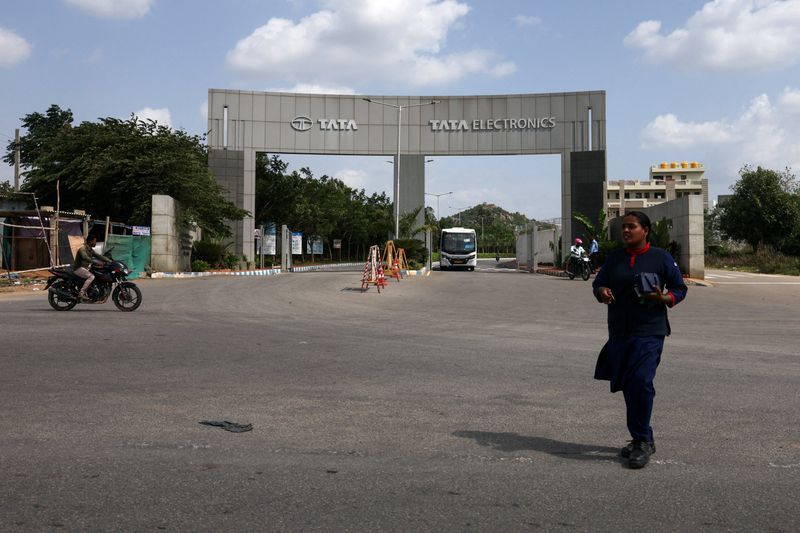
India's government has formally initiated an investigation into a substantial data breach affecting Tata Electronics, a critical supplier to Apple's manufacturing operations in the country. The Ministry of Electronics and Information Technology confirmed the development on Thursday through its secretary, S. Krishnan, marking the authorities' first official public acknowledgment of the incident. The breach has exposed sensitive proprietary information related to Apple's forthcoming iPhone 18 Pro models, which the technology giant plans to introduce to global markets in September.
The compromised data appears extensive in scope, encompassing detailed component specifications and supplier lists that Apple normally guards with considerable secrecy. A ransomware group responsible for the theft has already distributed files across dark web platforms, including photographic documentation of the unreleased iPhone 18 Pro variants. Among the leaked materials are at least six distinct files that identify the specific manufacturers contracted to produce individual components for these new smartphone models—information that Apple deliberately withholds from its publicly disclosed supplier list to maintain competitive advantage and supply chain security.
Tata Electronics' role as Apple's Indian production partner makes this breach particularly significant for both companies' strategic interests in the region. The breach threatens to undermine the intricate global supply chain architecture that Apple has painstakingly developed over decades, whereby manufacturing and component sourcing operations are distributed across numerous countries and contractors. The exposure of supplier relationships for unreleased products could enable competitors to anticipate Apple's technological direction and potentially identify weak points in its supply network.
Authorities have directed the case to India's Computer Emergency Response Team, the national agency tasked with managing cybersecurity incidents and coordinating responses to digital threats. This escalation demonstrates the seriousness with which Indian officials are treating the breach, particularly given the involvement of a major multinational corporation and implications for India's standing as a secure manufacturing destination for high-technology products. The formal referral also signals that the investigation will operate through established governmental protocols designed to handle incidents of national cybersecurity significance.
The timing of the leak presents considerable operational challenges for Apple ahead of its scheduled September product announcement. Detailed specifications and component sourcing information appearing prematurely in public forums could influence market expectations, enable supply chain competitors to anticipate demand patterns, and potentially allow rival manufacturers to accelerate their own product development timelines. The breach fundamentally compromises Apple's ability to control the narrative around its new products during the carefully orchestrated pre-launch period that typically drives consumer anticipation and media coverage.
Tata Electronics has responded by engaging international forensic investigation specialists to conduct a comprehensive security audit of its systems and identify the precise vectors through which attackers gained access to sensitive data. This external engagement reflects the technical complexity required to investigate sophisticated ransomware attacks and the need for specialized expertise in breach analysis. The deployment of global consultants also underscores the multinational dimension of modern cybersecurity incidents, where attackers frequently operate across borders and target companies with international operations.
The breach extends beyond Apple's ecosystem, with the same ransomware group posting stolen documents from several other major technology and semiconductor companies, including Tesla, Qualcomm, and TSMC. This pattern suggests either a coordinated campaign targeting the technology sector or a single breach operation that compromised multiple corporate networks. The involvement of TSMC, the world's leading semiconductor contract manufacturer, and Qualcomm, a major processor designer, indicates the attackers may have penetrated networks with access to widely-used technology components and designs.
For Malaysia and Southeast Asia, this incident carries several implications beyond the immediate corporate impacts. The region's growing importance as a technology manufacturing hub means such breaches raise questions about cybersecurity standards and government capacity to protect high-value industrial operations. Companies considering regional expansion must now evaluate whether Tata Electronics' experience reflects broader vulnerability patterns in the Indian manufacturing sector or represents an isolated incident.
The breach also highlights the tension between Apple's need to maintain proprietary secrecy and the impossibility of completely insulating supply chains from cyberattacks. As manufacturers increasingly relocate production facilities to lower-cost jurisdictions in Asia, they necessarily expose sensitive product information to additional security risks inherent in operating across multiple countries with varying cybersecurity standards. Apple's reliance on Indian manufacturing partners must now be reassessed against the demonstrated ability of criminal actors to access and commercialize confidential product data.
The incident demonstrates that even for companies with sophisticated security practices and enormous resources, protecting unreleased product information remains extraordinarily challenging in an environment where ransomware groups actively target high-value corporate networks. The exposure of iPhone specifications months before official announcement may reshape how Apple and similar companies approach security protocols for new product development, potentially requiring investment in enhanced compartmentalization of sensitive information and more stringent access controls across supplier networks.
Longer-term, this breach may accelerate conversations between the Indian government and major technology companies about establishing sector-wide cybersecurity standards for suppliers. The formal investigation by Indian authorities signals that policymakers recognize the reputational and economic stakes involved when foreign manufacturers suffer significant data breaches operating within Indian borders. Future foreign direct investment decisions in Indian tech manufacturing could depend partly on demonstrated improvements in cybersecurity governance and incident response capabilities.

