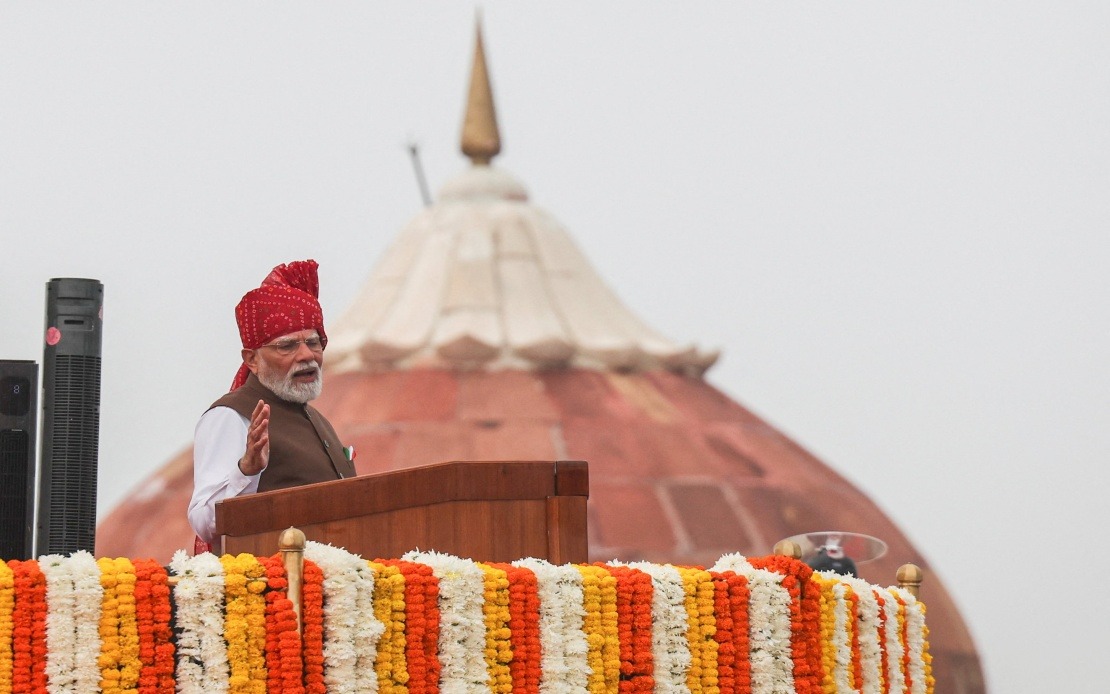
Prime Minister Narendra Modi used India's Independence Day address from the Red Fort in Delhi to articulate an expansive vision for transforming the nation into a developed economy within the next two decades, centred on achieving self-sufficiency across critical industrial sectors. The strategic blueprint represents a significant pivot toward reducing import dependence and building indigenous technological capabilities, a priority that carries substantial implications for regional trade dynamics and supply chain reconfiguration across Asia.
The semiconductor sector emerged as a flagship component of Modi's self-reliance agenda. With three fabrication plants already commissioned and between five and eight additional facilities expected to commence operations over the next seven to eight years, India is positioning itself to compete in a sector crucial to modern manufacturing and defence systems. This expansion reflects broader global efforts to diversify semiconductor production away from concentrated supply chains, a development that Malaysian stakeholders should monitor closely given the region's existing semiconductor prowess and the potential for competition or collaboration in specialised chip manufacturing.
Energy security constitutes another cornerstone of India's development pathway. Modi announced plans to establish five new nuclear reactors during the current decade while targeting 100 gigawatts of nuclear capacity by 2047. The government has simultaneously celebrated a milestone in mastering fast-breeder nuclear technology, which enhances India's trajectory toward fuel self-sufficiency and reduces vulnerability to international supply disruptions. This nuclear emphasis underscores recognition that modern economic development demands stable, large-scale baseload power generation that renewable sources alone cannot currently provide at the requisite scale.
Renewable energy expansion has achieved remarkable acceleration under Modi's governance framework. Solar capacity increased dramatically from two gigawatts twelve years ago to 160 gigawatts currently, demonstrating substantial progress in transitioning toward cleaner energy infrastructure. This renewable energy growth, coupled with nuclear development, positions India to address climate commitments while simultaneously building energy independence. The achievement offers instructive lessons for Southeast Asian nations grappling with balancing developmental needs against environmental imperatives.
Hydrocarbon security remains strategically important despite the renewable energy transition. Modi announced an 850 billion rupee allocation, equivalent to approximately 8.9 billion US dollars, for exploration of offshore oil and gas reserves in regions previously considered commercially unviable. By opening areas previously labelled as "99 per cent no-go" zones, India expands its domestic petroleum resource base and reduces reliance on volatile international markets. This exploration initiative demonstrates that while renewables feature prominently, traditional energy sources continue underpinning India's medium-term energy architecture.
Defence manufacturing capabilities represent a critical dimension of the self-reliance programme that extends beyond energy and semiconductors. Modi specifically highlighted the imperative to develop domestic expertise in drone technology, counter-drone systems, and hypersonic defence platforms. Building indigenous defence manufacturing capacity reduces dependence on foreign military suppliers and strengthens India's strategic autonomy in an increasingly competitive regional security environment. For Malaysia and other Southeast Asian states, India's defence modernisation trajectory warrants attention as it reshapes regional power balances and military procurement dynamics.
Consumer behaviour emerged as an unexpected yet significant element of Modi's self-reliance vision. The Prime Minister explicitly encouraged Indian citizens to prioritise domestically manufactured goods despite potential cost or convenience disadvantages compared to imported alternatives. Modi articulated a philosophical argument that purchasing decisions carry strategic weight, framing consumer choices as integral to building national industrial capabilities and testing domestic manufacturing competitiveness. This appeal to nationalist consumption patterns reflects recognition that economic self-reliance requires systemic transformation extending beyond policy frameworks into cultural preferences and purchasing habits.
The 2047 target date carries symbolic resonance, marking the centennial of India's independence in 1947 and establishing a generational timeframe for transformative economic development. This extended timeline acknowledges the magnitude of required infrastructure investment, technological advancement, and institutional development necessary to transition a nation of India's scale into developed country status. The ambitious nature of this goal reflects Modi's conviction that comprehensive structural reform across multiple economic sectors, pursued with sustained political commitment, can fundamentally alter India's development trajectory.
For Malaysian policymakers and businesses, India's self-reliance programme carries multiple implications. Increased Indian domestic capability in semiconductors, renewable technology, and defence systems may create both competitive pressures and partnership opportunities within Southeast Asia's technology sector. Malaysian companies operating in semiconductor manufacturing, renewable energy installation, or defence technology supply chains should anticipate shifting regional competitive dynamics. Simultaneously, India's infrastructure investment imperative may generate demand for regional expertise, components, and services, potentially creating export opportunities for Malaysian firms equipped to supply critical inputs to India's development programme.
The geopolitical context amplifies the significance of Modi's announcement. India's self-reliance drive aligns with broader efforts by major powers to reduce supply chain vulnerabilities exposed during recent global disruptions. By building domestic capacity in semiconductors, nuclear technology, and defence systems, India strengthens its strategic independence while potentially reducing reliance on suppliers from other major powers. This realignment affects regional trade patterns, investment flows, and technological partnerships throughout Asia.
Regional implications extend to energy markets where India's nuclear expansion and offshore petroleum exploration may influence South Asian energy security arrangements. Malaysia, as a significant natural gas exporter, observes these developments with interest as India's energy independence ambitions could moderate future demand for regional hydrocarbon imports. Conversely, India's renewable energy scaling presents opportunities for technology transfer and collaborative development of clean energy solutions applicable across Southeast Asia.
The self-reliance narrative also reflects ideological commitments within Modi's political framework, emphasising national pride, indigenous innovation, and reduced dependence on external actors. This framing resonates across India's polity and carries implications for how India engages with multilateral institutions, trade arrangements, and regional partnerships. Countries negotiating trade agreements with India should anticipate preferences for domestic protection and technology transfer provisions aligned with self-reliance objectives.
Implementing this comprehensive self-reliance programme requires sustained investment, technological capability building, and institutional reform across multiple sectors simultaneously. Success depends on attracting private sector participation, developing skilled workforce capacity, and ensuring that protected domestic industries eventually achieve international competitiveness. Malaysia's experience with managing industrial protection and technology development during earlier developmental phases offers comparative lessons relevant to India's reform trajectory, suggesting potential knowledge-sharing opportunities between nations pursuing similar development models.

