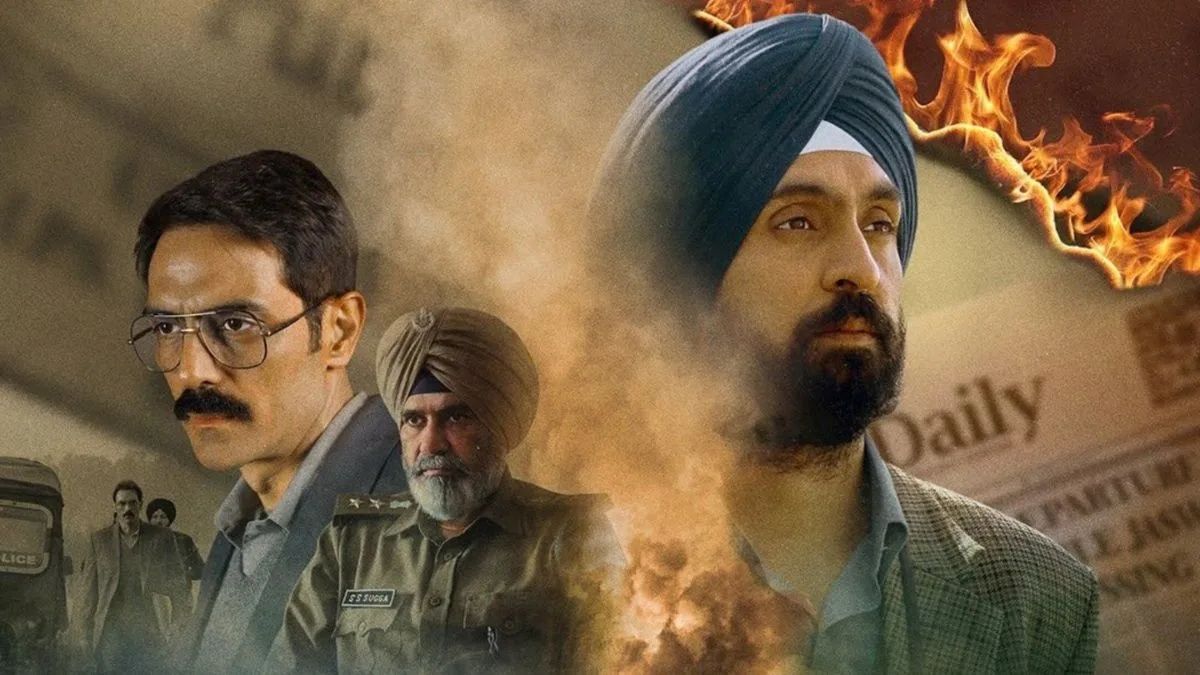
Filmmaker Honey Trehan spent nearly four years negotiating with Indian censors to release his film about a Sikh human rights activist, only to see it vanish from a streaming platform within days of its debut. The ordeal surrounding "Satluj," which chronicles the life of Jaswant Singh Khalra, a documented human rights campaigner who exposed extrajudicial killings and police violence during India's controversial counterinsurgency operations in Punjab during the 1980s and 1990s, exemplifies a troubling shift in how India's government controls cinematic expression.
When "Satluj" finally launched on streaming service ZEE5 earlier this month after years of contentious exchanges with authorities, it remained available for merely two days before being removed. The platform cited unspecified "current developments" for the takedown, though reporting suggested government officials raised "security concerns" as justification. Trehan, the film's producer, characterised the intervention as an abuse of state power. "This is not the sign of a healthy nation," he declared in response, alleging that India's Ministry of Information and Broadcasting weaponised censorship for political objectives. He described the tactic as "a backdoor entry to enter into the film industry and to control the narrative," suggesting the government uses film regulation as a tool for broader ideological management.
The "Satluj" controversy represents merely the most visible manifestation of what many in India's creative community characterise as systematic censorship under Prime Minister Narendra Modi's tenure since 2014. Parliamentary data reveals that authorities demanded modifications to 3,033 films in the fiscal year ending March 2025, a figure that represents a more than doubling from the equivalent period four years prior. These statistics lack granularity—they do not specify what alterations were mandated or the reasoning behind such demands—yet they signal an intensifying pattern of state intervention in creative content. The Central Board of Film Certification, India's government-appointed regulatory body, has not published a comprehensive annual report outlining its activities since 2017, making transparent accountability difficult for observers and filmmakers alike.
India occupies an unusual position among major democracies in granting a government-controlled film board direct authority over what audiences may view. This stands in sharp contrast to rating systems prevalent in the United States, Europe, and other established democracies, which typically categorise films by age-appropriateness whilst leaving final content decisions to filmmakers and distributors. India's certification apparatus, by contrast, wields the power to demand substantive edits before public exhibition—a mechanism that grants authorities direct influence over narrative and representation. When India's Ministry of Information and Broadcasting articulated its censorship criteria to Parliament, officials cited protection of "sovereignty and integrity of India, security, public order, decency, morality, defamation, contempt of court or incitement to offence." These categories remain sufficiently expansive to encompass subjective judgements about political acceptability.
Sadanand Dhume, a South Asian analyst at the Council on Foreign Relations, contextualises the current environment within India's broader political trajectory. "The politics of the country has taken a sharp turn since the advent of Modi in 2014, and Bollywood is facing the downstream effects," Dhume observed. This assessment aligns with the experiences of multiple filmmakers who report escalating demands for modifications to works addressing sensitive historical episodes, religious minorities, and caste dynamics. The pattern suggests censorship is intensifying not randomly but strategically, targeting narratives that challenge official interpretations of national history or contemporary social hierarchies.
The targeting of "Satluj" carries particular geopolitical resonance. The film stars Punjabi actor Diljit Dosanjh and focuses on Khalra's documentation of security force abuses during the period when India suppressed a violent Sikh independence movement. Though that campaign effectively ended decades ago, Modi's Bharatiya Janata Party continues to view separatism with deep suspicion. The situation has become more fraught following Canada's 2023 allegations that Indian government agents orchestrated the killing of a Sikh activist in Vancouver—revelations that renewed international attention to Sikh identity and historical grievances in Punjab. Against this backdrop, a film sympathetically depicting a Sikh human rights defender becomes, in official eyes, a security liability rather than a legitimate historical examination.
Recent cases illustrate the expanding scope of censorship interventions. The Malayalam-language blockbuster "L2: Empuraan" faced pressure from Hindu nationalist groups objecting to its portrayal of 2002 religious riots, ultimately accepting 24 post-release cuts. The biopic "Phule," which examines 19th-century caste reformers, was ordered to remove caste-related language. India's Academy Awards submission "Homebound" required 11 cuts targeting caste and religious references before clearance. These examples reveal a consistent pattern: films engaging seriously with India's historical religious violence, ongoing communal tensions, or caste oppression face systematic pressure to minimise or eliminate such content. Conversely, films celebrating nationalist themes encounter minimal resistance—the 2025 spy thriller "Dhurandhar," depicting Indian intelligence operations against Pakistan, cleared certification swiftly and became the highest-grossing Hindi-language film ever.
Director Onir, who works across multiple genres, has personally experienced this censorship escalation. When his 2023 film "Pine Cone" included the word "gay" in a scene featuring a nine-year-old character, the censorship board flagged the dialogue as problematic. The film secured clearance only after Onir removed the reference. Such interventions extend beyond explicit political content into fundamental aspects of human experience and identity. Onir articulated the broader creative consequence: "I feel that it's one of the worst phases of Indian cinema because the variety of cinema, the kind of narratives that one wants to see, all kinds of stories—that is disappearing slowly." This assessment captures the chilling effect of unpredictable and expanding censorship demands: filmmakers increasingly self-censor, avoiding narratives that might provoke regulatory scrutiny.
Despite official suppression, "Satluj" continues circulating through informal channels, particularly within Punjab. Trehan held a private screening alongside the Cannes Film Festival in May, whilst the film had earlier been selected for Toronto International Film Festival in 2023 before its makers withdrew it ahead of the scheduled premiere—a decision Trehan attributed to the protracted legal struggle with Indian censors. More remarkably, "Satluj" is being screened in Sikh temples, community centres, and village squares throughout Punjab by viewers who downloaded it before its removal from ZEE5. This grassroots exhibition has transformed the film from a commercial release into a cultural event. "The film is getting screened—Hindu, Sikh, every caste, rich, poor, all sitting together," Trehan noted. "It became a celebration. What this film did, it brought the entire Punjab together." The paradox is stark: government suppression intended to restrict access has instead fostered collective, cross-community engagement with the work.
For Southeast Asian observers, particularly those in Malaysia and other regional democracies, India's experience carries cautionary implications. The trajectory demonstrates how governments can instrumentalise content regulation to enforce political conformity whilst maintaining democratic facades. India's film board, buttressed by loosely defined legal categories and opaque decision-making processes, functions as an effective tool for controlling public discourse about history, identity, and governance. The doubling of modification demands, combined with the withdrawal of visibility from major films, suggests an institutional willingness to escalate censorship. As Trehan's four-year ordeal illustrates, resistance proves exhausting and costly, making self-censorship an increasingly rational response for filmmakers navigating these barriers.

