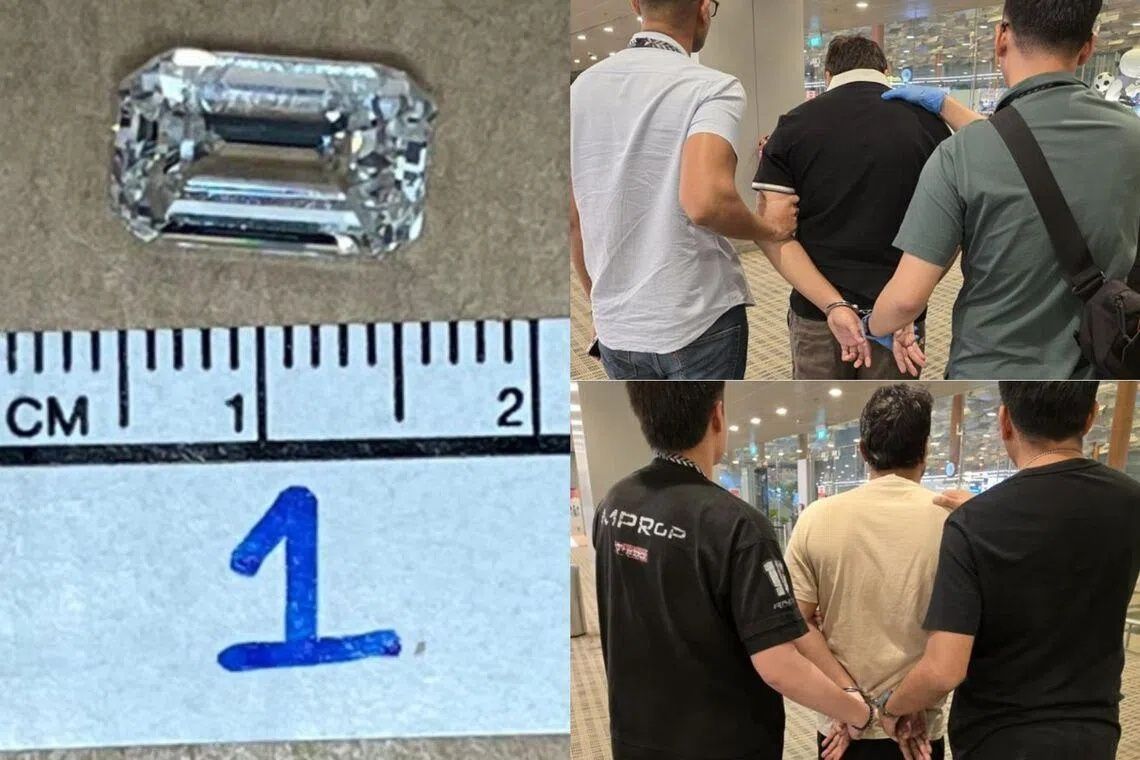
A carefully orchestrated theft at a prestigious Chinatown jewellery store has resulted in a significant prison sentence for one of two Indian nationals involved in the brazen heist. Mangroliya Manojkumar Kurjibhai, 41, received a custodial term of two years, two months and two weeks after pleading guilty to theft charges connected to the June 19 incident at Dianoche jewellery store on Kreta Ayer Road. The case highlights the sophisticated methods employed by international jewellery thieves and the swift response of Singapore authorities in apprehending the suspects before they could leave the country.
The theft unfolded with deliberate precision at approximately 3pm on the afternoon of June 19. Mangroliya and his accomplice, Serasiya Milan Ramnikbhai, 30, entered the jewellery establishment with a meticulously executed plan that had been devised well before their arrival in Singapore. Serasiya had concealed a counterfeit diamond in his mouth, a stone that had been specially commissioned in India to match the specifications and serial number of the target gem with remarkable accuracy. This level of preparation suggests the pair had detailed intelligence about the store's inventory and the specific characteristics of the diamond they intended to acquire.
Court documents revealed that Mangroliya requested to view the 4.95-carat diamond, which was valued at US$154,000, equivalent to over S$199,000 in Singapore currency. The sophisticated nature of the theft became apparent as Mangroliya engaged the sales manager in conversation about additional items in the store's collection, deliberately causing the manager to leave his position repeatedly. During these crucial moments when the manager's attention was diverted, Mangroliya signalled to Serasiya to execute the exchange. Serasiya ejected the fake diamond from his mouth and switched it for the genuine stone, which he then concealed in the same manner.
After completing the swap with apparent composure, Mangroliya told the sales manager that they would take time to consider the purchase before departing the store. The pair's calm demeanour during the exchange proved crucial to their initial escape, though the jewellery store's security measures would ultimately prove their undoing. Store staff soon discovered the deception when they examined the diamond Mangroliya had left behind using an optical gemstone identification machine, which immediately revealed it to be a counterfeit. The store's closed-circuit television system had captured the entire transaction, providing authorities with clear evidence of the theft and the identities of the perpetrators.
The timeline of events following the theft demonstrates how quickly Singapore's law enforcement agencies mobilised to prevent the suspects from leaving the jurisdiction. After leaving the jewellery store, the two men checked out of their hotel and proceeded to book a flight back to India, apparently confident they had successfully executed their scheme. However, authorities had already been alerted and were waiting for them. Officers apprehended both men at Changi Airport Terminal 3 at approximately 9pm that same evening, just hours after they had committed the theft and before they could clear immigration. During the arrest, officers recovered the genuine diamond from Serasiya's haversack, confirming their involvement in the crime.
The prosecution's case, presented by State Prosecuting Officer Yip Cheng Yee, was methodical in establishing the premeditated nature of the crime. The fact that the pair had commissioned a counterfeit stone in India before arriving in Singapore demonstrated this was not an opportunistic theft but rather a carefully planned operation with international dimensions. The prosecutor highlighted how Mangroliya had deliberately manipulated the sales manager's movements within the store to create opportunities for the exchange, revealing a level of cunning and coordination between the two accomplices. Such evidence of premeditation typically influences sentencing decisions, as it demonstrates the crime was not spontaneous but rather the result of deliberate planning.
While Mangroliya has been sentenced following his guilty plea, Serasiya's case remains pending before the courts. The distinction between their legal outcomes may depend on various factors, including the roles each played in the conspiracy and the evidence available against each defendant. In Singapore's legal framework, theft offences carry substantial penalties, with maximum imprisonment of up to seven years and potential fines. Mangroliya's sentence, while substantial, falls short of the maximum available, suggesting the court may have given consideration to his guilty plea and cooperation with authorities.
This incident carries broader implications for the jewellery industry across Southeast Asia, particularly in Singapore, which functions as a major regional hub for luxury goods and international commerce. The sophistication of the theft method—using a counterfeit replacement that was sufficiently convincing to momentarily fool staff and only be detected through specialised equipment—underscores the evolving tactics employed by organised jewellery thieves. The case demonstrates that even with experienced staff and established security procedures, jewellery stores remain vulnerable to coordinated, well-planned theft operations.
For Malaysian readers and businesses, the case serves as a cautionary tale about the risks associated with handling high-value items and the importance of robust security protocols. The incident also highlights the effectiveness of Singapore's border security and airport procedures in apprehending suspects attempting to flee the jurisdiction with stolen goods. The recovery of the diamond before it could be smuggled out of the country exemplifies how swift coordination between retail establishments and law enforcement agencies can prevent the successful conclusion of transnational theft schemes. As tourism and international commerce continue to thrive throughout Southeast Asia, such cases underscore the need for heightened vigilance among jewellery retailers and improved coordination among regional law enforcement agencies to combat sophisticated international theft operations.

